Yes, provided you don't plan to change anything. Seven in ten own their homes. Most of them live in houses, not flats. Crime runs below the rest of the borough. It's a comfortable town that wants its brickwork left alone.
The houses are the main reason to come. Across every dwelling on the council-tax list for the West Malling area, 30% are detached, 28% terraced, 22% semi-detached and 13% flats, with 6% bungalows. That's a lot of front doors with their own path. Only about 13% of homes were built before 1930, and 16% went up between 2000 and 2008, which tells you the old town is a small core inside a much larger ring of newer building. The energy certificates back that up: about 73% of certificated homes sit in bands A to C, and only 6% rate E or worse. About 81% of homes run on mains gas. The Georgian frontage on the High Street is what the brochures photograph. What most buyers get is a well-insulated house from the last few decades and a much smaller heating bill than the photos suggest.
It isn't cheap. In the Land Registry's twelve months to May 2026, the typical sale in the area was about £466,000, across 274 sales. By type, detached houses went for around £662,000, semis about £438,000, terraces £380,000 and flats £240,000. The flat price is how people get a foot in the door here. The detached price is what the rest of them are aiming for. Council tax bands tell the same story from another angle. Band C is the most common, but only about 8% of homes are in bands A or B, so the cheap end of the list barely exists.
If you're renting first, typical private rent across Tonbridge and Malling was about £1,470 a month as of April 2026. That's a figure for the whole borough, not for these streets, so treat it as the floor of the conversation rather than a quote.
Safety is one of the better parts of the answer. Kent Police's published figures for the year to May 2026 put the area at about 58 recorded crimes per 1,000 residents, roughly 15% below the Tonbridge and Malling average. Nobody picks West Malling for its nightlife, and the crime figures reflect that.
Getting around mostly means driving, whatever the station signs say. West Malling, East Malling, New Hythe and Borough Green & Wrotham stations are all within reach, yet at the 2021 census only about 3% of workers took the train and 1% the bus, while 47% drove and 41% worked from home. There are 197 bus stops in the area. Only a few people use them to get to work. Broadband is decent: gigabit-capable connections reach about 78% of premises and superfast about 94%. For a town full of people working from the spare bedroom, that second number matters more than the timetable at the station.
Flood risk is modest but real. On the Environment Agency's river-and-sea flood zones, about 1% of the area sits in the highest-risk zone. On a wider measure that also counts surface water, about 9% of postcodes are at high risk on at least one flood indicator. The difference between those two numbers is mostly rainwater with nowhere to drain, which is worth checking street by street. The surroundings are the best thing about the area. The typical home is roughly 200 metres from public green space, and part of the area falls inside the Kent Downs Area of Outstanding Natural Beauty. Manor Park Country Park, just south of the town, used to be the grounds of Douce's Manor, which is how most country parks around here started out.
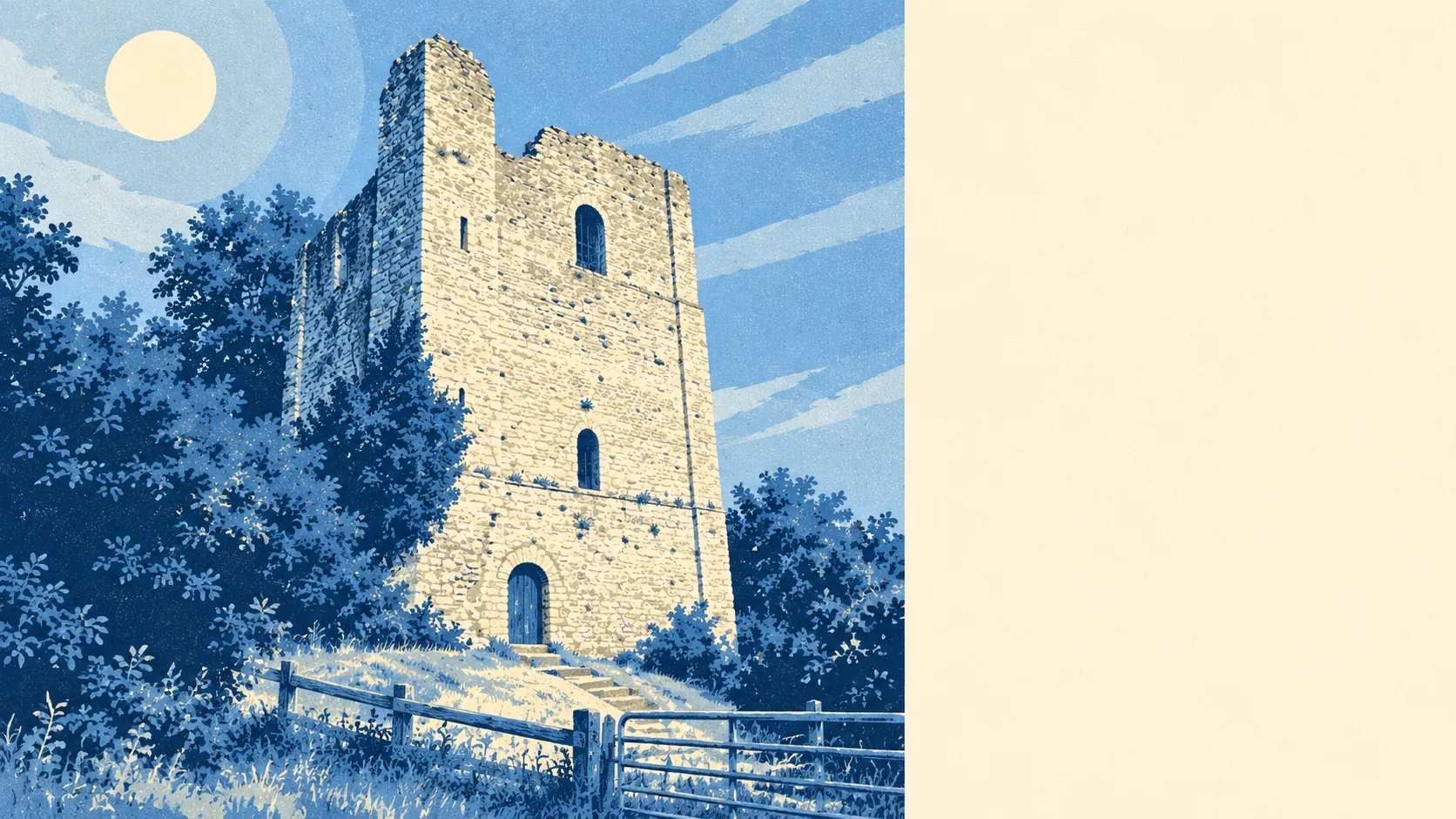
The weak spot is anything involving a builder. There are 396 listed buildings in and around the area, 15 of them Grade I, plus 20 conservation areas and 11 scheduled monuments, including St Leonard's Tower and St Mary's Abbey. If your house is listed or sits in a conservation area, new windows, a different roof or a rear extension all go through the council first, and the council won't hurry. Buyers who fall for a period house on the High Street should find out what the listing covers before they order a kitchen. Farrow & Ball sample pots are fine. Plastic windows are another conversation.
The people fit the houses. About 72% of households own their home, the typical resident is 41, and modelled gross household income averaged about £67,600 in the financial year to March 2023. That's a solid, settled area of homeowners in the middle of their working lives, and the quiet on these streets comes from that.
This page covers more than the old town. Kings Hill is the newer settlement built on the former airfield, laid out for people who want a garage and an office within walking distance. East Malling and Larkfield, Leybourne and the villages of Mereworth, Ryarsh, West Peckham and Wrotham Heath fill in the rest. The West Malling address carries the heritage. The cars are mostly parked in the surrounding villages.
It suits a couple or a young family who work from home most of the week, want a house rather than a flat, and like being close to open countryside. It also suits anyone who wants a proper High Street within reach, as long as they're happy for the High Street to stay as it is.
It doesn't suit anyone who needs a daily train commute to feel normal, or anyone buying a listed house with extension plans already drawn. It also won't work for a buyer looking for something cheap. There isn't much in bands A or B, and the flats are a small share of the stock, not a bargain bin.
The history is unusually good for a town this size. Guy Gibson, who later led the Dambusters, was stationed at Royal Air Force West Malling in 1941, and his signature is still preserved on the cellar ceiling at Douce's Manor, where the officers had their mess. The artist John Downman lived at Went House from 1804. Aretas Akers-Douglas, a Home Secretary, was born at St Mary's Abbey in 1851. As early as 1705, West of Kent played Chatham at cricket here. Even in the eighteenth century, people were coming to West Malling to spend the weekend on the grass.
West Malling is a good place to live, and better than average. Its real strength is what surrounds it: green space close to almost every door, the Kent Downs on the horizon and a town centre that hasn't been ruined. The weak spot is how little you're allowed to change, because a lot of it is listed, protected or looked after by someone with a clipboard. Buy a house you're happy to live in as it is, not one you plan to rebuild.