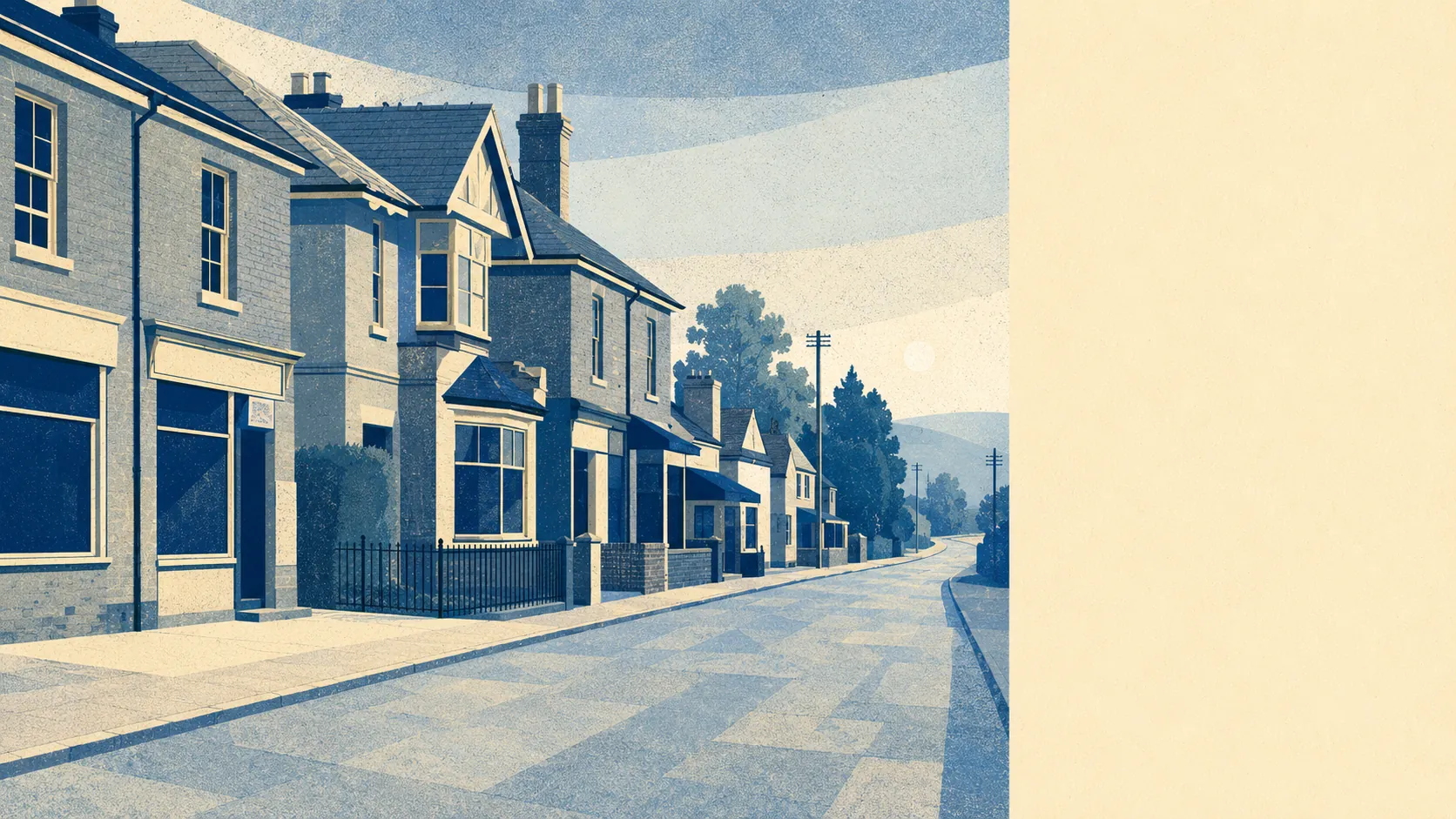
West End, Hampshire is a settled, middle-aged, own-your-own-home sort of place, the kind of suburb people move to and then stop moving. The overwhelming majority own the roof over their heads. The typical resident is well into their forties. Households are comfortable without being showy, and the churn that defines busier neighbourhoods is largely absent here. This is not a place of transient renters and short lets. It is a place of people who arrived, unpacked, and stayed.
Tenure tells the clearest story. Around three in four homes are owned rather than rented, which is a high figure by any national yardstick and the single biggest clue to who lives here. Private renting accounts for only about one in seven homes, so the rental market is a thin sliver rather than a driving force, and the streets carry the stability that comes with ownership. People here have skin in the game, and they mow the verge accordingly. If you are looking to rent, you will find something, but you will be shopping in a small pool.
The age profile matches the tenure. The typical resident sits at around forty-seven, which places West End firmly in established-family and settled-adult territory rather than young-and-transient. The prime early-career band of twenty-five to forty-four makes up only about a quarter of the population, so this is not where people come to start out. It is where they come once the starting-out is done. The overall shape is of a place skewing older and calmer, with grown children and empty nests as common as buggies.
On money, the household income here runs to around £57,000 in a typical case, which is comfortable-professional territory rather than wealth that announces itself. It is enough to buy the settled suburban life West End sells and to keep it ticking over, without the flash of somewhere richer. A shade under a third of adults hold a degree, which fills in the same picture: solid, educated, unshowy prosperity.
The household make-up is a mix that leans quiet. About three in ten homes are single-person households, a good number of those older residents living alone, which is what you would expect in a place with this age profile. Couples with children make up roughly one in six homes, and lone-parent families a smaller share of around one in fourteen. The result is a neighbourhood that is neither a family-only enclave nor a retirement zone, but a blend of the two, with enough of everything to keep the schools full and the streets quiet.
The verdict is the strongest thing West End has going for it. The people are its best feature: a stable, well-off, low-turnover community of owner-occupiers who treat the place as a home rather than a stepping stone, and it shows in everything from the kept gardens to the low churn. If you want neighbours who stay long enough to learn your name, this is exactly the sort of place that delivers them.