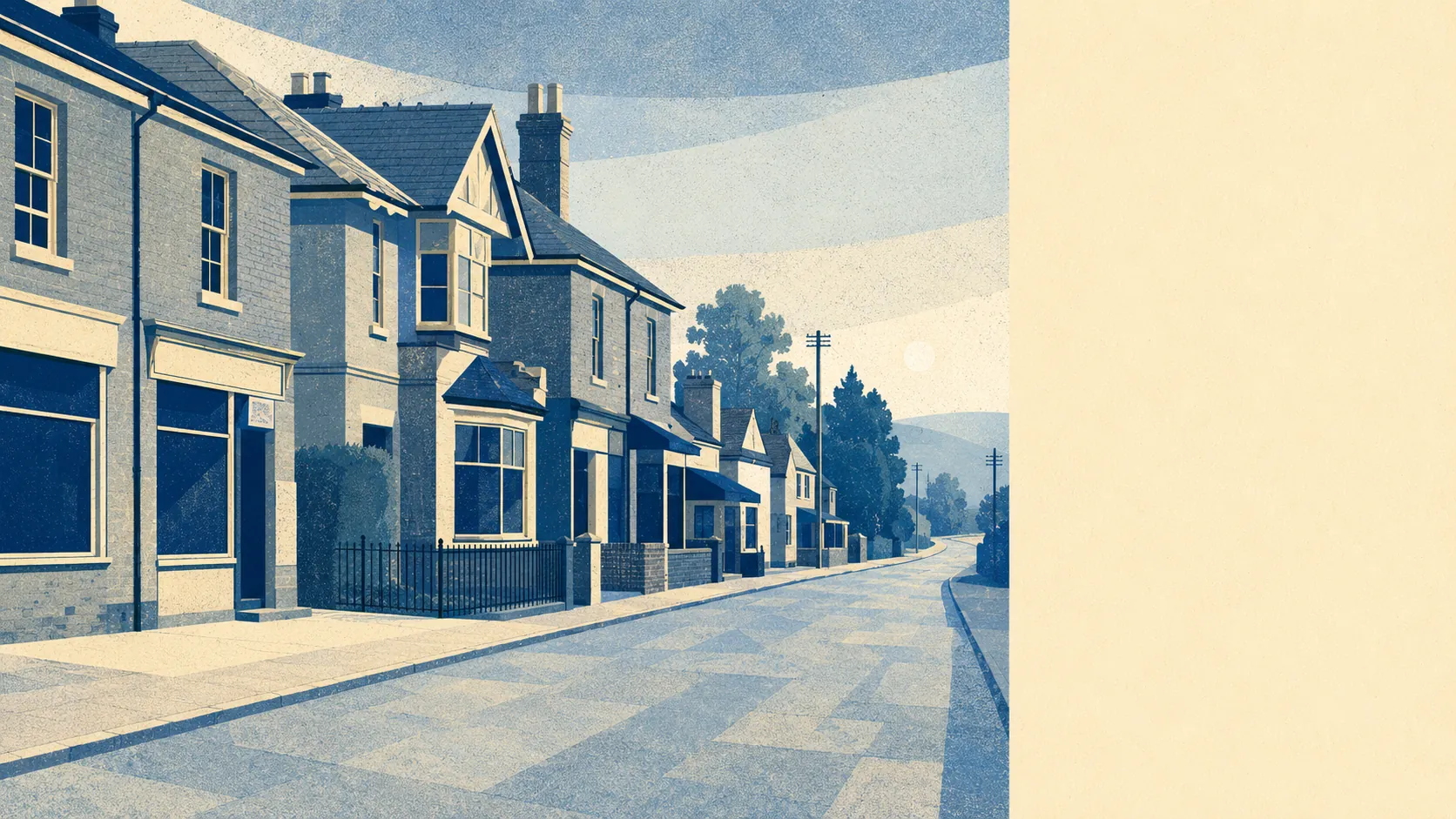
West End, Hampshire is connected the way a car-owning suburb is connected, which means well enough if you drive and awkwardly if you do not. There is no railway station in the village, and next to nobody here commutes by train, the two facts feeding off each other in the usual loop. The roads do the heavy lifting instead, with the town centre reachable in a little over ten minutes by car and Southampton sitting close by for everything the village does not have. Broadband is the quiet strength that props the whole thing up. This is a place built around the driveway and the home office, not the platform.
Rail is the honest weak spot. West End has no station of its own, so the nearest trains mean a drive first, to lines running from Hedge End, Southampton Airport Parkway or Southampton Central. From those you can reach the wider network and pick up direct trains to London, but the getting-there tax is real, and it explains why barely a fraction of one in a hundred residents uses rail to get to work. Buses exist without pretending to be a lifestyle. There are around forty bus stops scattered across the area, yet under one in fifty people rely on the bus for the commute, which tells you the service is a backstop rather than a habit. Public transport here is something you use when the car is in the garage, not something you plan a life around.
Broadband is where West End quietly redeems itself. Gigabit-capable connections reach roughly nine in ten homes, and faster-than-basic coverage is close to universal across the parish. For a place whose train options are thin, that matters more than it sounds, because the fastest way out of West End for a great many residents is not a road or a rail line at all. It is the wifi. A settled suburb full of people who work from home cares far more about upload speed than train times, and on that measure the village is genuinely well served.
Put together, what this means for a typical week is simple. If your work is at a desk in a spare bedroom, West End is superbly connected and you will barely notice the transport gaps. If your work is in the town centre, the car gets you there in around ten to fifteen minutes and the whole thing is painless. If your work is in London or anywhere that demands a daily train, you will drive to a station, resent the extra twenty minutes on each end, and eventually either move closer to a platform or stop commuting altogether. The motorway and the nearby city are close enough that a driver never feels stranded, but the person without a car in the household will feel the pinch quickly.
The verdict is a middling one, and fairly earned. West End is decently connected by road and genuinely well connected by broadband, but its lack of a station and its thin bus use drag the overall picture down to average at best. Fine if you drive or work from home. Frustrating if you were counting on public transport to do the work for you.