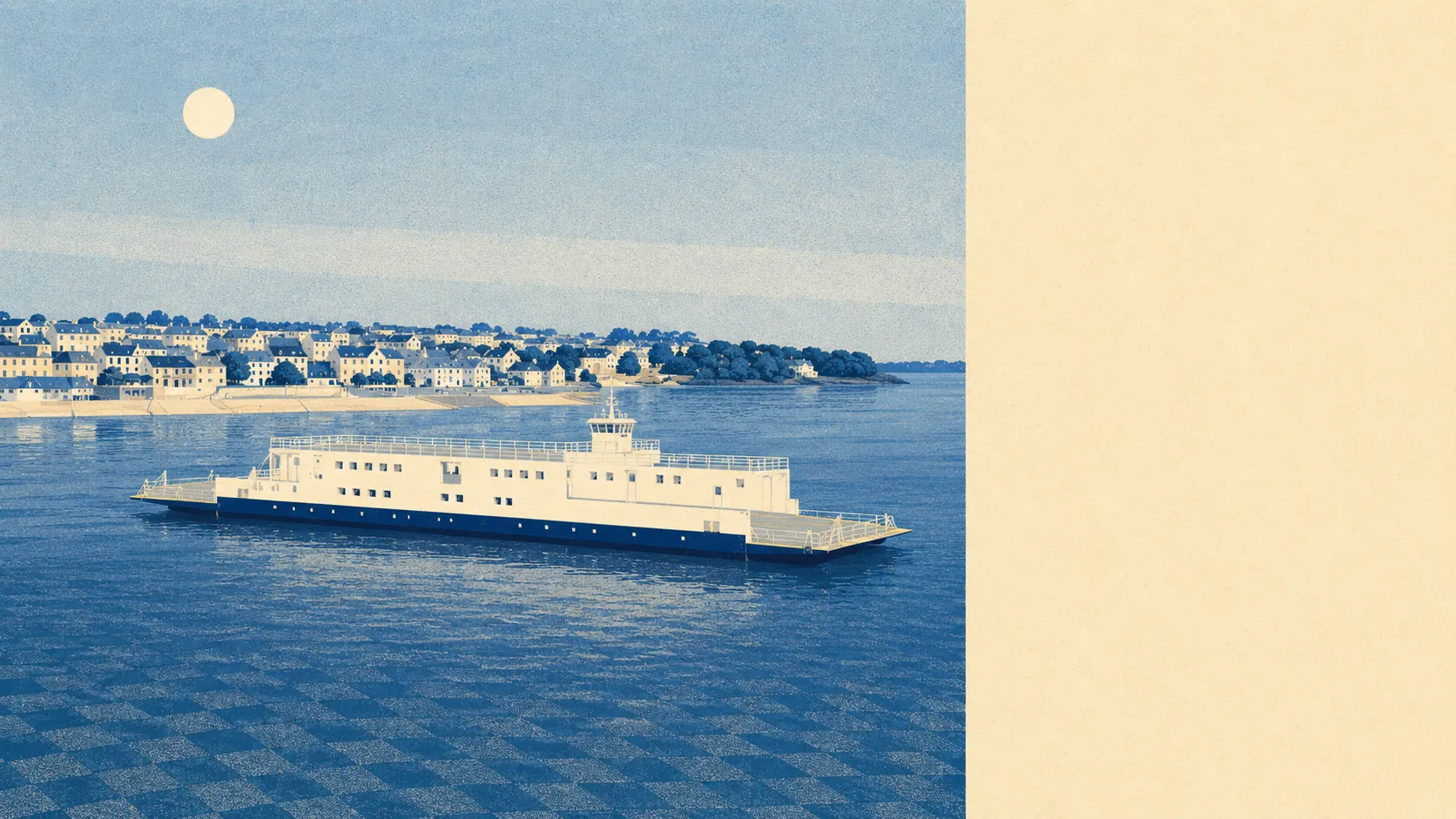
About £210,000 for a typical one, which in a coastal Cornish town is the sort of number that makes people check they read it correctly. Terraces go for less than that. Detached houses go for a good deal more. Most of the town sits in the two cheapest council tax bands. This is a place where the sea view has never been priced as a luxury item, because the thing you are looking at is a dockyard.
Land Registry figures for the year to May 2026 put the median sale at £210,000 across 77 completed sales. The split by type does the real work: terraces at around £190,000, semis at roughly £222,500, detached houses at about £342,500, and flats at around £155,000. Terraces made up the bulk of the market with 35 sales, semis 22, detached 12 and flats 8. That is a market with genuine depth at the affordable end and a thin, expensive top layer, which is the opposite shape to most of the Cornish coast.
The published house price index for the area recorded a rise of about 4% over the twelve months to May 2026, with the average price sitting near £280,000 and a five-year change of roughly 11%. Flats went the other way by a fraction of a percent over the same twelve months, which is small enough to be noise rather than a story. Nobody should read either figure as a forecast.
Council tax is where the affordability stops being theoretical. Band B is the most common band, and around 58% of dwellings sit in band A or B. For comparison against your own bill, the band D annual charge runs to roughly £2,590, with band A at about £1,730. Most people here are paying meaningfully less than the band D figure, which is not something you can say in many places within sight of a city.
Renting is measured at the Cornwall level rather than the town's own, so treat it as the regional picture: typical private rent across the Cornwall area is about £1,000 a month. By size, that breaks down to roughly £690 for a one-bedroom, £880 for two, £1,080 for three and around £1,510 for four or more. These are mean figures from the national rent index rather than a middle value plucked from listings, and there are no separate studio or room rents to give.
Against local earnings, the arithmetic is unusually kind. Modelled household income for the financial year to March 2023 came to about £49,700 gross, before tax. Set that against a £210,000 median and Torpoint lands in the category of places where an ordinary two-income household can realistically buy the standard house rather than the compromise version of it. That is rarer on this coastline than the brochures let on.
Measured by floor space, the sales that could be matched to an energy certificate came out at a median of about £2,885 per square metre, covering roughly 86% of them, on a typical floor area of around 75 square metres. Seventy-five square metres is a modest but properly liveable house rather than a flat pretending to be one.
The bedroom mix backs that up. Census 2021 has about 48% of households in three-bedroom homes, roughly 29% in two, around 13% with four or more, and about 10% in one-bedroom accommodation. This is a three-bed town. If you are hunting for a large detached property, the stock exists but it is the minority, and the pricing reflects the scarcity rather than any particular grandeur.
On cost, Torpoint is one of the genuinely strong cards in its hand. You get a real house, in a real town, with water on three sides, for money that would buy a flat with a shared bin store across the estuary.