Yes, but the old town will make you ask first, and it'll read the application closely. Tonbridge has well over a hundred listed buildings. Five conservation areas cover parts of the area. Neighbours file planning applications by the thousand. Freedom here depends on the address: the post-war estates are relaxed, and the historic core is not.
Tonbridge has 146 listed buildings: 2 at Grade I, 6 at Grade II* and 138 at Grade II. Listing covers the whole building, inside and out, so changes that would be routine elsewhere need listed building consent. That includes an internal wall, a replacement window or a new rooflight. Doing the work without consent is a criminal offence, not an admin slip. Buyers who fall for a timber-framed house on the High Street should cost the consents before the kitchen.
There are 5 conservation areas in and around the town: Tonbridge itself, Quarry Hill, Haysden, Coldharbour at Hildenborough and North Frith at Hadlow. Conservation area status doesn't freeze a house, but it brings extra control over demolition, trees and changes that can be seen from the street. Some works that would normally go ahead without an application may need one here. A two-storey side extension that sails through on an estate can turn into a long exchange of letters about brick bond on Quarry Hill.
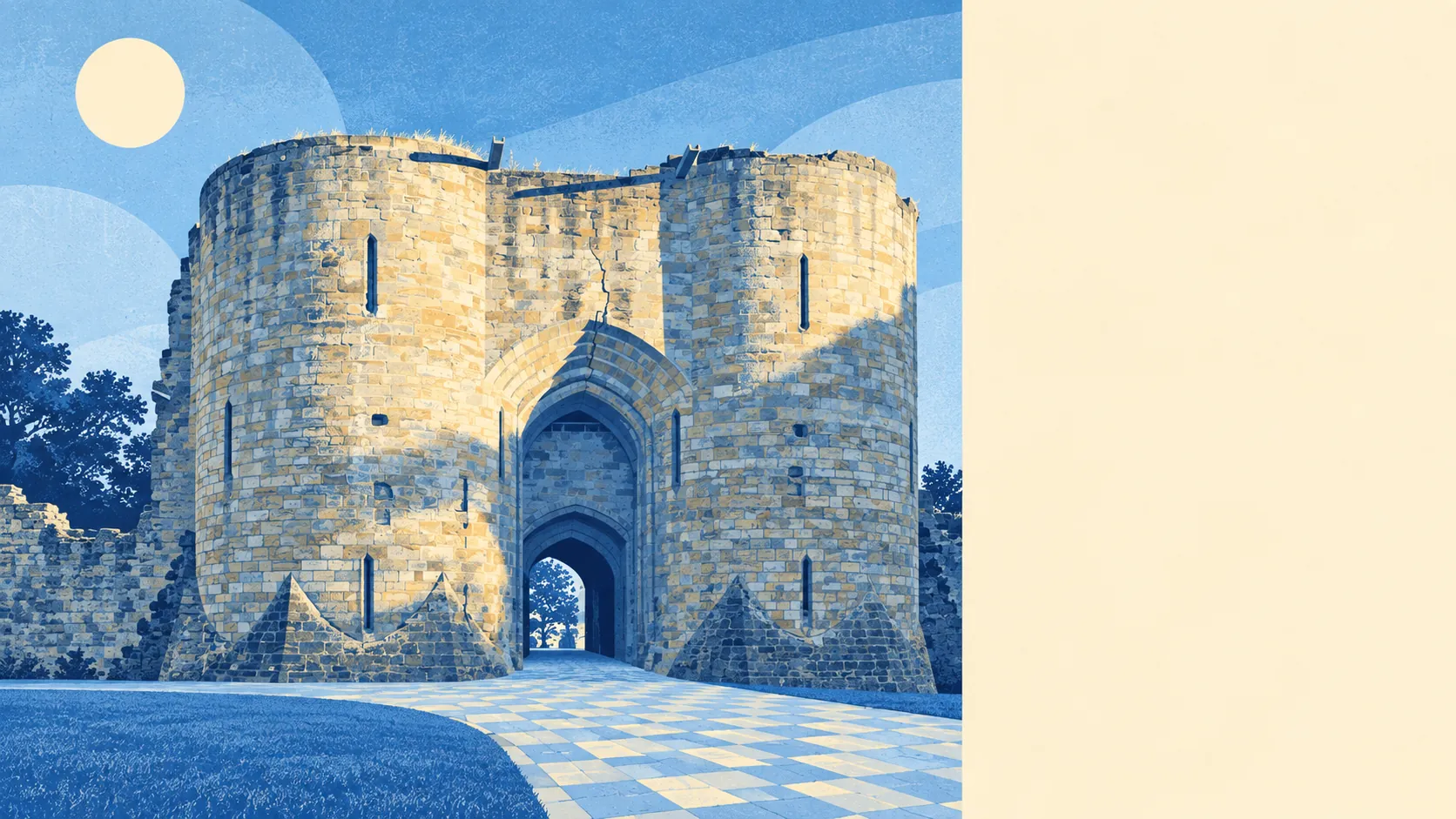
Three scheduled monuments sit in the area, including the Castle Hill earthworks and the town banks that are all that survive of the old defensive ditch. Scheduling is the strictest tier of protection there is. It matters mainly if you're digging near one, and if your garden backs onto one, a planning officer won't be the only person you talk to.
None of this stops people building. There were 7,344 planning applications in the area between March 2024 and June 2026, and 3,199 in the most recent twelve months. That doesn't tell you how many were approved. It does tell you the loft conversion three doors down is not a coincidence, and that your neighbours have had plenty of practice writing objection letters.
The ground adds its own condition. The British Geological Survey's published shrink-swell hazard reaches class 3 in parts of Tonbridge, and about 26% of the area sits at that class or above. Clay soils like that expand when wet and shrink when dry, so foundations for an extension may need to go deeper than standard, especially near trees. Have a structural engineer look at the ground before an architect draws the orangery. It's cheaper than finding out from a crack in the new wall.
In practice, an ordinary post-war semi outside the conservation areas can often take a rear extension or loft conversion under permitted development, subject to the usual limits and a lawful development certificate if you want certainty. A listed building or a house in a conservation area has much less room, and the first step there is a conversation with the council, not a builder's quote. Check the address against the listing and conservation area maps before you make an offer. That beats learning the rules once you're on first-name terms with the planning officer.
Your freedom to extend in Tonbridge is below average. On an estate, extending is a form to fill in. In the old town, it's a negotiation.