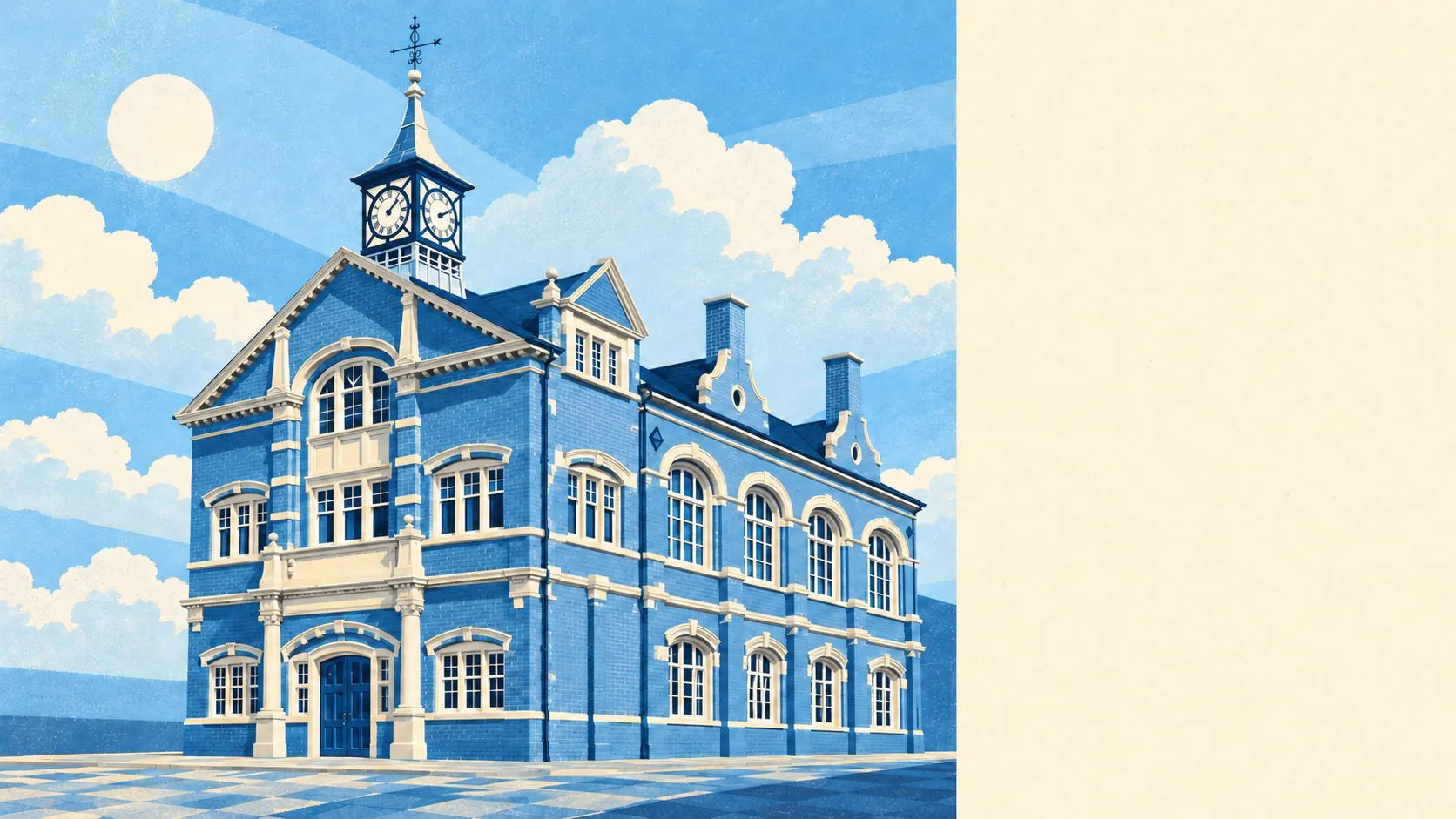
Thame's strongest asset is the people already living in it, and they plan on staying. Seven in ten own their home. Four in ten have a degree. Hardly anyone reports bad health. For a buyer, that means neighbours with a long-term stake in the street, who will also notice if the hedge goes untrimmed.
Home ownership runs at about 71%, and the typical resident is 44. The Office for National Statistics models median gross household income at around £72,000 for the financial year to March 2023, before tax. On the government's deprivation index, Thame's neighbourhoods average in the ninth of ten bands, close to the least-deprived end of England, and the 2025 index put the town exactly where the 2019 one left it. About 86% of residents describe their health as good or very good. Even the kitchens behave, with 78% of the 78 rated food outlets holding the top hygiene score.
Thames Valley Police recorded about 49 crimes per 1,000 residents in the year to May 2026, level with South Oxfordshire's published rate of 49. Violence and sexual offences make up 37% of that. It's a broad legal category that includes common assault without injury, and it runs close to the England and Wales share of 35%. Shoplifting (10%) and public order offences (10%) come in a little above their national shares, and anti-social behaviour well below. Across the whole force, which covers far more than Thame, 9% of crimes led to a charge, against 12% nationally, putting it 37th of 42 forces. Thame's crime is mostly the kind a busy high street attracts, and the shoplifters seem to agree with the shoppers about which one to visit.
Water is where Thame does worst. About 19% of the town's postcodes carry a high reading on at least one Environment Agency flood indicator, surface water included, and another 22% a medium one. In the river-and-sea flood zones the footprint is tiny, well under 1% in zone 2 and none in zone 3. The single recorded flood event in the Environment Agency's records dates from December 1992, when the main river overtopped its channel. So the risk is mostly rain with nowhere to go, and a listing that says "outside the flood zone" is describing the river and saying nothing about the drains.
Commuting by train is close to nonexistent: under 1% of working residents used it at the last census, while about 41% drove and another 41% worked from home. The nearest station is Haddenham & Thame Parkway, just over the county line in Haddenham, and the M40 is reached at junction 7 at Milton Common. Buses serve 56 stops, with an average of 38 departures each weekday and a weekend service at 94% of them. The Department for Transport's 2019 model puts the nearest hospital about 28 minutes away by car. About 93% of premises can get gigabit broadband, so the internet made it all the way into town, which the railway never managed.
Thame has 174 listed buildings. Two are grade I, 11 are grade II*, and the rest are grade II. They include the Spread Eagle Hotel, the Prebendal and the Church of St Mary, and there are two conservation areas, Thame and Moreton. Owning one of the older buildings means getting listed building consent for windows, doors and much of the interior. On the older streets, a new front door is a planning matter.
The Land Registry recorded 169 sales in the twelve months to May 2026, at a median of about £423,000. Detached houses went for around £644,000, semis £473,000, terraces £375,000 and flats £253,000. Band C is the most common council tax band, and bands A and B together cover only about 15% of homes, so South Oxfordshire's valuation list doesn't give you many cheap places to hide.
Typical private rent across South Oxfordshire is about £1,380 a month (April 2026). That's a district-wide average from the Office for National Statistics, so Thame's own streets could sit on either side of it.
The council tax valuation list, which covers every dwelling, shows a mix that splits roughly evenly between houses. Terraces make up 29% of homes, detached houses 24% and semis 23%, with flats at 18% and bungalows at 7%. Only 14% were built before 1930, and most homes with an energy certificate date from the post-war decades. About 60% of those certificated homes are rated C or better. Around 81% of households heat with mains gas and 7% with electricity alone. The medieval town centre is the shop window, but most people go home to something with cavity walls.
Thame has three primary schools: Barley Hill, John Hampden and St Joseph's Catholic Primary. Pupils at the local primaries average a maths score of 105 in the end-of-primary tests. Lord Williams's School, the secondary, records an average Attainment 8 score of 46. It began as the grammar school set up under John Williams's will in 1559 and became a comprehensive in 1971. Across Oxfordshire, Ofsted has graded 108 of 121 settings good or outstanding. John Hampden was educated at that grammar school and, after Chalgrove Field in 1643, came back to Thame to die of his wounds, which is old-boy loyalty taken quite far.
Green space is about 140 metres from the average front door, and water about 450 metres away, with the River Thame running along the north side of town. The Phoenix Trail, the cycle path laid on the old railway line, is about 530 metres away on average. The page also covers Postcombe, out on the A40 towards the Chilterns, and Towersey, which was moved from Buckinghamshire into Oxfordshire in a boundary swap without anyone packing a box.
The violinist Alfredo Campoli retired here, and Robin Gibb lived at the Prebendal and is buried in St Mary's churchyard. Thame has a habit of being where the touring stops.
Thame works for buyers who drive or work from home, want a working high street, and like being surrounded by owners who aren't going anywhere. Anyone who needs a train from their own doorstep, or wants a cheap starter flat, should look somewhere else, and so should anyone set on a low-lying garden on a surface-water route.
Living here, you join a community that owns its homes, stays healthy and keeps its kitchens clean, and that steadiness is the main thing your money buys. Overall, Thame is better than average. Its one real weakness is rainwater that has nowhere to go, and it makes up for it with neighbours who have every reason to keep the place exactly as it is.