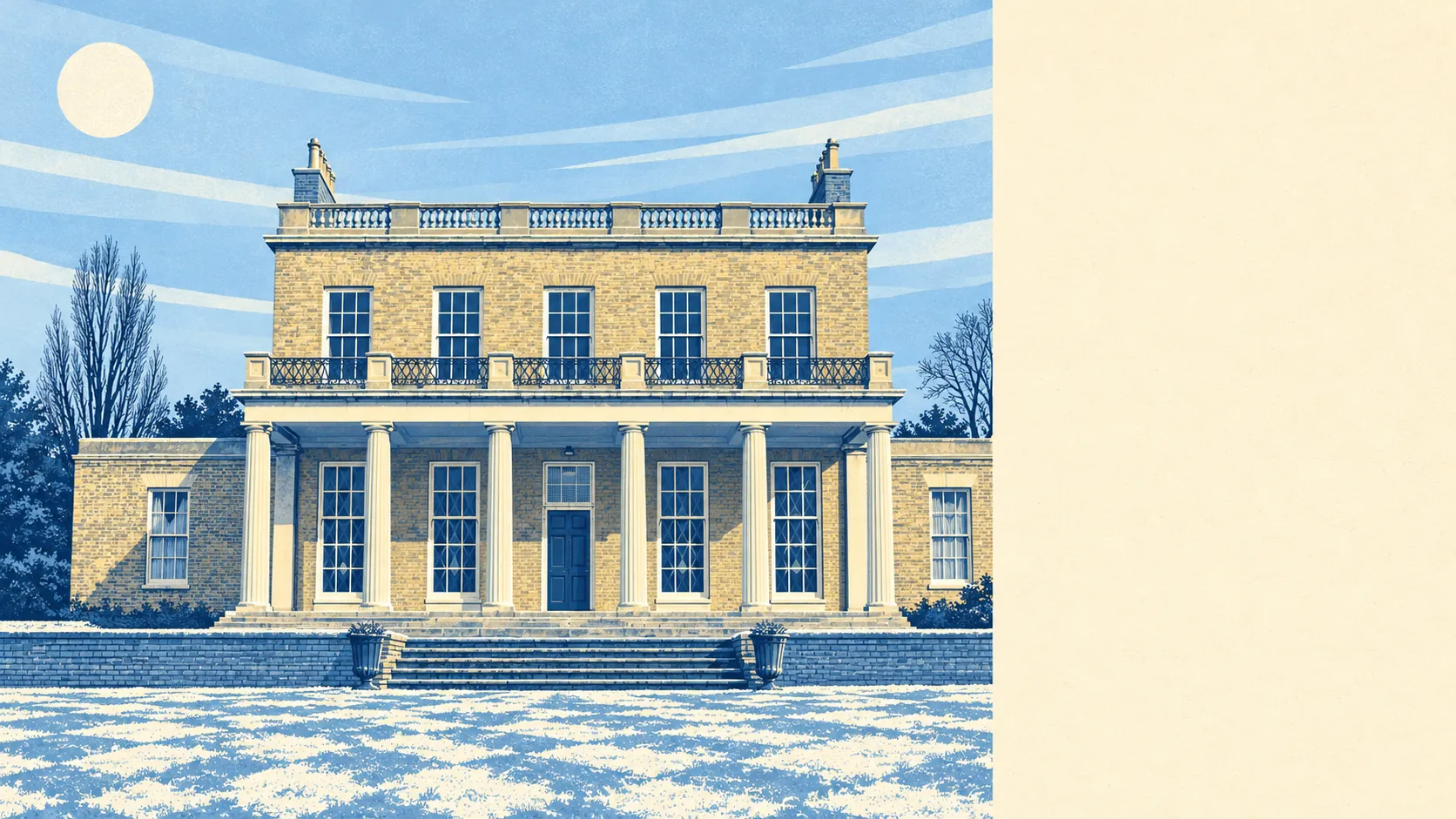
You can extend a home in Stoke Newington, but expect to ask permission for most of it. The area is thick with listed buildings. Conservation areas cover much of the map. Most homes are flats, which have the least freedom of all. Hundreds of neighbours apply every year, so it can be done, but it comes with paperwork.
Historic England lists 268 buildings in the area: three at Grade I, 14 at Grade II* and 251 at Grade II. Listing protects the whole building, inside and out, so changes to a listed home need listed building consent on top of any planning permission, and works that would be routine elsewhere, from windows to internal walls, come under scrutiny. With 268 of them, there is a fair chance one is on your street or is your house.
The area's map also takes in 16 conservation areas, among them Stoke Newington, Clissold Park, Northwold and Cazenove, Newington Green (North) and Lordship Park. Inside a conservation area, Hackney Council looks harder at anything visible from the street, and some changes that would go ahead without an application elsewhere need one here. Lady Mary Abney drew up the first detailed maps of the field boundaries here in the eighteenth century, and the council has inherited her interest in where the lines go. Check Hackney's conservation area map and the planning history of the exact address while the sale is still negotiable.
The neighbours are not put off. Hackney's planning register shows 1,776 applications in Stoke Newington between March 2024 and June 2026, 746 of them in the last twelve months. That is plenty of people trying to change their homes, and plenty of paperwork on the go.
The ground has a say too. The British Geological Survey puts the area's shrink-swell hazard at class 3, and all of the area reaches that class. Clay that swells when wet and shrinks when dry moves foundations with the seasons, so an extension here needs foundations taken deep enough and a structural engineer's view before anything is dug. The clay is not a reason to give up. It is a reason not to build on cheap footings.
Sixteen listed buildings in the area are on Historic England's Heritage at Risk register. Those are buildings in poor condition whose repair may qualify for grant support and will be closely watched. They are no threat to the buyer of an ordinary house nearby. They do show that the oldest buildings here get the same scrutiny a new back extension will.
In practice, some changes to a house outside a conservation area can go ahead without full planning permission. Anything in a conservation area, any listed building and most flats, which make up about 79% of homes here, will usually need an application. Building in Stoke Newington is a matter of applications.
Freedom to extend is limited in Stoke Newington. The extension is possible if you have patience and good drawings, and anyone who likes to build first and ask later will find the place a poor match.