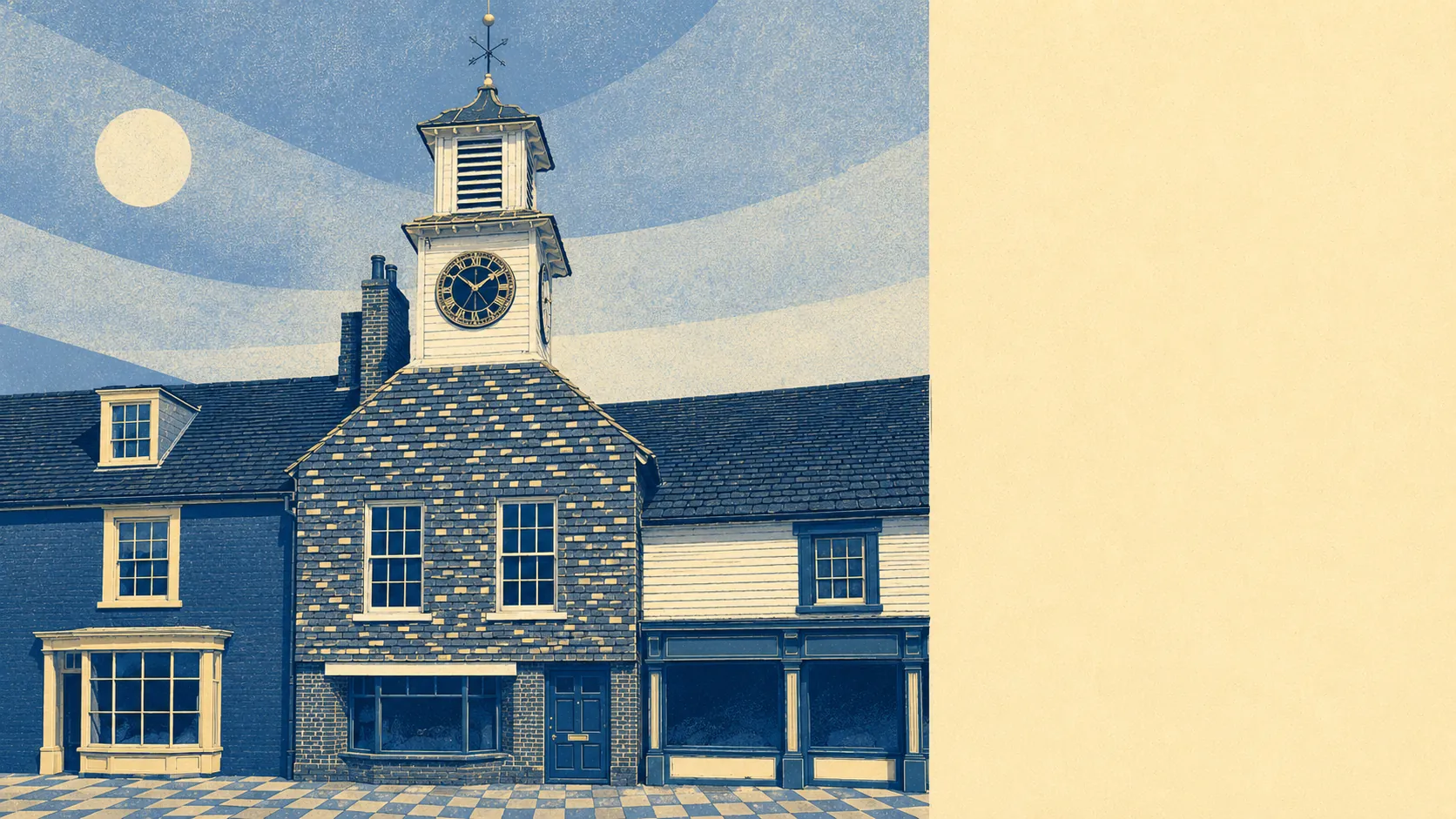
Steyning is what happens when a medieval port silts up and the town decides not to bother finding a new plot device. The River Adur stopped being navigable in the fourteenth century. The railway arrived in 1861 and left in 1966. What's left is a small West Sussex town at the foot of the South Downs, four miles inland from Shoreham, doing what it has quietly done for the best part of a millennium. Not going anywhere. That's the whole appeal.
The housing is mostly houses, which sounds tautological until you see how many places advertise themselves as towns and turn out to be flats. Getting on for two-thirds of the stock here is houses, another one in seven is bungalows, and only around one in five is a flat. Energy performance sits where you'd expect for a Sussex town with real history in it: about four in ten homes rated C or better, roughly the same again sitting on a D, and close to one in six down at E or worse. The Victorian and pre-war cottages, the pre-1900 stock making up nearly one in five homes, are doing what old buildings do to a heating bill. You get what you pay for. You also pay for it every winter.
Sale prices are not a bargain and don't pretend to be. The typical sale over the last twelve months landed at around £471,000 across roughly seventy transactions, which is a thin market by any measure. Split by type the honesty comes out. Flats are going for around £257,000, terraces for around £415,000, semi-detached houses for around £445,000, and detached houses for around £625,000. Council tax lands in Band E for the modal home and only about one in seven properties sits in Band A or B, which is another way of saying this is not where you find a cheap house. If your budget is well short of the typical flat price and you want something with a garden, you are shopping in a different town.
Rents follow the pattern. The typical private rent across the Horsham area is about £1,450 a month, up around four percent on the year. That is a Horsham-wide number rather than a Steyning-specific one, so treat it as the shape of the market rather than the exact price of any particular street. In practice, Steyning rents will sit somewhere near that figure, drifting up for anything with period features or a Downs view.
On safety the town is quietly excellent. Around forty-five crimes per thousand residents over the last year, roughly twenty-one percent below the Horsham average. That is a published rate, not a back-of-envelope calculation. It puts Steyning in the category of places where the safety question isn't really the question, and the actual question is whether you can afford to live somewhere this quiet.
Getting anywhere else is the price you pay. There is no station in Steyning; the nearest is Shoreham-by-Sea Rail Station, five or six miles down the road. Fewer than one in a hundred residents commutes by train and only about one in a hundred by bus, because the practical answer is a car and around forty-four percent of workers use one. The good news, if you work from home, is that over four in ten already do, which is one of the highest home-working shares you'll find outside inner London. Gigabit broadband reaches around eighty-two percent of postcodes and superfast covers the lot, so the working-from-home part isn't a compromise. The commuting part is.
Flood risk in the town is manageable rather than absent. Around one in ten postcodes carries a high surface-water flood indicator and about one in seven carries a medium one, which is the River Adur reminding you it used to be a port. Fluvial zones are small. Green space is the compensating gift. Average distance to green space is about a hundred and fifty metres and there are around sixteen greenspaces within a kilometre of the typical home, which is what happens when your town is folded into the South Downs. The prehistoric hillforts, the Bronze Age burial mounds on Steyning Round Hill, the ruins of Bramber Castle. The scenery is not a marketing claim.
The heritage constraints are real and worth understanding before you buy. There are 117 listed buildings in the area, two of them Grade I and seven Grade II starred, and the town centre sits inside the Steyning Conservation Area with a second conservation area covering neighbouring Bramber. What that means practically is that if you want to swap the windows on your High Street cottage for anything other than what's already there, you'll be having a conversation with the planning department. Extensions get complicated. UPVC is a fantasy. This is the deal.
The neighbourhood character is what the numbers describe when you stop looking at them individually. Around seventy-seven percent of homes are owner-occupied, the median resident is fifty-four, and the typical household income is a shade over £61,000. That is not a young town. It is a settled town, where people bought a place and stayed. The single-pensioner household share is over twenty percent, which is either a warning or a recommendation depending on what stage of life you're at. About one in three households is a single-person household.
The page here also covers Ashurst and Botolphs, two of the smaller settlements folded into the same postcode district. Ashurst is a village about two miles west, with a twelfth-century church where Laurence Olivier's funeral was held and a pub called the Fountain Inn. Botolphs is a Downs-side village a mile and a half southeast of the town centre, on the road between Steyning and Coombes. Both are quieter than Steyning proper, which is quite the achievement.
Who it's for. If you are past the school-run years, work from home or don't mind driving, and want to buy a house with real history in it in a place that has been staying itself for a thousand years, Steyning is exactly what you'd design if you were designing this life from scratch.
Who it's not for. If you want to get on a train, want a five-bedroom detached for less than the local detached median, or want the shape of your evenings decided by anything other than the pub and the Downs, this is not your town. Buy in Shoreham. Buy in Worthing. Buy anywhere with a station.
The town has produced its share. Sally Gunnell grew up here. Julia Donaldson wrote The Gruffalo here. Maisie Peters is from here. E. M. Delafield was born here. Peter Carter-Ruck, the libel lawyer who put the fear into Fleet Street, was born here in 1914. Charles Stewart Parnell married Kitty O'Shea here in 1891 and destroyed his own career in the process. Steyning has been quietly minding its business while more famous places burned themselves out.
Above average, and honest about the trade. The local community and the environment do most of the heavy lifting, five out of five on both. The price is what you pay to be here, and two out of five on value is the honest score. If the maths works, the life works. If it doesn't, you're not going to argue Steyning into affordability. It's been here since before the Normans and it doesn't need convincing.