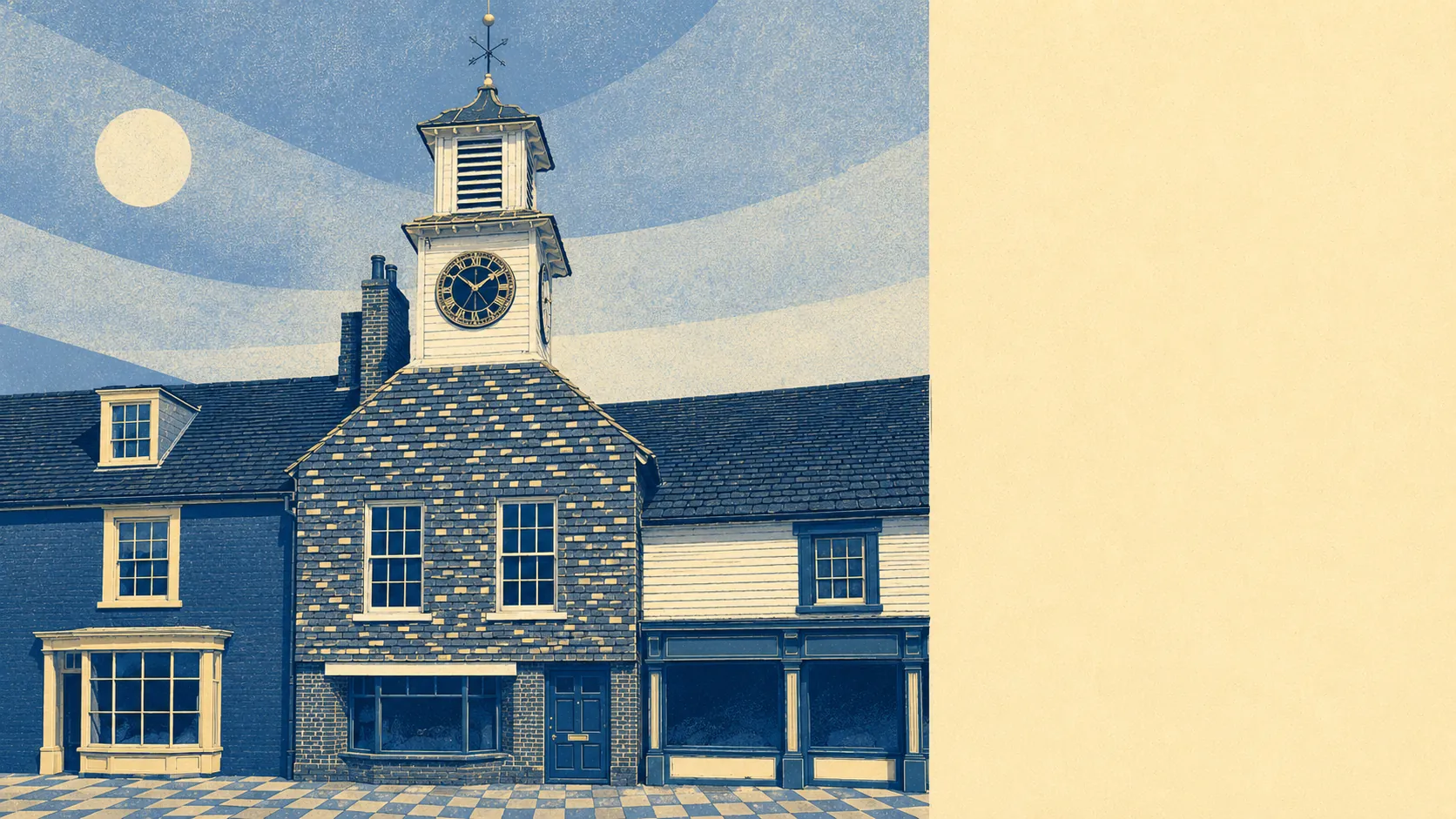
Depends on which house you bought. Steyning has 117 listed buildings, two conservation areas covering the town centre and Bramber, and one scheduled monument within the boundary. Around 191 planning applications went in over the last twelve months. The Horsham planning department is active and attentive rather than fast. Whether the extension you have in mind is straightforward, needs consent, or is a non-starter is decided less by what you want and more by the polygon your title deeds sit inside.
The listed-building picture is dense for a settlement of this size. There are 117 listed buildings in total: two Grade One, seven Grade Two Starred, and 108 Grade Two. That is a high concentration for a town of just under six thousand residents, and it reflects a High Street that stopped being modernised sometime after the Victorian period and mostly forgot to resume. The named listings include Brotherhood Hall on Church Street, Chantry House, Charlton House, Penfold House, Springwells Hotel, the Stone House, St Mary's Guest House, the terraces at 61 to 65 High Street, and both parish churches of Saint Andrew and Saint Mary. Any change to the external appearance, most changes to the internal fabric, and some changes you would not have thought needed permission at all, require listed-building consent. That is a legally-defined process separate from planning permission, and it applies even to work that would otherwise fall under permitted development. Windows, doors, chimneys, roofs, internal partitions, occasionally even paint colour, all sit within scope for a Grade Two listing. For Grade One and Grade Two Starred, the scope is broader still. Buying a listed property because you loved the beams is a decision you own together with English Heritage for the rest of your ownership.
Two conservation areas cover the ground here. The Steyning Conservation Area takes in the historic town centre. The Bramber Conservation Area covers the neighbouring village of Bramber, which sits at the south end of the district under the ruins of Bramber Castle. Conservation-area status brings a set of consents that do not apply outside it. Some permitted-development rights are automatically withdrawn, which means work that would be automatic in an unconstrained postcode requires householder planning consent here. Demolition of buildings above a certain size needs consent even when the building is not listed. Tree work of any significance requires notification, which is a way of saying the tree in your garden belongs partly to the community's idea of the street. Some conservation areas across the country also carry Article Four Directions, which strip further rights on specific issues such as window replacement or roof material. Whether any Steyning streets carry Article Four is a question for the planning department once the address is identified, because these are property-specific rather than town-wide.
For a house that is not listed and sits outside both conservation areas, the picture is closer to standard. Rear extensions within the usual permitted-development limits are typically achievable without full planning consent, subject to the standard dimension rules and neighbour-notification. Loft conversions, garden buildings, and single-storey side additions of modest scale are typically doable. But even outside the conservation areas, the wider Horsham planning framework applies, and Horsham is not among the more permissive planning authorities in the country. Around 191 planning applications were submitted over the last twelve months, which is an active but not high-volume caseload, which means individual applications get attention rather than being waved through. Budget for time and iterations rather than a one-submission wonder, and expect the design to bend around the character of the street more than around your Pinterest board.
Three out of five on your freedom to alter a home. Steyning is not the town where you buy a Victorian cottage and start knocking through walls on a Bank Holiday weekend. It is the town where you check the listing status, the conservation-area boundary, and the tree preservation orders before you commission the drawings, and where the answer to 'can I extend this' is almost always 'yes, with consent, and with the details doing what the character policy tells them to do'.