Yes, if you want golden stone, quiet, and somewhere to put the car. Three-quarters own their homes. The median resident is in their fifties. Nearly a third work from home, which around here is less a lifestyle preference than a transport solution. Somerton is not sleepy. It is settled, which is a different condition and much harder to reverse.
Start with what the houses actually are. Across every dwelling on the council-tax valuation list for the Somerton area, about 36% are detached, 25% semi-detached, 17% bungalows and 14% terraced. Flats come to around 4%, and that one figure explains more about who moves here than any brochure will. Roughly 30% of the stock went up before 1930, and the town's instinct with any building that outlives its purpose has always been the same: turn it into a house. The medieval tithe barn is housing. The Red Lion, opened as a coaching inn in 1768 and closed in 1995, came back as town houses. Heating is the part buyers underestimate. Only about 50% of homes run on mains gas, so the rest are on oil, electricity, or whatever a previous owner installed with more optimism than research, and about 8% are electric-only. On energy certificates, roughly 50% of certificated homes sit in bands A to C, about 30% in band D and about 20% in band E or worse. A cold band E cottage in a conservation area is a lovely thing to own and an expensive thing to fix.
The Land Registry's last twelve months, to May 2026, records 115 sales across the area at a median of £372,500. Detached property came in at £445,000, semi-detached at £335,000, terraced at £250,000. The detached number is what people mean when they call Somerton expensive. The terraced number is what they point at when they insist it isn't. Council tax sits mostly in band C, with about 25% of dwellings in bands A or B, so the annual bill is not the thing that catches anyone out.
Renting is thinner ground, because the dependable figure is a county one rather than a town one. Typical private rent across the Somerset area was about £990 a month as of April 2026, up about 4% over the year, with a two-bedroom place at roughly £890. Read that as regional weather rather than local forecast. A market town with this few flats does not produce a deep rental market, and anyone hoping to rent for a year while they look around should budget for a longer search than they planned.
Safety is where the area is genuinely, boringly excellent. Recorded crime ran at about 47 offences per 1,000 people in the year to May 2026, roughly 49% below the Somerset average. Burglary accounts for about 6% of recorded crime here against about 4% across England and Wales, which is the ordinary country pattern: far less of everything, and a slightly larger slice of what remains is someone going through a building nobody was watching.
Then comes the bill for all that peace. About 56% of working residents drive to work, while under 1% commute by train and under 1% by bus, which is not a rounding error so much as an obituary. Somerton's own station closed to passengers in 1962 and the line still runs past without stopping. Department for Transport modelling from 2019 puts the nearest town centre at about 19 minutes by car against about 40 by public transport, a doctor at about 11 minutes by car, and a hospital at about 27 minutes by car against about 76 minutes on public transport. There are 79 bus stops across the area averaging about 52 scheduled weekday departures each, and about 71% of them see a weekend service, which beats the rural reputation and is still not a bus anyone would plan a job around. Broadband is the surprise. About 96% of premises can get superfast, about 41% can get gigabit, and nothing in the area falls below the government's minimum standard. Almost every premises gets a mobile signal from at least one operator and about 97% from all of them. The internet turned up decades before the trains will, and that is the whole modern rural bargain.
Water is a live local subject. About 11% of postcodes carry a high rating on at least one flood indicator, surface water included, and about 13% a medium one, which is the honest number for a town perched above the River Cary with the moor spread out below it. On the Environment Agency's river-and-sea flood zones the exposure is far smaller: under 1% of the area, rising to about 3% once the climate allowance is applied. Two flood events are on record, the most recent in 2007 from local drainage and surface water. Green space is the compensation, with the average postcode about 300 metres from it and around 9 separate green spaces within a kilometre, water about 400 metres away. One less romantic item: about 96% of the area sits in radon band three or higher, in the highest band nationally, so a test kit belongs on the moving-in list next to the kettle.
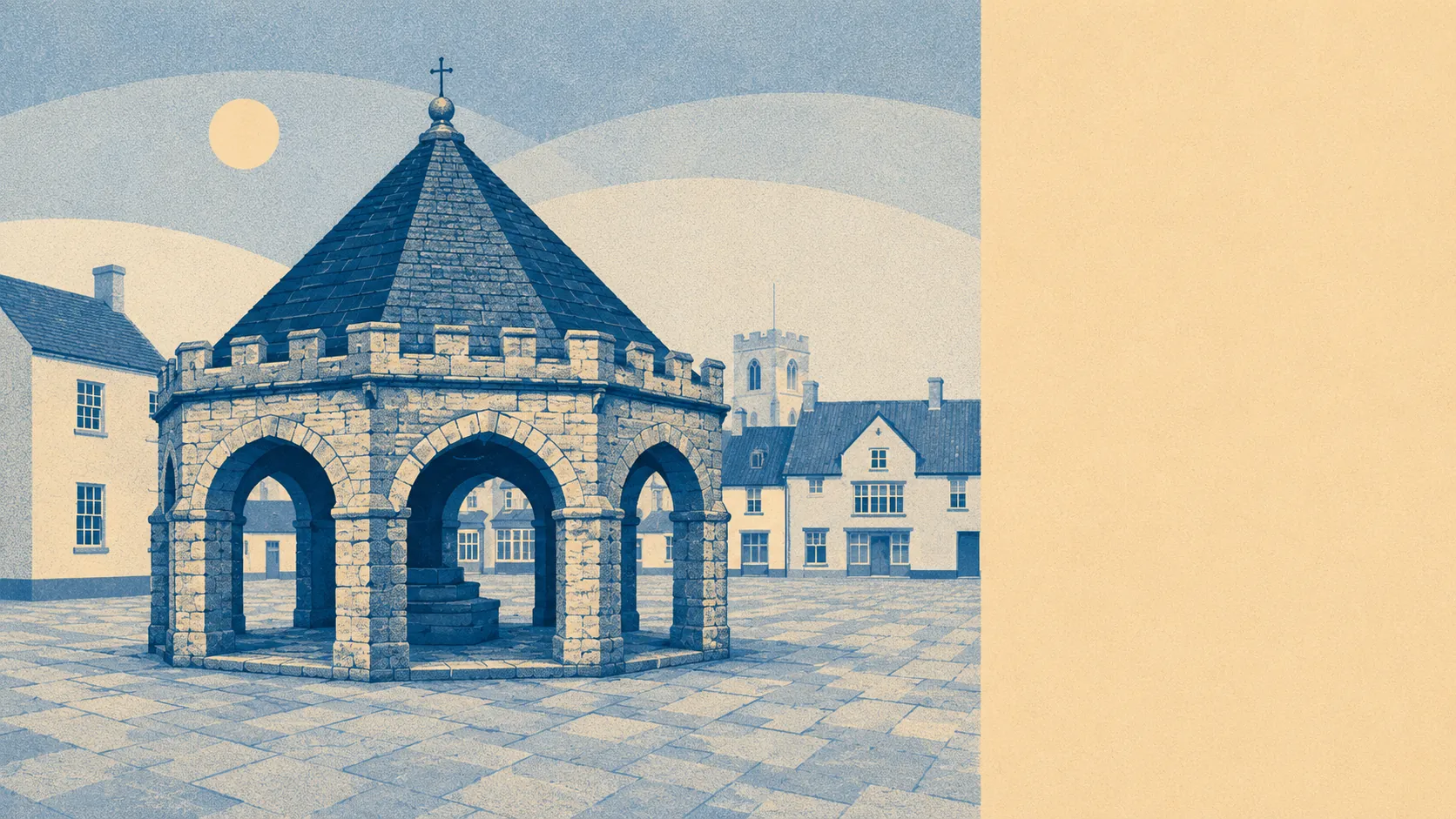
Heritage here is not decoration, it is planning policy. The area holds 385 listed buildings, 4 of them Grade I and 31 Grade II star, along with 7 conservation areas covering Somerton itself, Long Sutton, Kingsdon, Butleigh and the Charltons, and 11 scheduled monuments including the market cross in the square. One building sits on Historic England's Heritage at Risk register. In practice that means replacement windows, solar panels, a wider drive and anything touching a front elevation become a conversation rather than a decision. People buy the golden stone and then work out they are its tenant.
Roughly 76% of households own their home. The median age is 53. Median household income across the area was about £56,400 in the financial year to March 2023. About 28% of households are one person and 17% are a pensioner living alone, while around 55% run two cars or more, which is what happens when the bus is a hobby rather than a service. The same arithmetic carries out into the villages this page also covers, Charlton Adam, Charlton Mackrell and Keinton Mandeville, with fewer shops and more sky.
It suits people who work from home or have finished working, who want a garden and stone walls and a shop they can walk to, and who regard a twenty-minute drive to anything larger as a fair price. Families do well here if the second car is already in the budget.
It does not suit anyone without a car, anyone who needs a train more than twice a month, anyone with a health condition that makes a long hospital run a problem, or anyone who thinks a night out should still be happening at eleven.
The real strength is safety, and it is not close: this is one of the calmer corners of the county by a wide margin, and the green space and the housing back it up. The weak spot is transport and connectivity, where the closed station, the token bus commute and the hospital run do the damage. Somerton is a good place to live for anyone who has already decided that arriving somewhere matters less than staying there.