Yes, and you should expect to explain yourself first. The area carries hundreds of listed buildings and seven conservation areas spread across one small town and a scatter of villages. Householders here apply for things constantly, so this is a slow yes rather than a no. What it is not is a place where you knock a wall through in the spring and think no more about it. Buy the handsome stone cottage and you take on its paperwork along with its roof.
The Somerton area holds 385 listed buildings. Four of those are Grade I and 31 are Grade II star, with the remaining 350 listed at Grade II. Listing applies to the whole building inside and out, so it is not only the frontage that is protected: internal walls, staircases, fireplaces, original joinery and often the outbuildings sit inside the designation too. Listed building consent is a separate process from planning permission, it is needed for alterations that affect character rather than only for the obvious extensions, and doing the work first and asking later is a criminal offence rather than a fine to be budgeted for.
Seven conservation areas cover Somerton itself along with Long Sutton, Kingsdon, Butleigh, Kingweston, Charlton Adam and West Charlton and Charlton Mackrell. Inside a conservation area, ordinary permitted development rights are narrower than elsewhere, consent is generally needed to demolish and to fell or lop trees, and the things people treat as maintenance decisions, roof coverings, render, rooflights, chimneys and boundary walls, become matters the planners get a view on. It is worth checking whether a specific property also sits under an Article 4 direction, which removes further permitted development rights and is decided property by property rather than street by street.
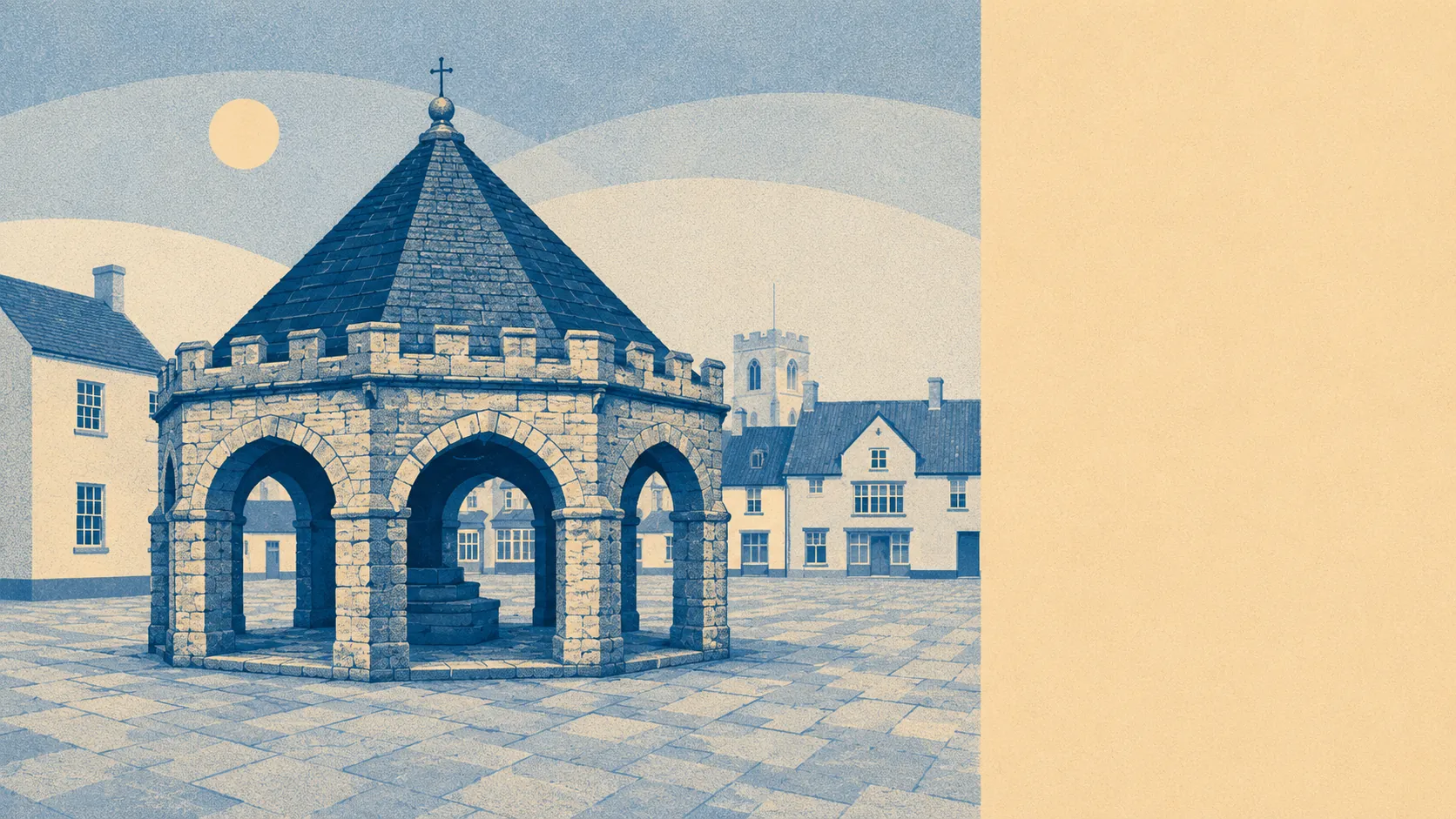
There are also 11 scheduled monuments in the area, including the market cross standing in the middle of Somerton's square. Scheduled monument consent is the strictest tier in the system and it bites on ground disturbance, so it matters mainly to anyone with land adjoining one and a plan involving foundations.
None of this stops people building. Somerset Council's planning register records 315 applications across the Somerton area between April 2024 and June 2026, with 124 of them in the most recent twelve months. That is a live pipeline of extensions, conversions, outbuildings and alterations, which is the only real evidence that matters: the constraints here are procedural rather than prohibitive, and plenty of households work through them every year.
One listed building in the area sits on Historic England's Heritage at Risk register. That is a record of a building in poor condition, which can open the door to grant support and will certainly attract close attention to any repair scheme. It says nothing at all about the ordinary house down the road.
Practically, the split is simple enough. Roughly 30% of the dwellings on the council-tax valuation list here were built before 1930, so a large share of the stock is old, and the older and prettier the house, the more likely it is that consent is required for something you assumed was your own business. A post-war house outside a conservation area behaves like a normal house and enjoys normal permitted development rights. A stone cottage inside one does not. The correct order is to establish the designations on the specific address before exchange, not after the architect has drawn something lovely.
Freedom to alter is the tightest constraint attached to living here, and anyone whose plan involves reshaping a period property should price the consultants and the timescale in from the start. The compensation is that everyone else faces the same rules, which is precisely why the place still looks the way it does.