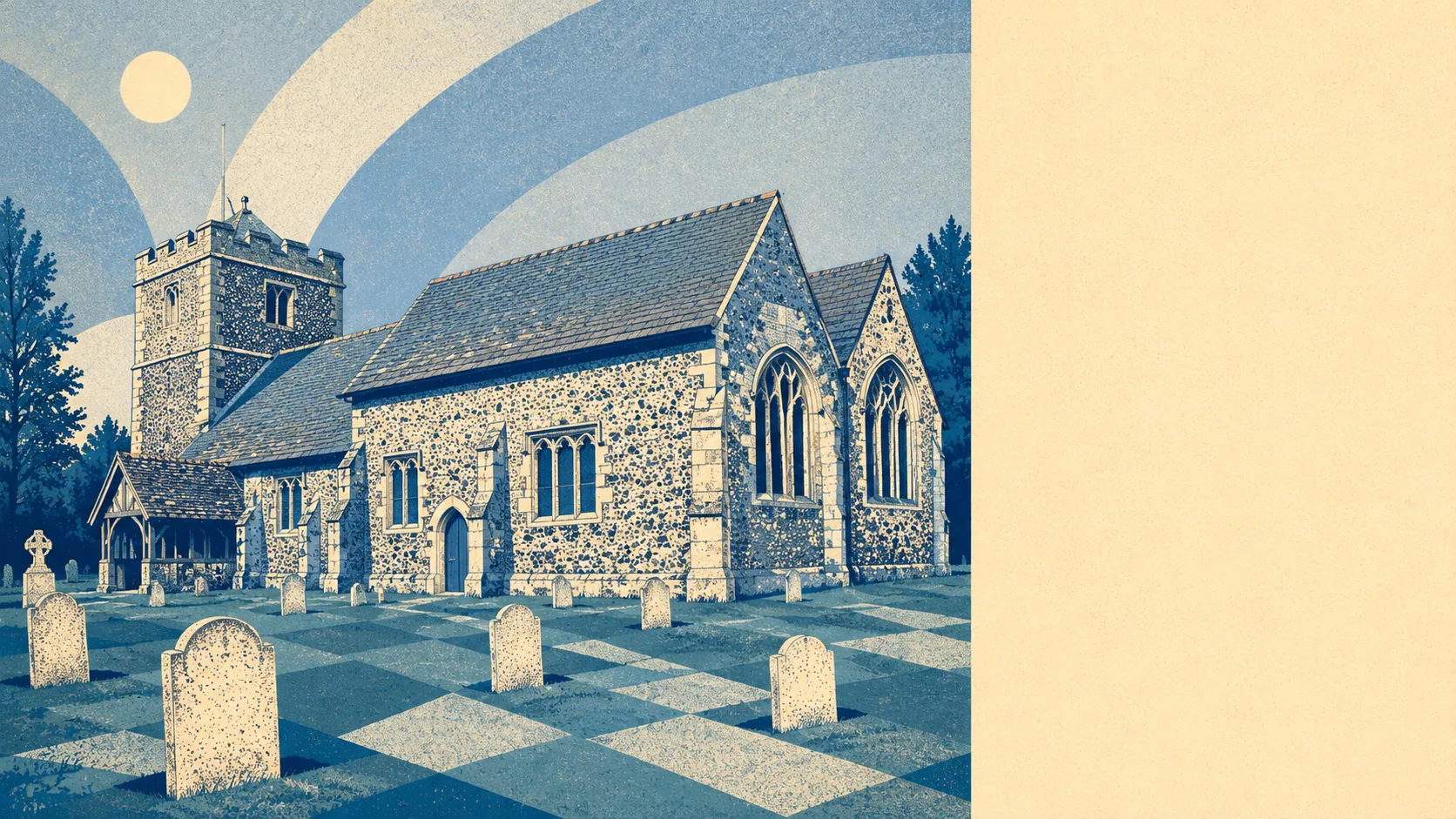
The countryside around Ringmer is the reason most people move here. Green space averages about 170 metres from any front door. Roughly twelve accessible green spaces sit within a kilometre of the average postcode. The parish scatters into hamlets before it stops. This is proper countryside with a village at the middle of it, not a village pretending to be near some.
Access to green space is essentially step-out-the-door. The average postcode sits under two hundred metres from a green space of some sort, and about twelve open spaces sit within a kilometre. Water features follow the same pattern, averaging under three hundred metres away with roughly fourteen within a kilometre. No part of the parish falls inside an Area of Outstanding Natural Beauty on the mapping, and no postcode overlaps a designated Site of Special Scientific Interest boundary, though a Site of Special Scientific Interest with ancient woodland lies partly within the parish. The absence of formal designations across most of the parish reads two ways: the countryside quality here isn't down to a national label drawing the eye, and the practical result is that most of what surrounds the village is workaday farmland, hedgerows and small woods rather than protected landscape.
The character is village-scattered-into-countryside. The parish takes in Upper Wellingham, Ashton Green, Broyle Side, Norlington, Little Norlington and Shortgate as smaller settlements around the main village core, so the map is denser with named places than the road layout suggests. Ringmer sits three miles east of Lewes, which is close enough for a market-town run and far enough that the village keeps its own identity. Glynde and Barcombe are close neighbours and both are conservation areas in their own right, giving the surrounding parishes a heritage weight that isn't confined to Ringmer itself. Glyndebourne is a name most people already know for reasons that aren't about the local landscape, and it sits close enough to be part of the summer rhythm of the area. Ringmer Mill, a post mill that stood on Mill Plain overlooking the village for centuries, stopped working in 1921 and collapsed in 1925, and the mill post is still what a lot of people mean when they refer to that stretch of the local skyline. James Callaghan retired to Upper Clayhill Farm here after his election defeat and lived in the parish until his death in 2005, which puts Ringmer in a small category of villages where a former Prime Minister chose to see out his life without needing to advertise it.
Ringmer's surrounding area is a five-out-of-five, which is a rare score and honestly earned by the density of green space, the scatter of hamlets, and the near-total absence of anything urban within walking distance. The village is quiet at its middle, and it gets quieter the further out you go.