Ringmer is what happens when a village gets stuck three miles from Lewes and decides that's about right. The post mill collapsed in 1925 and the parish never quite recovered its ambition. Around three thousand two hundred people. Roughly four in ten adults have a degree. James Callaghan retired here and stayed until he died. Not a commuter dormitory, not a proper village either. Somewhere in between, and the people who live here mostly like it that way.
The housing stock tells you who the place is for before anyone opens a door. About seven in ten homes are houses, roughly one in seven is a bungalow, and only about one in seven is a flat, which is close to the opposite of what you'd find in Lewes town. The dominant age band is post-war, built between 1950 and 1982, so a lot of what you're looking at is a three-bed semi with a driveway and a garden that someone has extended twice. About one in ten homes predates 1930, and those are the ones the estate agents photograph first. Roughly half the stock sits in energy bands A to C, about a third in band D, and rather more than one in ten in E or worse, which is what happens when you own something old with solid walls and a lot of chimneys.
Typical sale price over the last year sat around four hundred and twelve thousand pounds across thirty-nine transactions, which is a thin market by any measure and means one bad month distorts the picture. The split by type is more useful. Detached houses ran to around eight hundred and fifty thousand, semis and terraces around four hundred thousand, flats around two hundred thousand. So Ringmer has a genuine ladder, unusual for a village. The modal council tax band is D, but there's a long tail into E, F and G, and only about one home in twelve sits in bands A or B. The people at the bottom of the ladder are subsidising the people at the top through a tax system based on values that were fixed decades ago, which is a story that repeats itself across most of the South East.
Rent is the local-authority figure, not the village's own, and the typical private rent across the Lewes area sits at about £1,320 a month. That's what the wider Lewes rental market looks like in aggregate, so treat it as directional rather than precise for Ringmer specifically.
Crime runs at about 54 recorded offences per thousand residents a year, which is a published rate and roughly 24% below the Lewes district average. It is what it says. Ringmer is a safer-than-average slice of a safer-than-average district. The people who bought here for a quiet life got what they paid for.
Schools land in a slightly awkward place because the brief doesn't carry graded Ofsted figures for the primary and secondary in the village, which usually means the inspection profile is either mid-cycle or the schools are relatively small. Key Stage 2 maths average score across the two primaries in the postcode district comes in at 103.5, which is a touch above the national benchmark of 100. Key Stage 4 attainment eight sits at 47.6, which is close to the England average for state secondaries. There is a village primary and a village secondary, and Chailey Heritage School operates in the wider area as a specialist provision. The catchment logic is what most people move here for, not any single headline number.
Connectivity is the honest weakness. Under one in a hundred residents commutes by train, roughly one in thirty-five by bus, and just under half drive to work. The nearest railway stations are in Lewes, Cooksbridge and Glynde, which means a car or a bus to get to the platform before you get on the platform. Broadband compensates a bit. Full-fibre gigabit reaches around two-thirds of postcodes, superfast covers everyone, and none of the village sits below the universal service floor. So the working-from-home crowd is served, and about a third of residents already do it.
Environment reads well and flood reads badly. Green space is essentially outside the front door, with an average distance of about a hundred and seventy metres and roughly twelve green spaces within a kilometre. Blue space is close too. But roughly one postcode in five carries some level of surface-water flood risk, and around one in seven falls into a medium risk category. That's not river or coastal flood zone territory, which is essentially absent here, it's the water that pools when the drainage fails during a heavy summer storm. Insurable, mostly, but worth asking about at the specific address rather than trusting the village average.
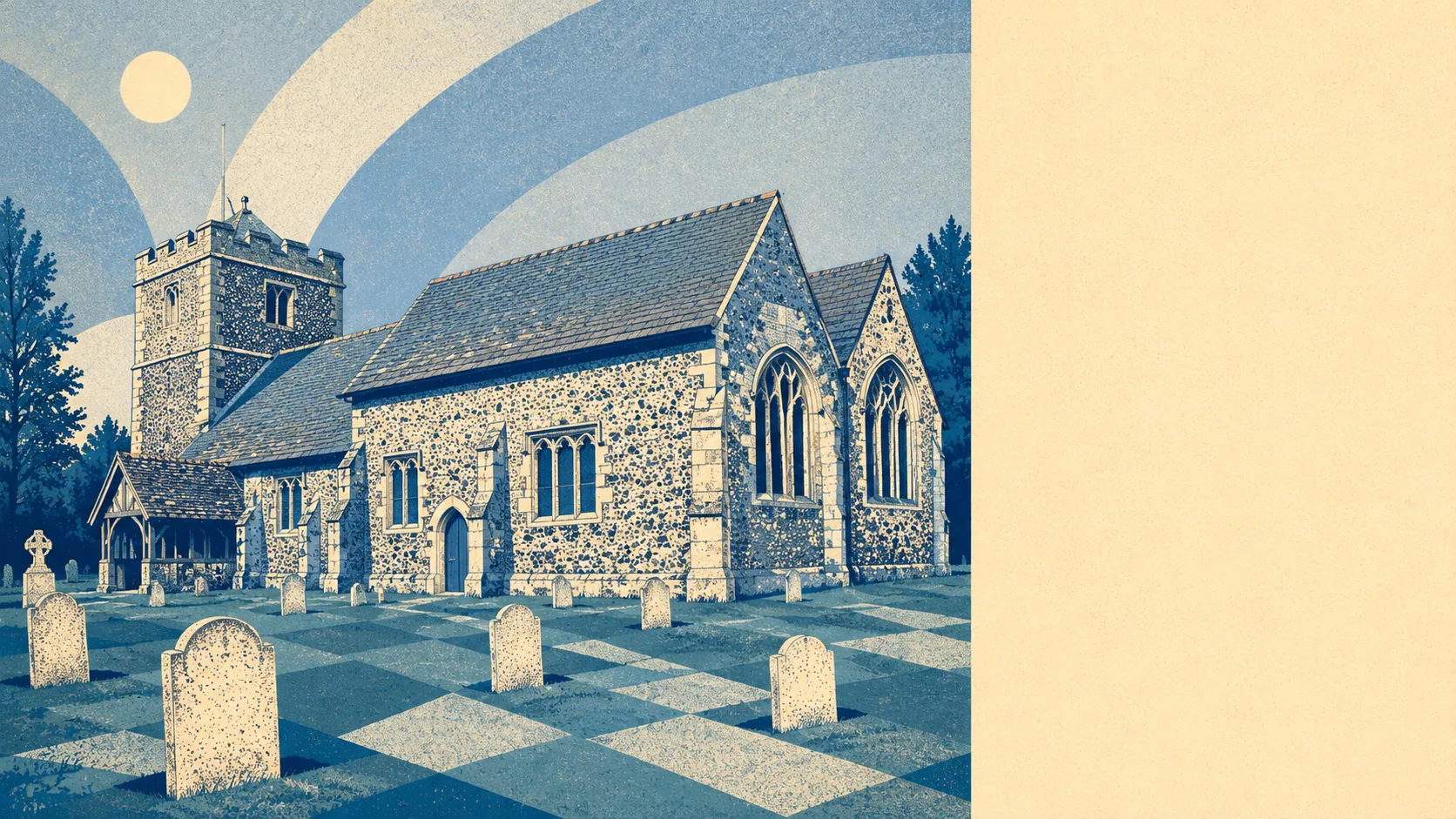
Heritage constraints are real but light. Twenty-four listed buildings across the parish, one at Grade I, one at Grade II star, and the rest at Grade II. There's one conservation area, in the village core itself. What this means practically is that if you buy the pretty period cottage near the church, changing the windows means talking to the conservation officer, and any extension will need thoughtful design. If you buy the 1970s semi at the edge of the village, none of that applies to you.
The neighbourhood character is home-owning and settled. Over three-quarters of households own their home, the median age is 52, and household income sits around sixty thousand pounds. That is a mature, established village with people who've been here a while and aren't moving. The turnover is low, which is why the market is thin. It's also why the pub still functions and the school gates still work as a social network.
Ringmer suits people who want a village that isn't quite pretending. Space for the kids and the dog. A mortgage that gets you a proper house rather than a two-bed flat. A drive to Lewes for the market and to Brighton for the treat. Enough green to feel like the countryside without living so far out that a pint of milk needs planning. Wendy James, the lead singer of Transvision Vamp, grew up here. John Harvard, after whom Harvard University is named, married the vicar's daughter here in 1636. Callaghan retired here in 1979 and stayed. The mix tells you something. This is a village that has been quietly interesting for four hundred years without ever needing to advertise it.
It doesn't suit people who need a station within walking distance, or who think a proper night out should end within a taxi-radius of home, or who want the retail-and-restaurant density of a market town. Those people should look at Lewes proper and pay the difference.
Overall this is an above-average place to live at three and a half out of five, and the shape of that rating is worth understanding. The strongest dimension is the surroundings, at a clean five out of five, because the green space is genuinely on the doorstep and the environmental designations don't tie your hands. The weakest is flood, at two out of five, because the surface-water figures are meaningful enough to check at the specific address you're buying. Everything else clusters around the middle, which is what a mature commuter-village looks like when the numbers are honest. If you want the quiet life this village offers, it delivers it. If you couldn't stretch to Lewes and are hoping the village will fill that gap, the numbers say it doesn't do that job, and the falling house-price index over the last year says the market isn't rewarding wishful thinking either.