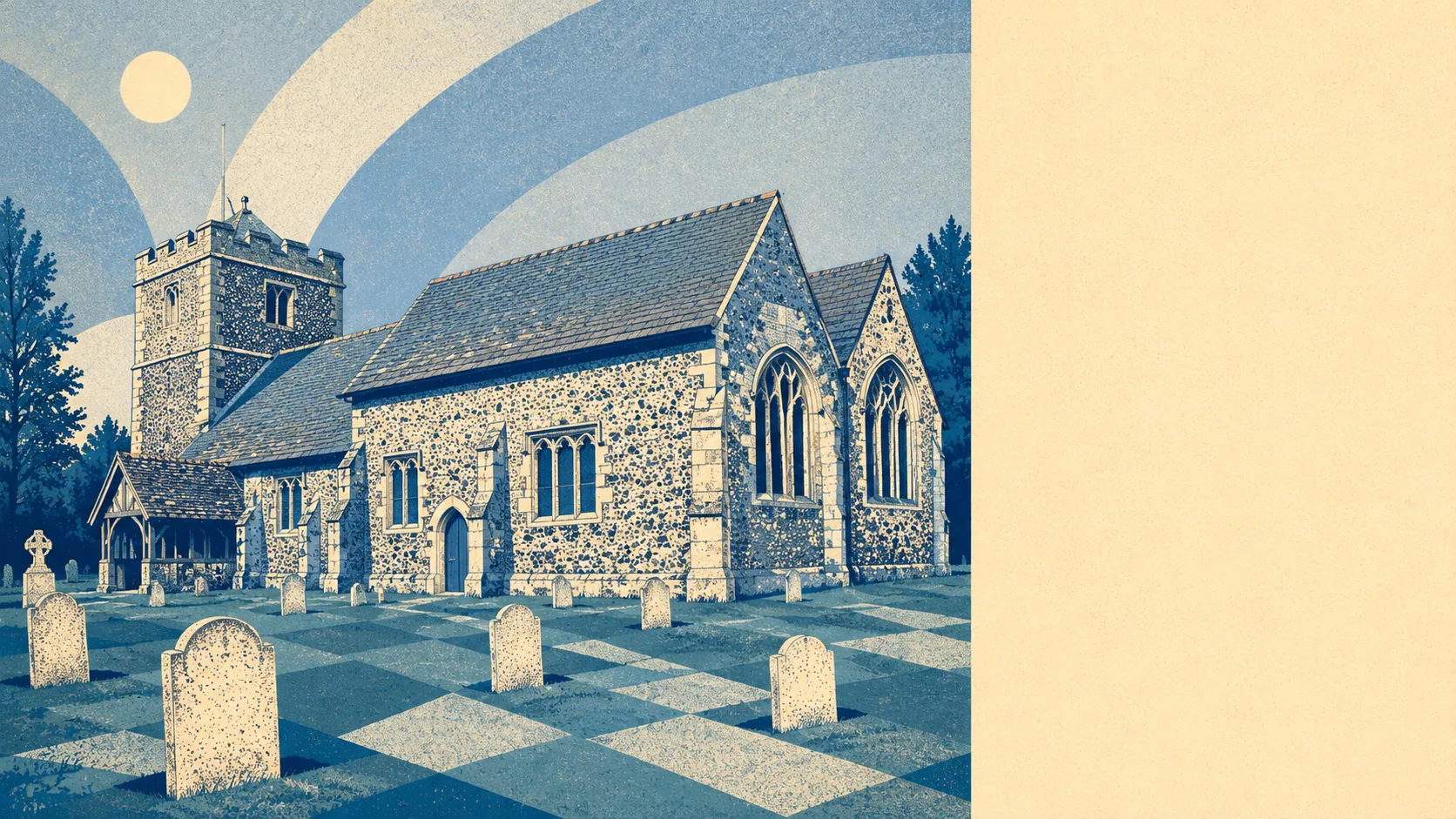
Whether you can extend a house in Ringmer depends heavily on which house. Twenty-four buildings across the parish are listed. One conservation area covers the historic core of the village. The dominant age of the housing stock is post-war, built between 1950 and 1982, so most homes sit outside both constraints. The village lets you extend a lot of what's here, and refuses to let you touch the parts that make it look like a village.
The listed picture covers twenty-four buildings, of which one is at Grade I, one is at Grade II star, and the remaining twenty-two are at Grade II. Grade I is the top tier, reserved for buildings of exceptional interest, and there's only a small number of those in any English parish. Grade II star sits just below, and Grade II is the largest category, covering most of what's protected. If you own a listed building, any change that affects its character, inside or outside, needs listed building consent. That includes windows, doors, chimneys, internal walls in some cases, roofing materials, and any extension. Carrying out work on a listed building without consent is a criminal offence rather than a planning-enforcement problem, so it's the sort of ownership that requires a specific approach to home-improvement decisions.
The conservation area is Ringmer itself, covering the historic core of the village. Conservation area designation means the character of the area is a material planning consideration in any application, which in practice means more scrutiny of design, materials and scale. Some of the standard permitted-development rights are typically restricted inside a conservation area, so work that would need no consent on a plot outside might need a full planning application inside. Felling or heavily pruning trees over a certain size within the area also needs prior notice to the council. If you buy a house within the conservation area boundary, you should assume any external change is potentially subject to consent and check before you start work.
Most Ringmer homes sit outside both categories. If you're buying a three-bed semi built in the 1960s on an estate street outside the historic core, permitted development rights will cover most of the standard things people want to do, a rear extension within the volume limits, a loft conversion, a garden office of moderate size. Bigger extensions, or anything that changes the roofline significantly, will still need planning permission. The council's local plan and design guidance will shape what does and doesn't get through, and the neighbours are usually the ones who make the difference on borderline applications.
Ringmer's extension freedom is average across the housing stock as a whole, at three out of five. The post-war majority of homes are workable if you plan sensibly. The pre-Victorian stock and the conservation-area addresses are the ones where the consent conversation starts before the drawings do.