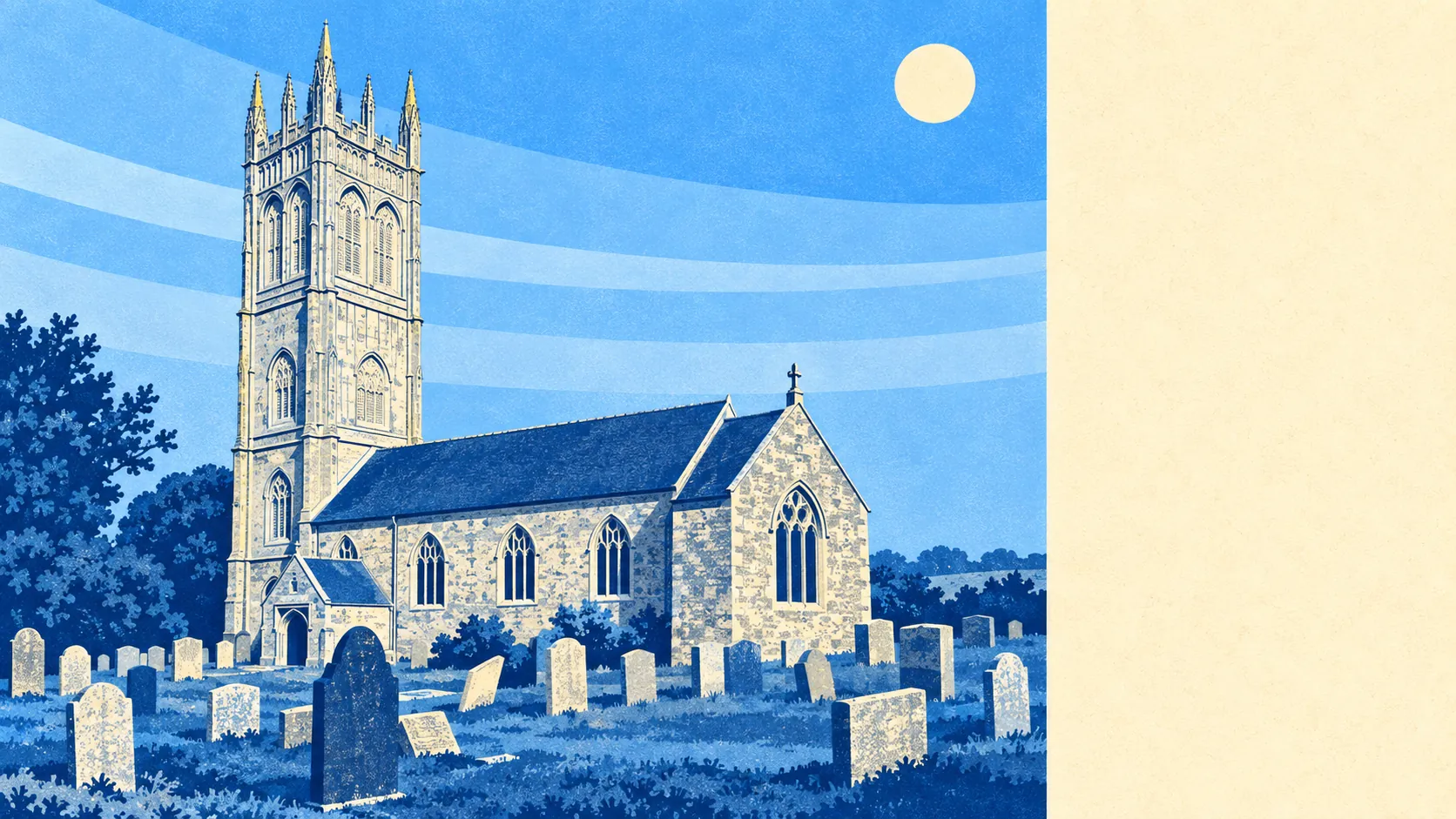
Most likely yes, unless you have bought one of the protected ones. The listed stock here is a short list, not a village-wide problem. There is one conservation area, and it does not cover everything. Plenty of applications go in every year, which is the loudest evidence that altering a house here is normal rather than heroic. The catch is that the constraints are concentrated in exactly the streets people fall in love with.
There are 13 listed buildings in the area. One is grade one, the highest tier, and the other 12 are grade two. There is nothing at grade two star. Listing applies to the whole building, inside and out, and to anything attached to it, so a listed house needs listed building consent for work that would be entirely unremarkable elsewhere: replacing windows, moving an internal wall, altering a roof, and in many cases repainting or repointing. Consent runs alongside planning permission rather than instead of it, and doing the work without it is a criminal offence rather than a paperwork problem. Thirteen buildings out of a village this size means the odds are strongly that yours is not one of them, but it means the odds are equally strong that you will be able to see one from your garden.
Probus has 1 conservation area, covering the historic core of the village. Inside it, the rules tighten without going as far as listing: some permitted development rights are restricted, demolition of walls and outbuildings can need consent, and trees are protected by a notification requirement. Councils can also remove permitted development rights inside a conservation area through a direction, which is worth checking for any specific address rather than assuming. Outside the boundary, on the newer edges of the village, none of that applies.
There is also 1 scheduled monument recorded within the area, the strictest protection tier in the system. It matters to almost nobody as a house-buyer, but it matters absolutely to anyone whose land sits on or beside one, where even groundworks need separate consent from national heritage authorities.
The most useful evidence is what people are actually doing. Planning records for this area show 578 applications between April 2024 and June 2026, with 243 of those in the last twelve months. That is a steady flow of householders putting in for extensions, alterations, garden buildings and the rest. It says nothing about how any individual one fared, and outcomes are not consistently recorded here, but the volume itself answers the question that matters: this is not a village where altering a house is an exotic act.
In practice, the answer depends entirely on which house. A post-war or 1980s house on the edge of the settlement, unlisted and outside the conservation area, will fall under ordinary permitted development rules for a rear extension or a loft conversion, subject to the usual size and height limits and a lawful development certificate if you want it in writing. A stone cottage in the middle of the old village is a different exercise, and the correct order is to check the listing and the conservation area boundary before you make an offer, not after the architect has drawn something.
Freedom to alter a home here sits in the middle: genuinely constrained in the historic core, genuinely straightforward everywhere else, with the constraint concentrated tightly enough that a single address check settles which version of Probus you are buying into.