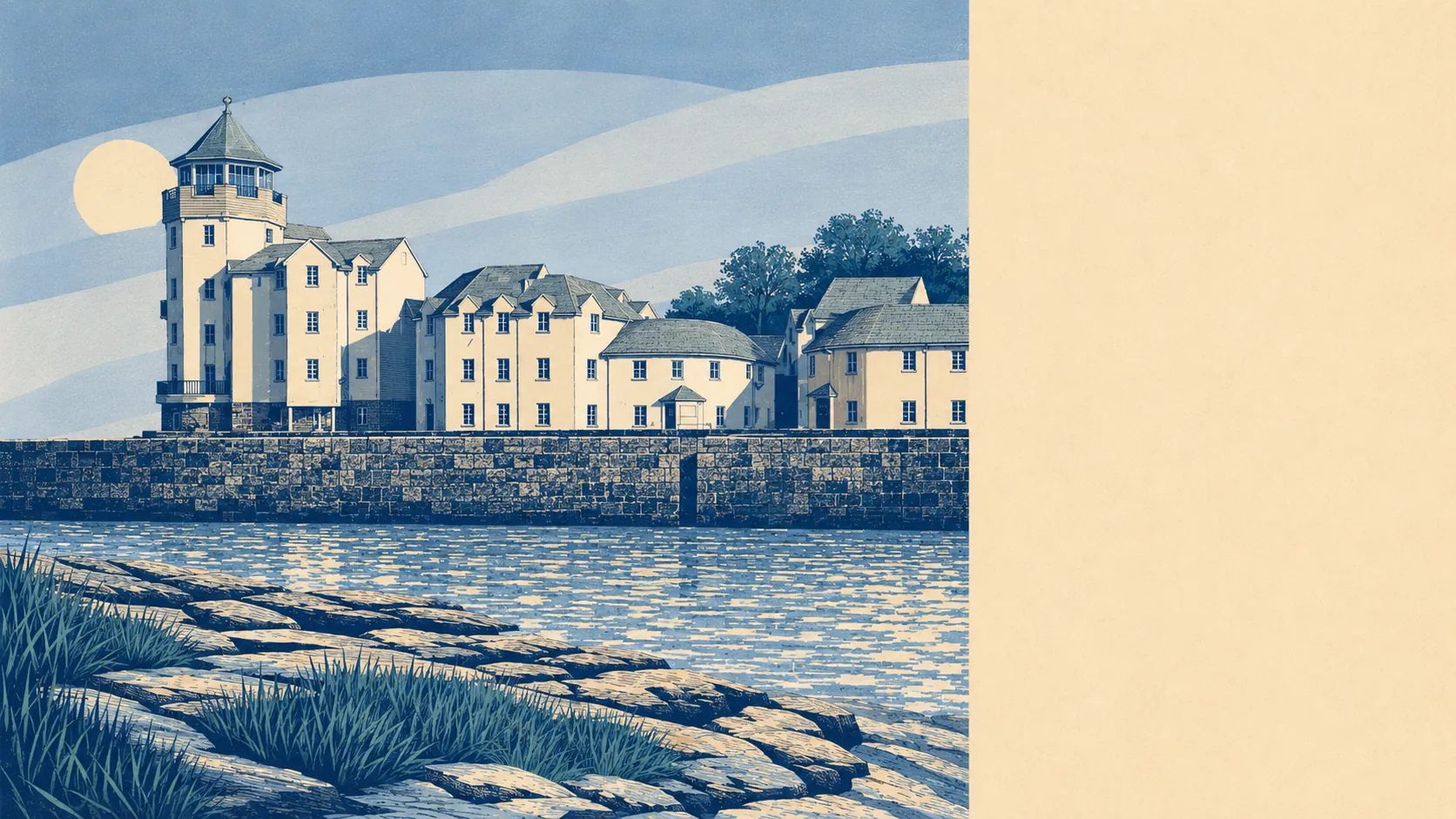
Portishead is a town of settled, comfortably-off owner-occupiers, and its numbers make no secret of it. Around three-quarters of households own their homes. The typical resident is 45. The typical household pulls in close to £67,000 a year, and roughly four in ten adults hold a degree. This is one of the least deprived corners of the country, and the people who live here are, by and large, the sort who arrived on purpose and intend to stay.
Start with who owns the roof. About three in four households are owner-occupiers, which is high, and it sets the tone for everything else. Only around one in six rents privately, with a smaller slice again in social housing. That ownership dominance is why the town feels stable rather than transient. People here are not passing through between jobs. They have bought in, and the low turnover shows in how proprietorial the place feels about its parks and its parking.
The age profile leans mature without tipping into retirement enclave. The median age of 45 is older than the national middle, and the classic young-professional band of twenty-five to forty-four makes up only around a quarter of residents. This is not a town that fills up with graduates chasing their first flat. It fills up with people a decade or two further along, arriving with a deposit and a school-run to plan, which is exactly the demographic the marina developments were built to catch.
The money matches the map. A typical household income near £67,000 puts Portishead comfortably above the national middle, and the affluence is broad rather than concentrated in a few gilded streets. Combined with the strong degree-holding share, it describes a town of established professionals and paid-up families rather than one of extremes. Nobody here is pretending to be Clifton, but the wallets are heading in that direction.
The household mix is more varied than the family-town billing suggests. Couples with children make up roughly a fifth of households, which is a solid family presence but not a monopoly. Nearly three in ten households are single people living alone, and around one in six of those is a pensioner on their own, so the quiet older resident is as much a part of Portishead as the school-gate crowd. Lone-parent households run to fewer than one in twelve. The result is a town that reads as family-oriented on the brochure but is, in practice, a broad spread of settled life stages sharing the same low-crime streets.
The blunt verdict is that Portishead is affluent, older-leaning, and heavily owner-occupied, one of the most comfortable resident profiles in the country. If you want a town where most of your neighbours own their homes, earn a decent wage, and plan to be there in ten years, this is about as concentrated a version of that as England offers.