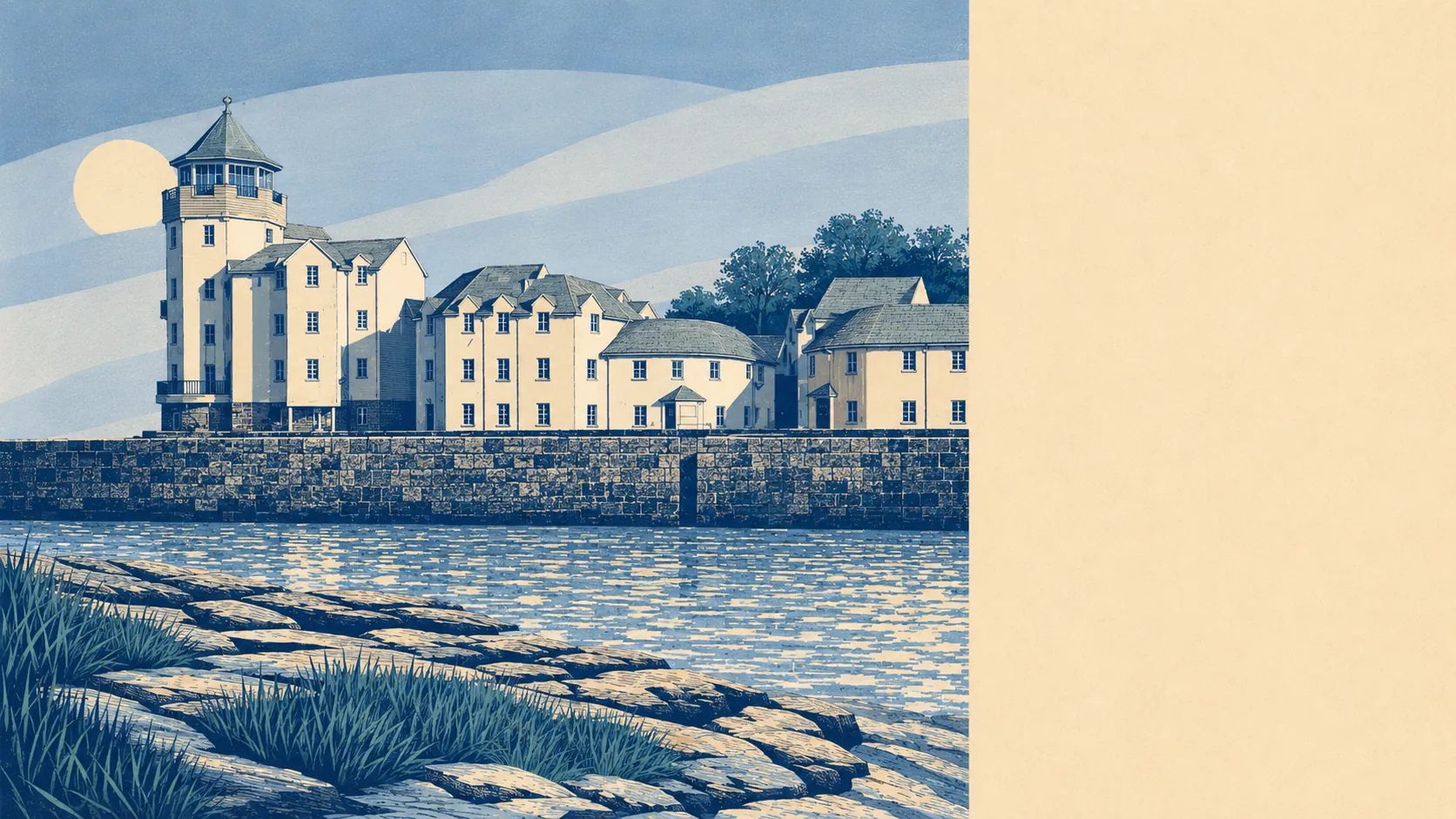
Portishead is where Bristol parks its families and its Audis. Three-quarters of people here own their homes. The median resident is 45. Nearly half the households run two cars or more, and about four in ten now work from home. Those aren't the numbers of a place with its own life. They're the numbers of a dormitory that boomed when Bristol needed somewhere to put the school run.
The housing stock tells you the same story. Just over half the homes are houses, with flats making up the rest at nearly four in ten, most of them in the marina blocks that went up when the docks stopped being docks. This is a modern town wearing a Victorian name: the single biggest slice of the stock was built after 2003, and barely six in a hundred homes predate 1930. It shows in the energy ratings, which are unusually kind. Two-thirds of homes sit in bands A to C, a quarter land at D, and fewer than one in twelve fall to E or worse. New-build calm has its compensations, and lower heating bills are one of them.
None of it is cheap. The typical home sold for around £386,000 over the past year, and the ceiling is higher than that suggests. Detached houses run to roughly £507,000, semis to about £405,000, terraces to around £380,000. A flat is the way in at roughly £220,000, which in Portishead means a marina apartment and a service charge you'll want to read twice. Most homes sit in council tax band D, and only about a fifth fall into the two cheapest bands, which is another way of saying the bargain end of this town is thin.
Renting is no gentler. Across North Somerset the typical private rent runs at about £1,200 a month, and Portishead is not the part of the area that drags that figure down. If you're renting here to try before you buy, budget for the trying to cost roughly what a mortgage would.
On safety, the town does well and the numbers back it. The published crime rate is around 68 per thousand residents a year, which lands roughly 24% below the North Somerset average. This is a place where the loudest thing on a weeknight is the M5 in the distance, and the data agrees with the impression.
Connectivity is the catch, and everyone who lives here knows it. Fewer than one in five hundred residents commute by train, because the town has no working station and hasn't since Beeching. The Portishead to Bristol line is funded and due to reopen in 2027, which locals have learned to say with the flat tone of people who have heard the date move before. For now it's the half-hourly bus to Bristol or the A369 and its famous queues. Broadband is the consolation prize: gigabit service reaches nearly nine in ten homes, and superfast covers the lot. You can't get a train, but you can stream the frustration in high definition.
The setting is the reason people forgive the rest. Green space is almost on the doorstep, roughly 140 metres from the average home, with the Severn Estuary and the Eastwood nature reserve giving the place its edge and its view of Wales on a clear day. The catch sits under the same view. This is a coastal town on reclaimed marsh, and the flood maps say so plainly. Close to three in ten postcodes fall inside the highest Environment Agency flood zone, and around one in fourteen carry a high surface-water risk. The marina is the selling point and the exposure in the same breath.
For anyone planning to alter a home, the heritage constraints are light. The town carries about 40 listed buildings, only one of them top-grade, along with four conservation areas and a single scheduled monument. Most of Portishead is modern enough that you can put in a loft conversion without a conversation with a heritage officer, which is more than the period towns down the coast can say.
The character is comfortable and unbothered by it. Around three-quarters own their homes, the median age of 45 tilts toward settled family life, and the typical household income sits near £67,000, comfortably above the national middle. This is a town of paid-off cars, decent kitchens, and people who chose predictability on purpose.
It suits a particular buyer. If you're a Bristol-commuting family who wants new-build warmth, a park at the end of the road, low crime, and a marina to walk the dog along, Portishead was built for you, almost literally, in the last twenty years. If you want period charm, an urban edge, or ground that stays reliably dry, this is the wrong postcode. Buyers chasing character usually end up in Clevedon with its Victorian seafront, and buyers who just want the same commuter comfort with less mud find it in Nailsea, which promises exactly what it delivers and delivers exactly what it promises.
The town has produced its share of names to prove it isn't only cul-de-sacs. Carol Vorderman did the sums here, Eddie Large the jokes, Adge Cutler the Wurzel folk, and the actor Johnny Briggs and the architect George Wightwick round out a notably eclectic alumni roll. The deeper history is grander than the new estates let on: John Cabot sailed from these waters on the Matthew in 1497, back when the port at the head of the river actually was one. The town has been quietly reinventing itself ever since, and the marina is just the latest draft.
So, is it a good place to live? Above average, and honest about why. It rates as strong overall, carried by a community and quality-of-life picture that scores at the very top, and held back mainly by the flood risk that comes with building a town on an estuary and calling the water a feature. It will never be Clifton. But it out-parks Clevedon and out-earns Nailsea, and the people who buy here are entirely at peace with that trade.