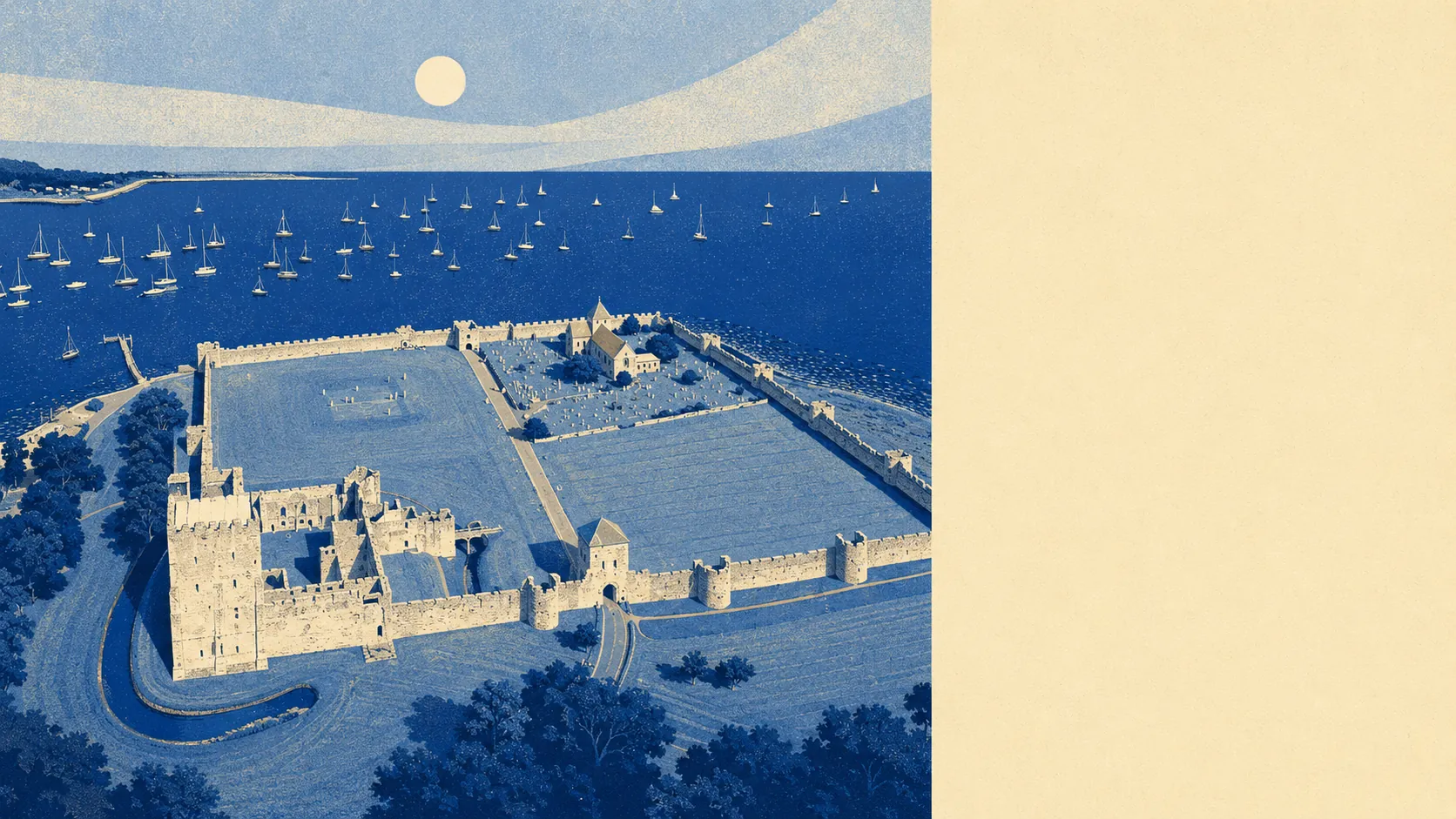
Portchester sells the castle, delivers the cul-de-sac. The Romans built the fort. The medieval lot built a castle inside it. The 1960s built most of the houses you'd actually buy. Not Hamble. Not Southsea. A post-war Fareham suburb with a scheduled monument at the end of the road.
About six in ten homes are houses, a quarter are bungalows, and roughly one in seven is a flat. Most of the stock went up between 1950 and 1982, which is the era's tell: standard footprints, decent gardens, gas central heating, and the energy efficiency of a place that hadn't yet decided it cared. Just under four in ten properties rate at energy band C or better. Nearly half sit at D. About one in six still scrapes along at E, F or G, which is what happens when you build a lot of houses in a hurry and then leave them alone for sixty years.
A typical sale over the past year landed around £344,000. A flat went for about £160,000, a terrace for around £318,000, a semi for around £365,000, a detached house for around £432,500. The modal council tax band is C, with about a fifth of dwellings sitting at band A or B. More middle than either tail. The flats are doing the affordability work, the detached houses are doing the postcard work, and most people end up in the semi.
Rented stock is thin here. About eight in ten residents own. The typical private rent across the Fareham area runs about £1,210 a month, which is the Fareham figure rather than a Portchester one. Anyone arriving with a rental budget is mostly arriving in someone else's spare bedroom.
The crime rate runs around 44 incidents per 1,000 residents a year, roughly a quarter below the Fareham figure and well into the safer half of the south coast generally. The rating panel calls it a five out of five on community. Quiet enough to walk through after dark and dull enough that few people would want to.
Over half the workforce drives to work. Nearly three in ten work from home, which is the post-2020 number doing what it does in every village within ninety minutes of London. Under two in a hundred take the train. Under two in a hundred take the bus. Portchester Rail Station sits on the South Western Railway line that runs to Fareham one way and Cosham the other, with London Waterloo and London Victoria services stopping by, but barely anyone uses them. The A27 cuts the village in half east to west, which is the route most residents actually use. Gigabit broadband reaches nine in ten postcodes. The car-free thing doesn't really work here. You either have one or you're moving.
The harbour is the postcard and the harbour is the problem. About one in seventeen postcodes carries a high flood probability and roughly one in nine carries a medium one. Around one in seven sits inside Environment Agency flood zone 3. The places with the view are mostly the places with the worry. Green space, by contrast, is in your face: the average postcode sits about 200 metres from a publicly accessible park, with around thirteen within a kilometre. Water sits a short walk away on average. For a village this size, the ratio of harbour-edge walks to indoor regrets is excellent.
Heritage rules are real but concentrated. There are 55 listed buildings in the wider area, two of them at Grade I, the highest tier of national importance, with Portchester Castle one of the two. Most of the rest are Grade II, the protect-the-character tier rather than the don't-touch-anything tier. There is one conservation area, Portchester itself, and one scheduled monument. If you buy a 1960s semi at the Tesco end of the village, the heritage rules don't touch you. If you buy something old enough to have an opinion, the rules will be the thing you remember about the renovation.
About eight in ten households own. The typical resident is 51. The median household pulls in about £58,000 a year. It is mostly mortgages-near-paid, kids-mostly-grown, second-car-on-the-drive territory. The 1950s house with two parents working from home upstairs and a teenager left in the spare room. Neighbours who have been on the same street for twenty years and watched the harbour change weather more often than they have changed jobs.
This suits the buyer who has done their stretch from Cosham and Fareham and wants a castle at the end of the road without paying Hamble-le-Rice prices for the privilege. It suits the buyer who is settled enough not to need a Friday-night scene and old enough to have stopped pretending they want one. It suits the buyer who likes the idea of a harbour at the end of the walk, a Roman fort at the end of the village, and doesn't mind the A27 being the most-used piece of local infrastructure.
It does not suit the Southsea renter who needs to be three minutes from a bar. It does not suit the buyer who could have stretched another postcode west to Hamble and would have. And it absolutely does not suit the buyer who has done the maths on Paulsgrove across the water, where the same house goes for a third less and the harbour view comes from the wrong side. If that calculation is keeping you up at night, you have already answered the question, and Fareham proper will have you in for less.
The notable-residents board does some quiet work. Neil Gaiman, the author, was born here. Neil Astley, founding editor of Bloodaxe Books, came from here. Steve Ridgway ran Virgin Atlantic Airways from somewhere in the area. Mike Hancock, the former Member of Parliament for Portsmouth South, has lived in the village for over thirty years. The village punches above its weight on people who left and on people who stayed.
Above average overall on the rating panel. The community score does the heaviest lift at five out of five and the schools score sits at the middle three. There are no schools graded into the rating set, which is what produces the middle mark rather than evidence of anything wrong. It is a settled village, safer than its borough, older than its borough, and quietly wealthier than the borough that surrounds it. Not Hamble-le-Rice. Not Southsea. It's Fareham with a better postcard and Paulsgrove's harbour view from the right side of the water.