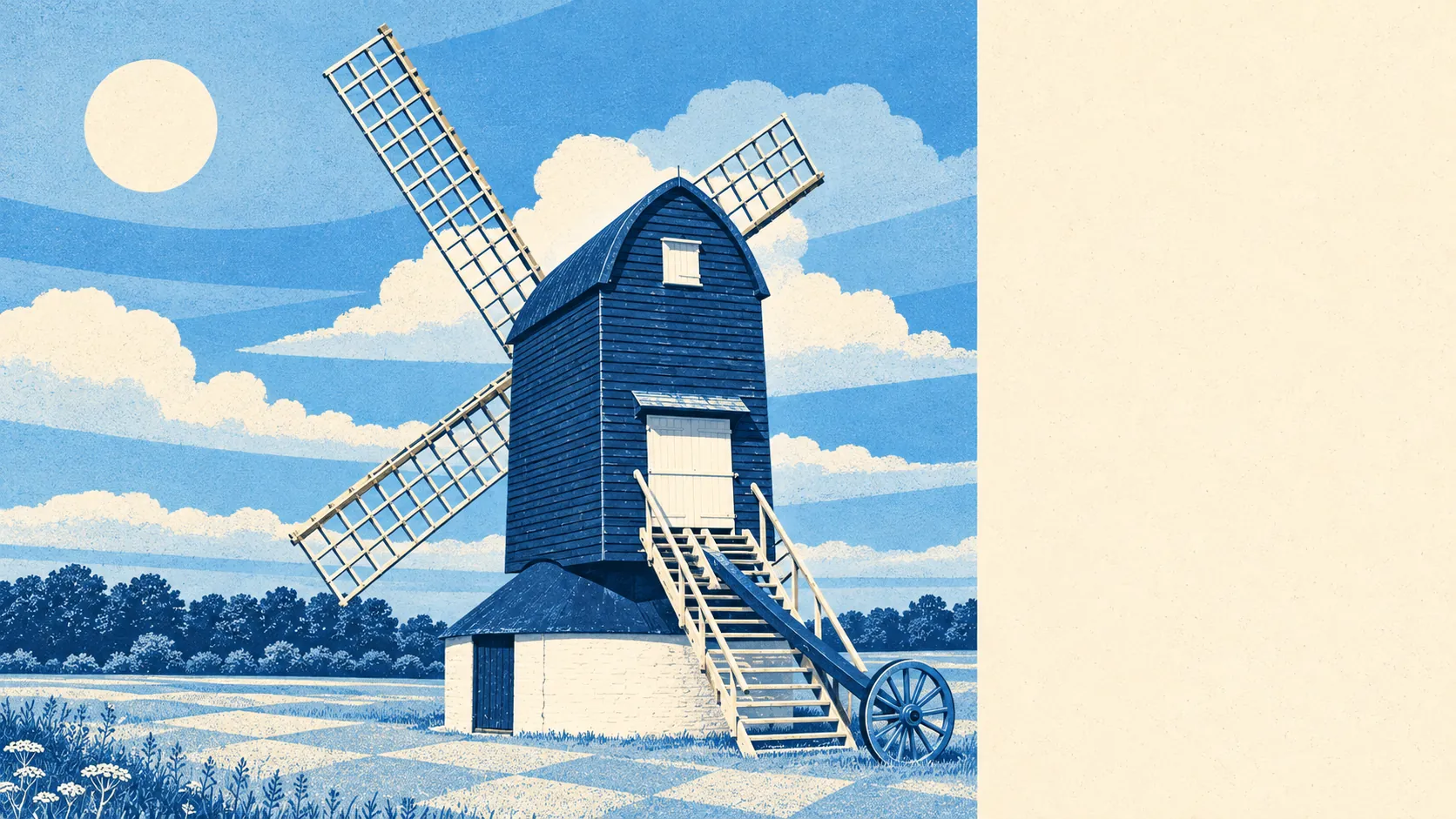
Pitstone gives most buyers more than it takes, and what it takes is mostly money. Life here is hills behind the houses, a drive at the front and a car on it. Most people own. Plenty work from home. The asking prices are what make people blink.
That points at a particular household: a couple or family with a car, a job that lets them stay home part of the week, and a weekend habit that involves walking boots. The village lies at the foot of the Chilterns, joined on to Ivinghoe, and this page also covers Ivinghoe and Cheddington. Together they're a run of neighbouring villages that share more than a postcode district.
Thames Valley Police figures for the twelve months to May 2026 put the crime rate at about 41 per 1,000 residents, roughly 38% below the Buckinghamshire average. For a family weighing up a move from somewhere busier, that gap is the easiest argument they'll have all year.
The Land Registry recorded 40 sales in the year to May 2026, at a median of about £465,000. Detached houses went for about £568,000, semis for about £455,000 and terraces for about £360,000. Band C is the most common council tax band, and only 6% of homes are in bands A or B. Renting is priced at county level: Buckinghamshire's typical private rent was about £1,470 a month in April 2026, an average that covers the whole authority and so says little about this village in particular. First-time buyers hunting for a starter flat will find the village barely built any.
The council tax list counts every dwelling, and it shows a place of houses. About 37% are detached, 25% semi-detached, 23% terraced and 12% bungalows, with flats at 3%. Only 13% were built before 1930, so the thatched-cottage fantasy covers a small corner of the village. Energy certificates rate 64% of certificated homes in bands A to C and 8% in E or worse, and 80% of homes are on mains gas. The housing was built for people who own a lawnmower and mean to use it.
About 75% of households own their home, and the median resident is 43. The Office for National Statistics models gross household income at about £72,000 for the financial year to March 2023, averaged across a wider area that takes in the village. That's the profile of people who did their flat years somewhere else and came here to stop.
None of Pitstone's postcodes fall in the Environment Agency's river-and-sea flood zones. A wider measure, the share of postcodes flagged on at least one flood indicator including surface water, puts about 9% at high risk, 6% at medium and 30% at low. Surface water is the part to take seriously, and the zone map alone won't show it.
At the 2021 Census about 45% of working residents drove to work, 44% worked from home and 2% took the train. Cheddington Rail Station and Tring Rail Station are both nearby, close enough to be useful and far enough away that hardly anyone bothers. The village has 23 bus stops, averaging about 22 weekday departures each, and every stop with timetable data has a weekend service. Superfast broadband reaches every postcode, and gigabit reaches 69%. The Department for Transport's 2019 modelling puts the nearest town centre 14 minutes away by car and 26 by public transport, and bus timings that old are the first to go out of date. A second driver in the household helps more than the timetable does.
There are 35 listed buildings in and around the village, two of them Grade I, two Grade II* and 31 Grade II, plus one conservation area at Ivinghoe. For most owners of a post-war semi, that leaves extensions and window changes as ordinary planning matters. Buyers who want a second storey will find a 1960s semi much easier to deal with than anything near the old church.
Ofsted's grades for Buckinghamshire as a whole put 80 of 94 graded settings at good or better, with 19 outstanding, and that figure describes the county, not the village. The one primary in the local figures averaged 107 in Key Stage 2 maths. The Cottesloe School is among the nearby secondaries. On the 2019 modelling, secondary school is a 15-minute drive or a 69-minute walk, so most families do the run in the car.
The surroundings are where Pitstone earns its keep. The average home is about 143 metres from the nearest green space, and water is about 335 metres away, including the Grand Union Canal along the parish's north-western edge. Hills on one side, towpath on the other. It's the one part of the deal no amount of money buys in a town.
Pitstone is better than average, and it's honest about the trade. The walk from the front door to open hills is the reason to come, and you pay for it in the price of the house. For a family with two cars, steady incomes and a habit of being outdoors by nine on a Sunday, it's an easy decision. First-time buyers stretching for a deposit, people who don't drive and anyone who wants a town on the doorstep should look elsewhere.