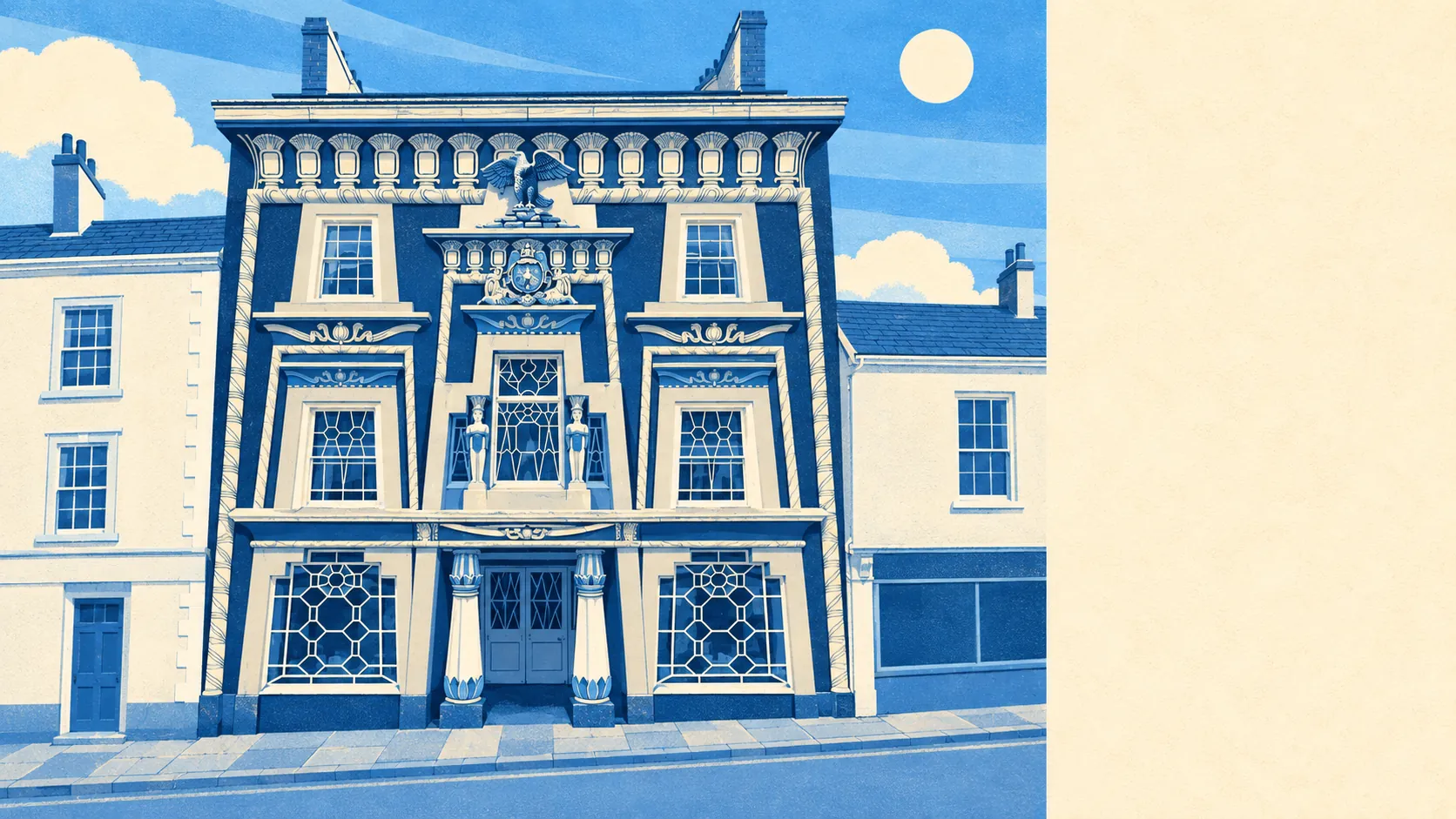
Yes, and you will fill in more forms than you expect. The town centre is dense with protected buildings. Two conservation areas cover the historic core and a nearby churchtown. People alter homes here constantly, and the applications keep coming in by the hundred. The answer is rarely no. The answer is slower, dearer and more supervised than the quote from your builder assumes.
Historic England lists 239 buildings within the area. Three of those are Grade I and 14 are Grade II star, with the remaining 222 at Grade II. Listing applies to the whole building, inside and out, so replacing windows, moving an internal wall, adding a rooflight or changing what the render is made of all become matters of listed building consent rather than personal taste. Grade II is the workaday tier and covers most of what you would actually buy to live in, but the consent requirement is the same as it is for the grander three.
Two conservation areas sit within the area, covering Penzance and Madron Churchtown. Conservation area status is a different mechanism from listing and catches the unlisted house next door: demolition, work to trees and various external alterations need permission that would be automatic elsewhere, and the character of the street becomes a material consideration in whether your proposal succeeds. Plenty of buyers discover this at the point of ordering the cladding.
Six scheduled monuments also sit within the area. That is the strictest protection tier in the system, and it matters mainly if you are buying land near one rather than a terrace in the middle of town, but it is an absolute rather than a negotiation.
What the neighbours are actually doing is the useful evidence. Cornwall Council received 1,358 planning applications across the area between April 2024 and June 2026, including 607 in the most recent twelve months. Whatever the constraints look like on paper, this is not a place where people have given up and stopped building. It is a place where they factor in an architect who has done it before.
On ground conditions, the mining legacy here is lighter than the county's reputation implies. Around 0.2 percent of postcodes sit within 500 metres of a recorded working, with the nearest at about 240 metres, and no postcode in the area sits directly over one. A mining search is still standard practice in Cornwall and a specialist report is occasionally asked for, which matters because lenders and insurers make their own decisions regardless of what the map says. None of that is a prediction about any particular house.
One listed building in the area appears on Historic England's Heritage at Risk register. That is a record of a building in poor condition, which can attract grant support and will certainly attract scrutiny for anyone taking it on. For the buyer of an ordinary house down the road it changes nothing.
In practice the question is which side of the line your property falls. Outside the conservation areas and off the list, ordinary permitted development rights apply and a rear extension is the routine job it is anywhere. Inside them, or on a listed building, assume that consent is required for work you would not think twice about elsewhere, and get an answer from the council before you exchange rather than after your builder has ordered materials.
Freedom to alter a home is one of the tighter aspects of buying here. The compensation is that the constraints are precisely what stopped the town being knocked about, which is the trade every buyer of an old harbour town makes whether they admit it or not.