Pagham is bungalows, harbour birds and one road out. Half the houses are bungalows. The median age is fifty-seven. Nearly nine in ten homes are owner-occupied. Pagham is a retirement village with a wartime caisson offshore, and once you see it that way the place stops pretending to be anything else.
The housing stock tells the story before the demographics do. Bungalows account for almost half of everything built here, with houses making up another third and flats barely scraping eight in a hundred. The energy-performance picture is what you'd expect of a post-war coastal village that hasn't been comprehensively retrofitted: nearly half the stock sits at band D, about four in ten reach C or better, and roughly one in seven is band E or worse. Pre-war housing is barely three in a hundred. This is a place built between 1950 and the early 1980s, on flat land near a harbour, for people who wanted single-storey living within walking distance of a beach. The market hasn't moved on because the buyers haven't either.
Typical sale prices land at around £347,500 over the last year, across roughly 110 transactions. Detached houses sit at about £400,000, semi-detached at £345,000, terraces at £295,000, flats at £160,000. The council-tax modal band is C, and roughly one in six homes sits at band A or B. The wider house-price index for the area is down on the year, so this is a softening market rather than a rising one.
Rent is harder to pin to Pagham specifically, but the typical private rent across the Arun area runs about £1,220 a month. Pagham itself is unlikely to sit at the top of that range. The rental market here is small because the village isn't really one. Most people own.
Crime is low. The published rate sits at roughly 59 incidents per thousand residents over the last year, running about a third below the Arun-wide average. The headline crime figures for the local authority are being driven by Bognor Regis and Littlehampton town centres, not by the coastal villages. Pagham is the village that the local-authority average punishes by association, not the place doing the work.
Connectivity is where the rating drops. About one in 125 working residents commutes by train, which is a polite way of saying nobody does. Bognor Regis rail station is the nearest, but the road geometry between the village and the station means cars do roughly six in ten commutes and home-working does another quarter. Bus stops exist; train usage suggests they're not what most people use. Broadband is the saving grace: about 96% of postcodes can get superfast, though gigabit coverage is closer to four in ten. The car-free share sits at about 15%, which on the south coast at a median age of fifty-seven is what counts as low.
Environmentally, the surroundings are the strongest thing about the village. Greenspace sits at about 345 metres from the average home, with around six patches inside a kilometre. Bluespace is closer still, about 250 metres, with the harbour and the coast putting nearly forty separate features within a kilometre of most postcodes. The flood picture is more mixed. About one in twenty postcodes carries medium-or-worse surface-water exposure, and the Environment Agency flood-zone-three share for the village runs around 8%. The Phoenix Caisson sitting off the bay is a scheduled monument that locals walk past on the beach. It is also a reminder that this coast has spent eighty years thinking about sea defence, and the policy across the village's 20-year, 50-year and 100-year shoreline plans is hold-the-line. The line will be held until it isn't, which is the deal with every south-coast village that sits below the storm line.
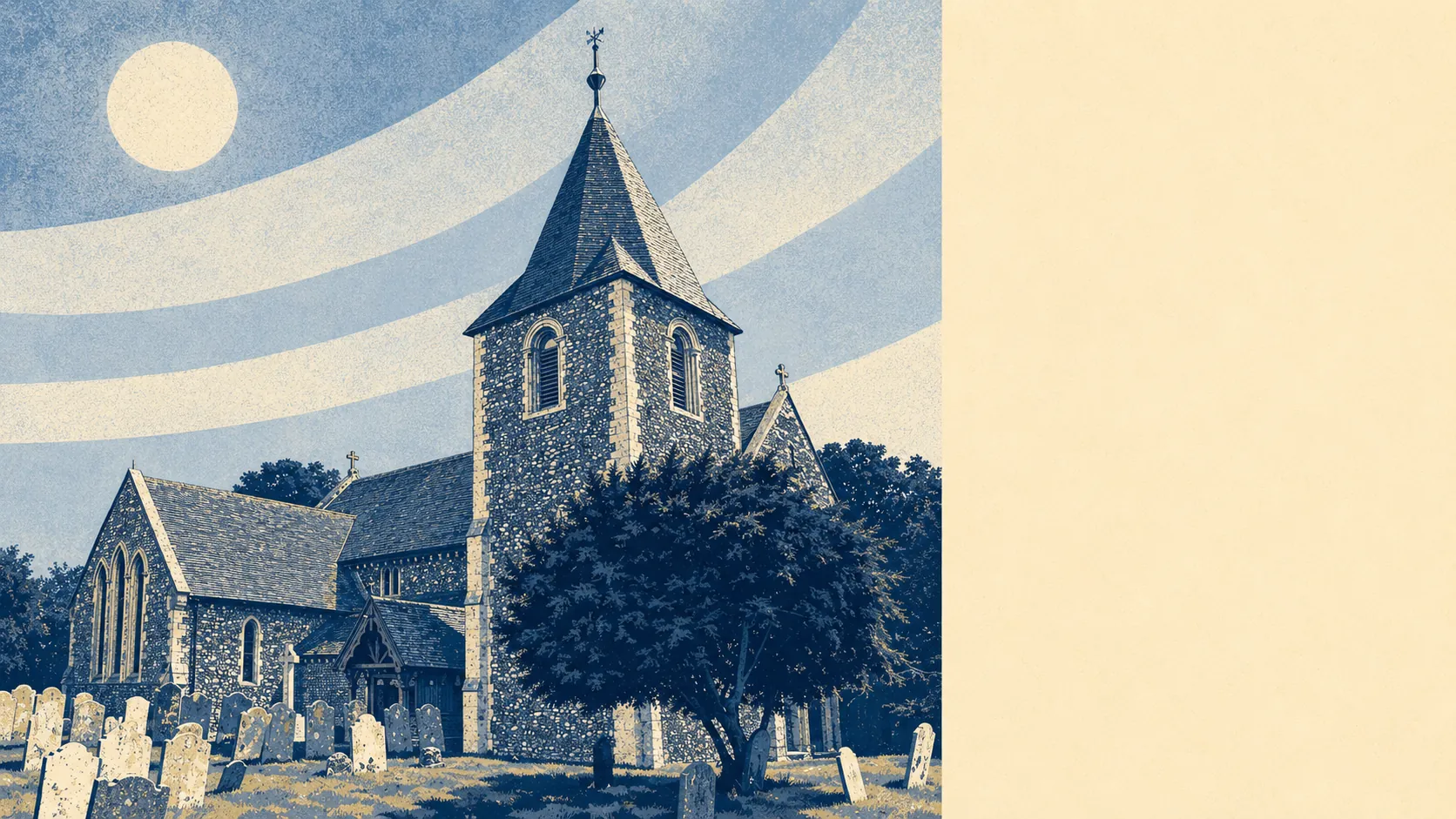
Heritage constraints are present but not overbearing. Forty-eight listed buildings sit in the area, including one Grade I and two Grade II*, alongside one conservation area at Aldwick. The named listed buildings include the Church of St Thomas à Becket and a scatter of farmhouses and chapels. For anyone buying a 1960s bungalow on an estate road, none of this will touch your plans for a conservatory. For anyone buying near the church or the harbour fringe, the planners will have opinions.
Demographically, this is a settled village. Home-ownership runs at about 87%, almost ten points above what you'd expect for the local authority. The median age is fifty-seven. Median household income is around £42,800. About a third of households are single-person, and nearly a quarter of those are single pensioners. About one in nine households is a couple with children. The under-44 working-age share is roughly one in five. This is the demographic shape that produces the housing stock, not the other way around. Bungalows get built where bungalows get bought.
Pagham suits the buyer who knows what they want and what they want is this. Someone retiring out of London or Surrey, looking for single-storey living near water, who has driven through Selsey and East Wittering and decided Pagham was the quieter of the three. Someone downsizing from a Bognor semi for the bird-watching. Someone whose calendar doesn't include a daily commute. The blue-and-green access is exceptional, the heritage is real, and the village does what it says on the tin.
Pagham is not for the buyer who wanted Whitstable. It is not for the family of four with two cars and a 7am start in Crawley. It is not for the buyer who thought "coastal village within commuting distance" meant something the Pagham bus timetable can deliver. Buyers chasing Whitstable energy will be sat in Bognor Regis traffic by week three wondering what they did. Buyers who'd otherwise have bought in Selsey will exhale and unpack.
The historic resident the village quietly carries is Joe Biden's paternal fourth great-grandfather, James Byden, christened at St Thomas à Becket in 1767. Pagham doesn't make a fuss about this, which is on-brand for Pagham. Derek Bell and John Watson also surface in the local record. The village's relationship to fame is approximately the same as its relationship to the train: aware of it, not pursuing it.
The verdict is above average overall, at 3.5 out of 5. The surrounding area and green-space access score the maximum five. Harbour, coast, greenspace density, all of it earned. Crime safety also scores five. The weakness is connectivity, which scores two: the train share is what it is, and pretending otherwise would be dishonest. Pagham is a good place to live if the life you want is one Pagham can deliver. If your life requires Chichester at 8.15am every weekday morning, this is not the village. If your life is mostly here, with occasional trips out for the things villages don't have, you've found the right harbour.