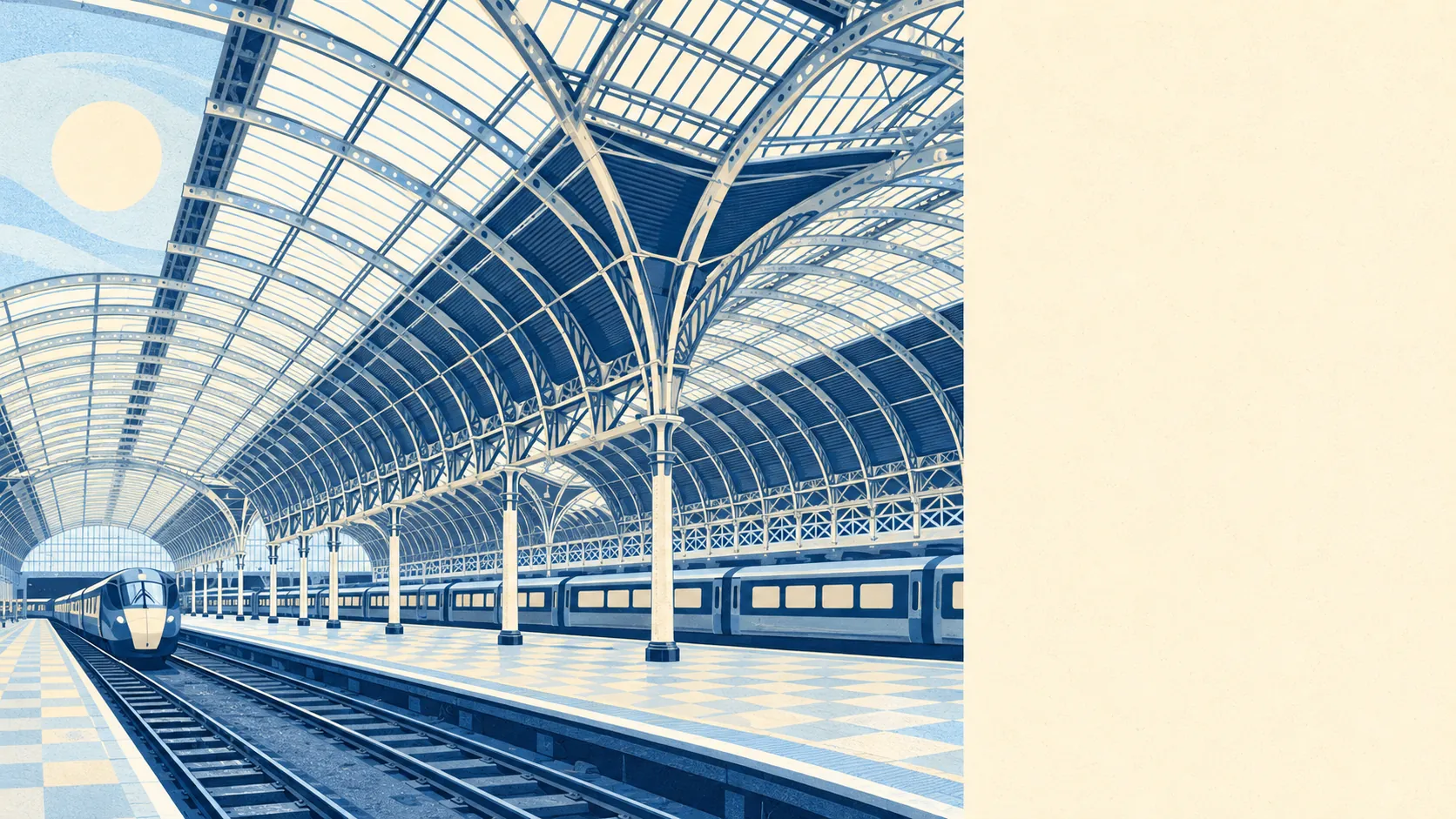
Paddington can get you to Cornwall, Heathrow or the far side of London without a change, and it will still argue with you about a new window frame. More than 1,500 listed buildings stand in and around it. There are 562 bus stops serving it. Seven in ten households run no car and lose nothing by it. Leaving is easy, but altering the place you leave from takes paperwork.
Transport is what Paddington does best. Brunel's station puts the Elizabeth line, the Heathrow Express, Great Western services towards Reading, Bristol, Cardiff, Exeter and Penzance, and four Underground lines inside one complex at London Paddington. The buses are just as heavy. The national transport access data counts 562 stops in the area, with an average of 478 scheduled weekday departures per stop and about 25 buses an hour at peak, and 453 of the 454 stops with timetable data run at weekends. Gigabit broadband reaches about 89% of premises and superfast about 98%. The 2021 Census caught 57% of working residents at home and only 2% commuting by train, though 7% took the bus and 11% walked. The terminus mostly serves visitors, and the locals ride the 23.
Changing your own home is where it gets hard. Historic England lists 1,586 buildings in the wider area, including 20 at Grade I and 70 at Grade II*, and 11 of them are on its Heritage at Risk register. Twenty-seven conservation areas fall inside the same map square, among them Bayswater, Paddington Green, Queensway and Westbourne. In practice that means consent for alterations other buyers would simply book a builder for, plus planning officers with opinions about sash windows. Even the station is listed, so the building everyone uses to escape is also one nobody can touch.
On safety, the Metropolitan Police recorded a rate of about 262 crimes per 1,000 people in the year to May 2026, roughly 40% below the Westminster average. The mix looks like a transport hub's. Theft from the person makes up 11% of recorded crime here against 2% nationally, and other theft 13% against 7%, while violence and sexual offences are 18% against a national 35%. Thousands of travellers carry phones in their back pockets through here every day, and the pickpockets have learnt the timetable too.
The Land Registry's last twelve months, to May 2026, show a median sale price of about £810,000 across 275 sales. That median mostly describes flats, which made up 244 of the sales at a median of £742,500. The 27 terraced houses went for a median of £2,500,000 and the four semis for £3,875,000. The house price index average dropped sharply over the year to May 2026, to roughly £836,000. Band G is the most common council tax band, and only 9% of homes are in bands A or B.
Renting costs about £3,150 a month, which is the typical private rent across the Westminster area as of April 2026, so it covers Mayfair as much as Praed Street. That figure matters here, because half of Paddington's households rent privately.
The valuation list for council tax counts 89% of homes as flats and 8% as terraced houses, and detached homes come to under 1%. About 49% were built before 1930, so a lot of those flats are carved out of tall stucco terraces whose builders had servants and coal in mind. Energy certificates put 62% of certificated homes in bands A to C and 9% in E or worse. Mains gas heats 54% of homes and 22% run on electricity alone, which is worth asking about in a high-ceilinged period conversion before the first winter bill.
Only about 27% of households own their home, 50% rent privately and 22% rent from a social landlord. The median resident is 35. The Office for National Statistics models average gross household income here at about £78,000 for the financial year to March 2023. On the official figures this is a young, well-paid district, and most of it is renting from someone who bought before the prices went up.
Flood risk splits by measure. The Environment Agency's river-and-sea flood zones cover none of the area. Separately, about 20% of postcodes carry a high rating on at least one flood indicator, and that measure includes surface water. The Thames is some distance away, and the risk comes from heavy rain on a district paved almost edge to edge.
Green space is close. The average home is roughly 130 metres from some, with Hyde Park and Kensington Gardens along the southern edge beyond Bayswater. Water is about 440 metres away on average. The Regent's Canal and the Paddington Arm meet at Little Venice, and the redeveloped Paddington Basin has Heatherwick's Rolling Bridge, which curls itself up for no practical reason that anyone has found.
The railway has always taken precedence here. Sarah Siddons, the great actress of her day, lived at Desborough House until it was knocked down to make way for the Great Western Railway, and she is buried at Paddington Green. Yootha Joyce of George and Mildred lived later at 198 Sussex Gardens, a street now lined almost door to door with hotels and flats.
Paddington is right for renters and young professionals who want to be anywhere quickly and have no wish to own a drill. Families who need space to extend into, and buyers planning a loft conversion within five years of moving in, should look elsewhere.
Overall, Paddington is better than average. The trains, buses and broadband are about as good as London gets. The protected buildings mean the flat you buy now is close to the flat you will have in ten years.