Okehampton is where Dartmoor does its shopping. Six in ten households own their home. The median resident is 44. Half the town sits in the two cheapest council-tax bands. This is not a scenic spot with a gift economy bolted on. It is a working town with a national park at the end of the road.
The housing is more varied than a town of about 9,100 people has any business being. Across every dwelling on the council-tax valuation list, terraces account for about 30%, detached houses 21%, semis 20%, flats 17% and bungalows 11%. About a quarter of it went up before 1930, which leaves three quarters that did not, and the postwar and late-century estates are where most of the town actually lives rather than where the photographs get taken. Energy performance is better than the granite-and-slate impression suggests: roughly 62% of certificated homes sit in bands A to C, about 26% in band D, and 12% in E or worse. Around 70% run on mains gas. Roughly 13% heat with electricity alone, and that is the line in a listing that quietly reprices the whole house, so read it before the viewing rather than after the first January.
On price, the Land Registry's last twelve months put the typical sale at £238,000 across 115 transactions. The split by type is wide enough to matter: 19 flats at a typical £147,000, 30 terraces at about £221,000, 30 semis at about £243,000, and 36 detached houses at £345,000. A flat and a detached house here are not the same market in different clothing, and quoting the town average at a seller of either will get you the look you deserve. Council tax runs low by national habit, with band B the most common and about 51% of dwellings in bands A or B.
Rent is best read at district level. Typical private rent across the West Devon area stands at about £840 a month as of April 2026, up about 2% over the year. That is an area figure covering a large stretch of rural Devon, not a street-level Okehampton number, and the gap between a town-centre flat and a farmhouse conversion twelve miles out is doing exactly what you would guess.
Safety is where the brochure stops writing itself. The published crime rate for the twelve months to May 2026 is about 75 recorded offences per 1,000 residents, against about 47 for West Devon as a whole, which puts the town roughly 60% above its own district average. Some of that is what happens when a small town carries a district's worth of high street: the rating list holds about 160 shops and 36 pubs, and every one of them serves people who live somewhere else and come here to spend. The mix is worth reading properly. Violence and sexual offences make up about 47% of recorded crime against 35% nationally, a statutory grouping broad enough to include assault without injury. Anti-social behaviour runs lower than the national share at about 12% against 16%, and shoplifting lower too, at about 4% against 8%. Devon and Cornwall Police charge in about 8% of cases against about 12% nationally, which ranks the force last of the 42 in England and Wales. That last figure belongs to the force, not to the town, but it is the outcome you inherit when you report something.
Getting about is a car proposition with a plot twist. About 55% drive to work, 20% work from home, 17% walk, and 1% take the bus. Rail commuting registers at zero, and the reason is a timing joke: the travel-to-work count was taken in the spring of 2021, and Okehampton Rail Station did not reopen to a regular service until that November, after decades of summer-weekend novelty and then nothing at all. Sampford Courtenay Rail Station sits further up the same line. Buses cover 39 stops with an average of about 23 scheduled weekday departures each, and every stop keeps a weekend service, which in rural Devon counts as luxury. Broadband is the strongest utility in the place: gigabit reaches about 90% of premises, superfast about 98%, and no premises falls below the universal service minimum. About 91% of the area gets all four mobile operators. Department for Transport modelling puts a doctor about 8 minutes away by car and a hospital about 40.
The surroundings are the reason people put up with the rest. Green space sits about 165 metres from the average front door with about 18 separate spaces within a kilometre, water about 245 metres, and the National Cycle Network about 250 metres, close to 84% of postcodes. Flooding needs two measures kept apart, because they count different things. On the postcode indicators, which include surface water, about 7% of postcodes carry a high rating, 8% medium and 25% low. On the Environment Agency's river-and-sea mapping, about 9% of the area falls in flood zone 3 and 5% in zone 2, with about 21% inside the climate-change extent. No historic flood is recorded across the town's postcodes. The one thing the moor gives you for free is radon: the geological survey places the whole town in the highest band, so a test kit is a normal part of buying here rather than a precaution for the nervous.
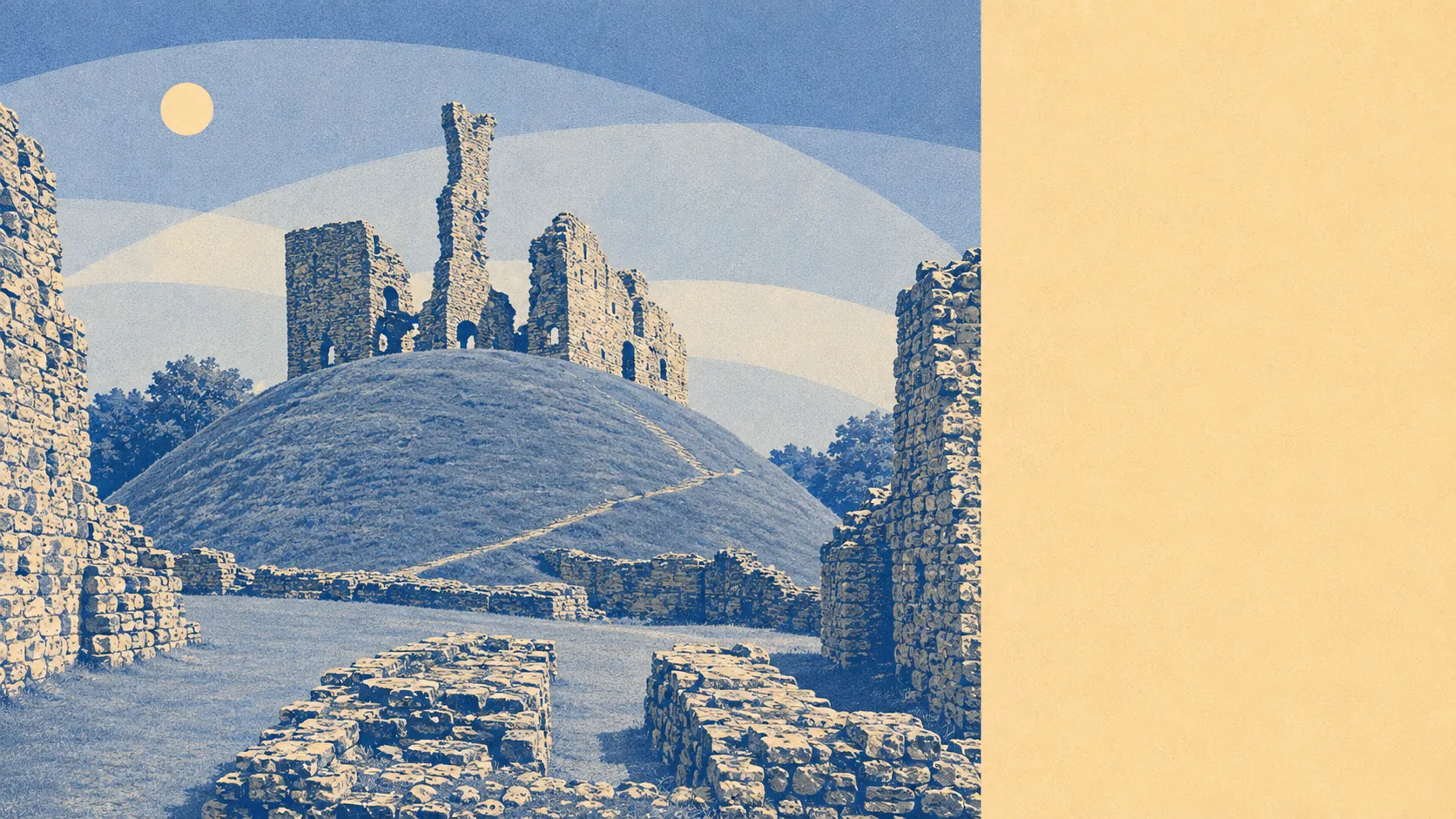
Heritage sits lightly. There are 34 listed buildings, one at Grade I, four at Grade II star and 29 at Grade II, including the Chapel of St James, the Church of All Saints and the Town Hall, plus three scheduled monuments and a single conservation area covering the historic core. Outside that core you can get on with your windows. Inside it, replacing a window becomes a planning conversation, and Okehampton Castle is a ruin owned by English Heritage rather than a constraint on your extension.
The character follows from all that. About 60% own outright or with a mortgage, the median age is 44, and typical gross household income before tax runs to about £46,500. It is a town of settled households and older money in the modest sense rather than the interesting one, with a rating list carrying about 112 holiday lets, which is the number that tells you how much of the local economy is other people's fortnight.
It suits anyone who wants space, a real high street, fast internet and a moor they can be standing on in ten minutes, and who has already made peace with driving to a hospital. Nine in ten of the town's rated food businesses hold the top hygiene grade, which is a small thing that says something about how the place runs itself.
It does not suit anyone who needs a city's services on a city's timetable, or a buyer who reads a crime rate without reading what produces it. If you want the moor as a view rather than a lifestyle, the villages will sell you that at a premium, and the town will keep the shops.
The town's own past has a decent line in comeuppance. Okehampton sent two members to the Commons until the Reform Act of 1832 struck it off as a rotten borough, which is one way of finding out what your constituency is really worth. Gwyllym Lloyd Wardle sat as its member, John Luxmoore left to become a bishop three times over, and James Meadows Rendel went out into the century as a civil engineer, which for a town whose relationship with the outside world has always been about roads, rails and viaducts is at least on brand.
So the answer is a qualified yes, with the qualification in bold type. Its real strength is what surrounds it: green space in every direction, water minutes away, and a national park close enough to be a Tuesday evening rather than an expedition. The weak spot is safety, and specifically a recorded crime rate well above its own district, driven in part by a town centre that serves far more people than live in it. Buy here for what is outside the town and you will be delighted. Buy here expecting a sleepy market town and the police statistics will keep correcting you.