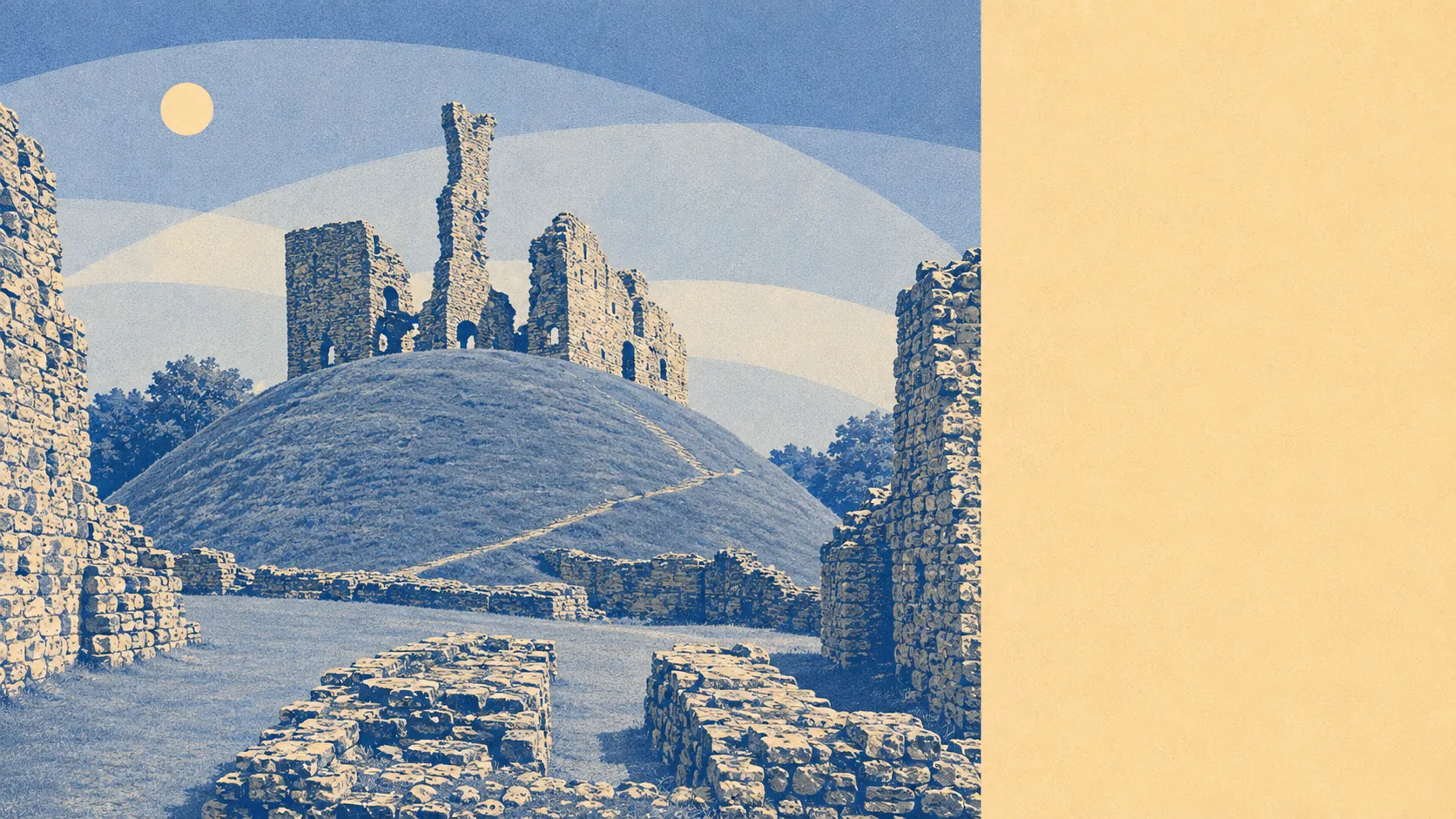
For most houses here, yes, and for a small and very old minority, not without a conversation. The listed stock runs to a few dozen buildings, and almost all of them sit at the lowest grade. A single conservation area covers the historic core. Three quarters of the town's homes went up after 1930 and carry no historic protection whatsoever. The constraint in Okehampton is street-sized rather than town-sized, which is the opposite of what the castle in the middle of it suggests.
Historic England's register carries 34 listed buildings in the town: 1 at Grade One, 4 at Grade Two Star and 29 at Grade Two. Listing binds the whole building rather than the pretty half of it, so consent covers internal work, rear elevations and anything that affects character, not only the bit visible from the pavement. Owners find this out at different speeds. The ones who find out early hire someone who has done it before, and the ones who find out late learn a new phrase for a window they have already ordered.
One conservation area covers the historic centre. Inside it, the ordinary rules tighten: demolition, trees and a range of alterations that would be nobody's business a few streets away become the council's business, and permitted development rights are read more narrowly. The boundary is a line on a map that most buyers never check, and it is the single most useful thing to look up before offering on anything in the middle of town.
Three scheduled monuments sit within the area covered here, which is the strictest protection the system has. That tier rarely troubles a domestic extension, but it matters for anyone buying land or a plot on the town's edges rather than a house on a street.
None of this has stopped people building. Council records carry 770 planning applications across the area between March 2024 and June 2026, with 321 of those in the most recent twelve months. That is a steady flow of extensions, alterations and outbuildings from a town of this size, which tells you more about what is achievable here than any policy document does.
In practice, that leaves two different experiences depending on which house you buy. Most of the stock is ordinary postwar and late-century housing on ordinary plots, where permitted development covers a good deal of what people actually want and a full application handles the rest. The older core is a different job, with an extra layer of consent, a longer timetable and an architect who needs to know the local team by name. The check costs nothing: look up the listing entry and the conservation area boundary before the offer, not after the survey.
Freedom to alter a house here lands mid-table. The historic protection is real but narrow, concentrated in a small centre rather than smeared across the town, and the planning record shows work getting done every month. Buy outside the old core and the constraint is largely theoretical. Buy inside it and the constraint is the project.