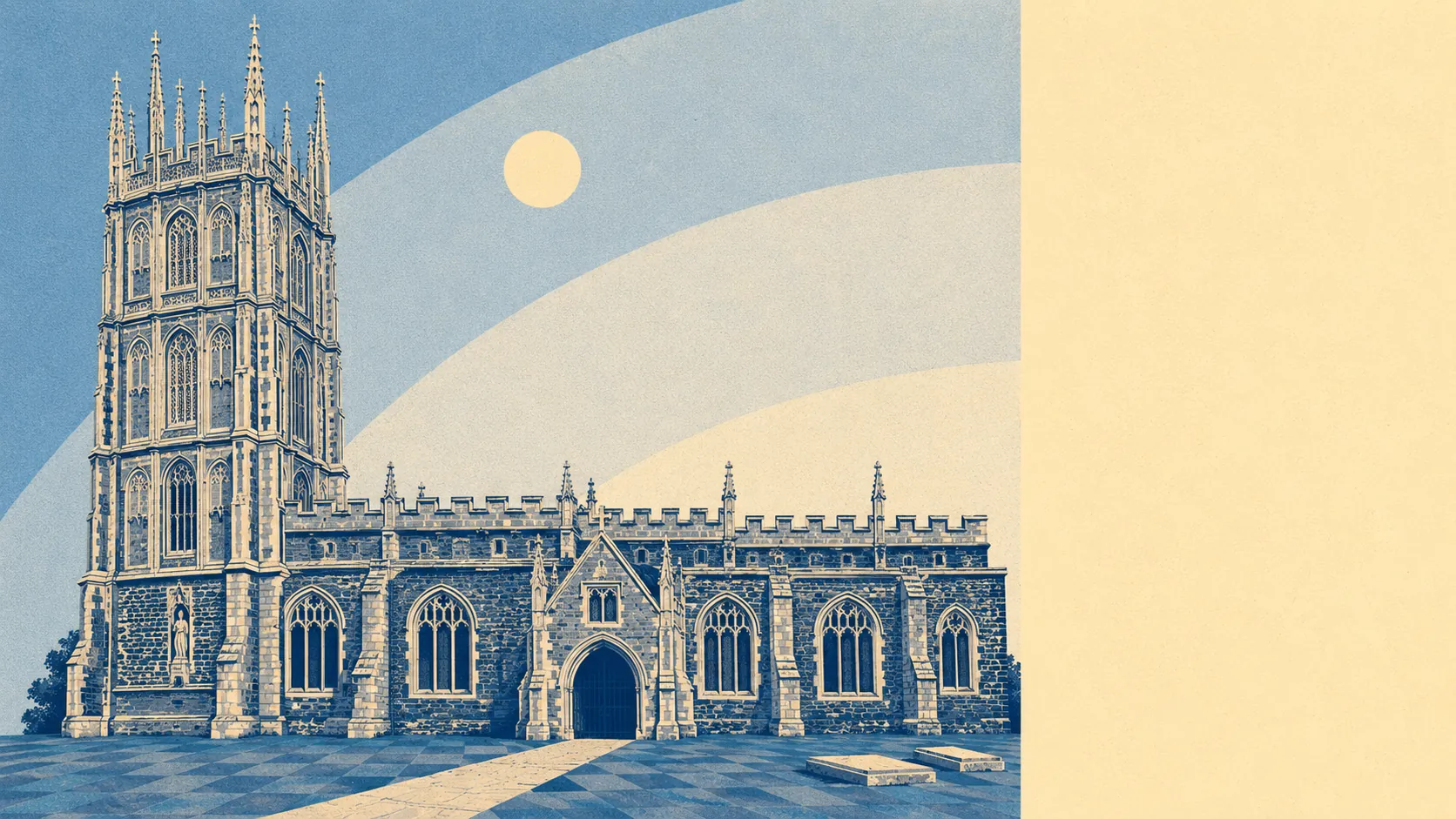
Yes, and with unusually little standing in your way. There is no conservation area covering the town. Listed buildings number a couple of dozen out of a housing stock in the thousands. Hundreds of planning applications have gone in locally over the past two years, so the neighbours are clearly not being turned away at the door. If your extension gets refused here, it will be for what you designed rather than where you designed it.
On listing, Historic England's register carries 26 listed buildings across the area. One is grade one, one is grade two star, and the remaining 24 are grade two. If you own one of those, listed building consent applies to alterations affecting its character inside and out, which covers rather more than people expect: windows, internal walls, fireplaces, and the kind of thing a builder will happily describe as "just a bit of tidying up". If you do not own one, listing places no constraint on your house whatsoever, and no amount of proximity to a listed neighbour changes that.
There is also 1 scheduled monument recorded in the area. That is the strictest protection tier in England and it attaches to the ground as much as the structure, so it matters if you are buying land adjoining it or planning anything involving excavation nearby. For a standard house on a standard plot it is an interesting footnote rather than a planning problem.
The live evidence is more useful than the theory. Between April 2024 and June 2026, 452 planning applications were lodged across the area, 202 of them in the most recent twelve months. That is a steady stream of extensions, conversions, garden rooms and the rest going through the system. People here alter their homes, routinely, and the process is well trodden enough that any local architect or agent will have done a dozen like yours.
One listed building in the area sits on Historic England's Heritage at Risk register. That means a building in poor condition, which brings both closer scrutiny of any work and the possibility of grant support toward repair. It is a specialist project for whoever takes it on, and it has no bearing at all on an ordinary house down the road.
Practically, most straightforward work here falls under permitted development: a rear extension within the usual limits, a loft conversion, a garden building. Without a conservation area or an article four direction in play, the things that get restricted in prettier towns, replacement windows, a front porch, a bit of hard standing, are generally yours to get on with. Check the specific property before you commit, because permitted development rights can be removed by condition on newer estates, and a house that has already been extended may have used up its allowance. The word of an estate agent that a place has "obvious scope to extend" is a sales line, not a planning determination.
Freedom to alter your home is one of the genuine strengths of buying here. The constraints are the ordinary national ones plus a short list of buildings that either you own or you do not, which is about as clean as English planning gets.