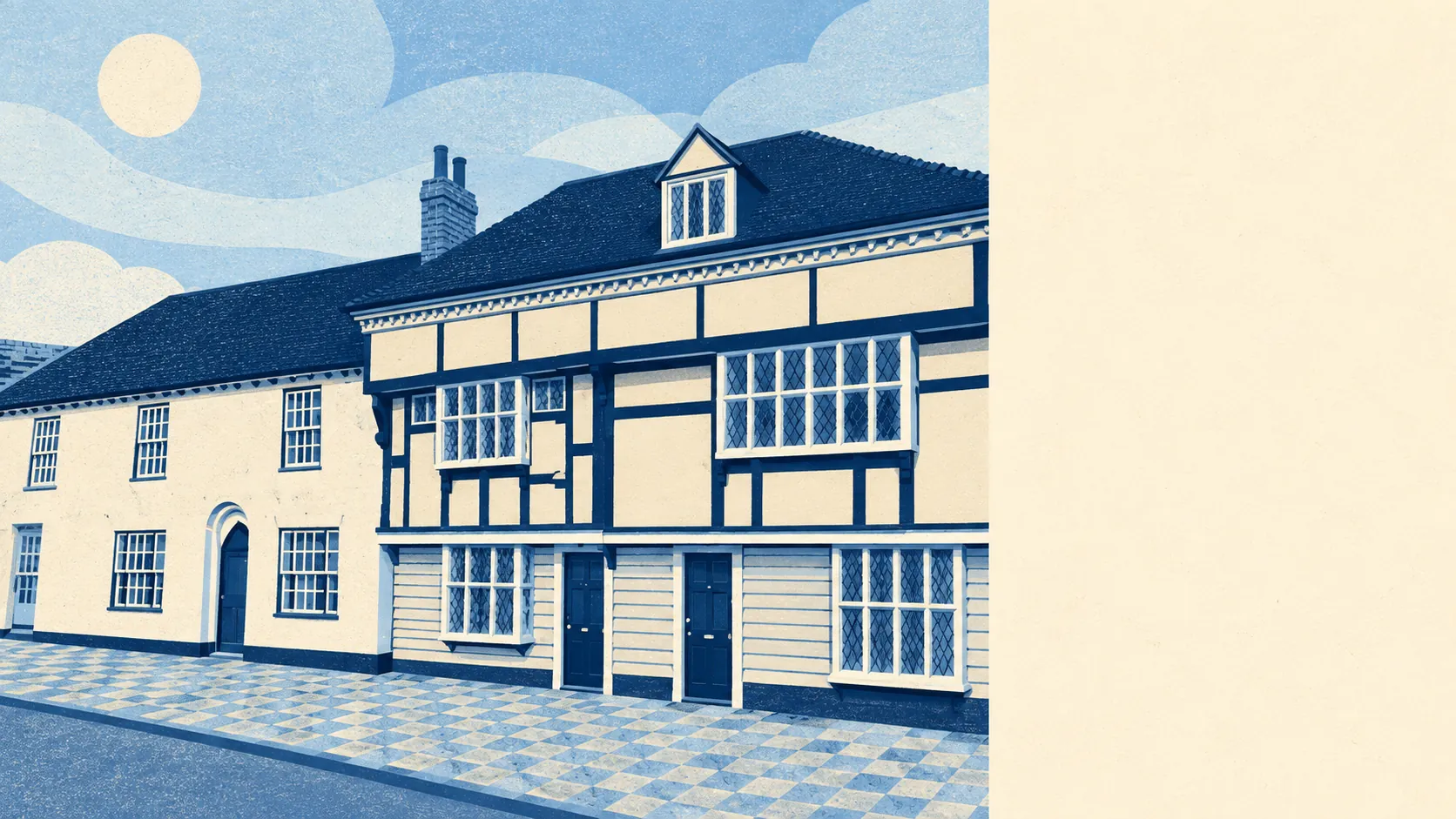
You can extend a house in Newington, but in a lot of the village the planners get a say first. Dozens of homes are listed. Ten conservation areas cover the village and its neighbours. Three scheduled monuments are in the mix. The neighbours still file hundreds of applications a year, so it can be done, just not quickly.
There are 80 listed buildings across the Newington area. Three are Grade I, five are Grade II* and 72 are Grade II. Listing covers the whole building, inside and out, so anything that changes its character needs listed building consent on top of any planning permission, and that includes windows, doors, internal walls and the kitchen you had in mind. If the house you're viewing is one of the 80, the extension plans in the estate agent's brochure are aspirational, not approved.
There are 10 conservation areas in and around the area, including Newington High Street, Newington Church, Newington Manor, Hartlip Village and Lower Halstow. Living in one doesn't stop you extending, but it narrows what you can do without applying. Changes visible from the street get more scrutiny, and some works that would be automatic elsewhere need permission here. Check the council's rules for your specific conservation area before you commission drawings.
The area also has 3 scheduled monuments, the strictest tier of protection in the heritage system. They matter mainly if your land sits next to one. Digging foundations near a protected ancient site is a conversation with a lot more people in it.
None of this has stopped anyone trying. Between April 2024 and June 2026 the area logged 1,669 planning applications, 679 of them in the last twelve months to June 2026. That doesn't tell you how many were approved. What it does tell you is that alterations here are normal and planning officers are used to them.
Underground, the British Geological Survey rates shrink-swell clay no higher than class 3 anywhere in the area, a moderate hazard, and only about 2% of postcodes reach that level. That class means clay that expands when wet and shrinks when dry, which is a question of how deep the foundations go and what a structural engineer thinks of the trees near the house. It's a design point, not a reason to panic.
In practice, a house outside the listed register and the conservation areas can usually use permitted development rights for modest extensions, the ones that don't need a full application. A listed house needs consent for almost anything. A house in a conservation area falls between the two, with some permitted development rights and some restrictions. Find out which of the three you're buying before you pay for the architect, not after.
Your freedom to extend in Newington is limited. Outside the protected streets the rules are ordinary, but on the historic core expect the planners to want a say on everything.