Merriott is a good place to live if you have already stopped going out. Three in four households own their homes. The median resident is past fifty. Crime runs a long way below the county average, and the buses barely run at all. Neither of those is an accident, and the people who moved here signed up for both.
The housing is village-standard in the most literal sense. On the council tax valuation list, terraces and semis take about three in ten dwellings each, detached houses a fifth, bungalows 14%, and flats 4%. That last figure tells you flats here are not a lifestyle choice, they are something that happened to a building. Around 36% of the stock went up before 1930, which is the part of the village people photograph. Roughly 62% of homes run on mains gas, about 12% heat on electricity alone, and around 3% have no central heating at all, so the fuel question belongs in the viewing rather than the first winter. On the energy certificates, about half the certificated stock sits in bands A to C, 34% in band D, and 15% in band E or worse.
Prices are where Merriott stops looking like a Somerset postcard and starts looking like a sum that works. The Land Registry recorded 21 sales in the twelve months to May 2026, at a median of £245,000. Terraces did most of the trading at a median of £225,000, and the few semis that changed hands sat at £280,000. On the sales that could be matched to a certificate's floor area, that works out at around £3,000 a square metre. Council tax clusters in band C, with about 32% of dwellings down in bands A or B, and a band D bill of roughly £2,560 a year.
Renting is thinner ground for evidence, because the reliable figure is the Somerset-wide one rather than the village's own. Typical private rent across the Somerset area is about £990 a month, up around 4% over the year, with three-bedroom homes across the same area nearer £1,100. Treat it as the shape of the county, not the shape of your street.
On safety, the published rate is about 38 offences per 1,000 people over the twelve months to May 2026, roughly 59% below the Somerset average. That is the single most flattering number the village has, and it is flattering by a distance. The caveat sits one level up: Avon and Somerset Constabulary charged or summonsed in about 11% of cases against about 12% nationally, which is a force-wide outcome rather than Merriott's own. Very little happens here. What does happen is handled at the same odds as everywhere else.
Connectivity is the bill for all that quiet. About 61% drive to work and 28% work from home. Trains and buses together account for under 1% of commutes, which reflects the timetable rather than the taste. Six bus stops serve the area, averaging two scheduled weekday departures each, and not one of them has a weekend service. Crewkerne Rail Station is the nearest station, and it is a station you drive to. The Department for Transport's modelled times put a town centre at 11 minutes by car against 22 by public transport, a doctor's surgery at about 13 minutes by car against 27, and the nearest hospital at 28 minutes by car against roughly 103 on public transport. Those models date from 2019, and the public transport half has aged considerably worse than the car half. Broadband, oddly, is the thing that arrived on time: gigabit service reaches 97% of premises, superfast covers the lot, nothing falls below the universal service obligation, and 97% of the area gets a signal from every mobile operator.
Water is a mixed answer and depends entirely on which measure someone quotes at you. About 15% of postcodes flag high on at least one flood indicator, surface water included, with 6% medium and 34% low. On the Environment Agency's river and sea flood zones, which measure something narrower, around 2% of the area falls in zone 2 and none in zone 3, and there is no recorded historic flooding. Green space averages 330 metres away with about six sites within a kilometre, and water is closer still at around 280 metres. The genuinely useful thing to know is radon: the geological banding puts roughly 92% of postcodes at band 3 or above, topping out at High, so a radon test here is ordinary housekeeping rather than nerves.
Heritage is the other constraint, and it is the one buyers underestimate. Fifty-nine listed buildings sit within the area covered here, one at grade two star and the rest grade two, and the village has a conservation area over its core. Replacement windows, solar panels, a dormer or the wrong front door stop being a weekend and become a correspondence. Hinton House and its registered park sit over at Hinton St George, also covered on this page, where the same rules apply with better gravel.
The character follows from the ownership. About 74% of households own, the median age is 51, and median gross household income was around £51,900 in the financial year to March 2023. Things do happen in Merriott. They happen at two in the afternoon.
It suits people who work from home or drive without resentment, who want a period house at a Somerset price and can absorb a heritage constraint or two, and who genuinely prefer their evenings uneventful.
It does not suit anyone whose life depends on a bus, a station platform, or somewhere open past nine. Households running on one car will find the timetable makes the decision for them, and teenagers will make their feelings known.
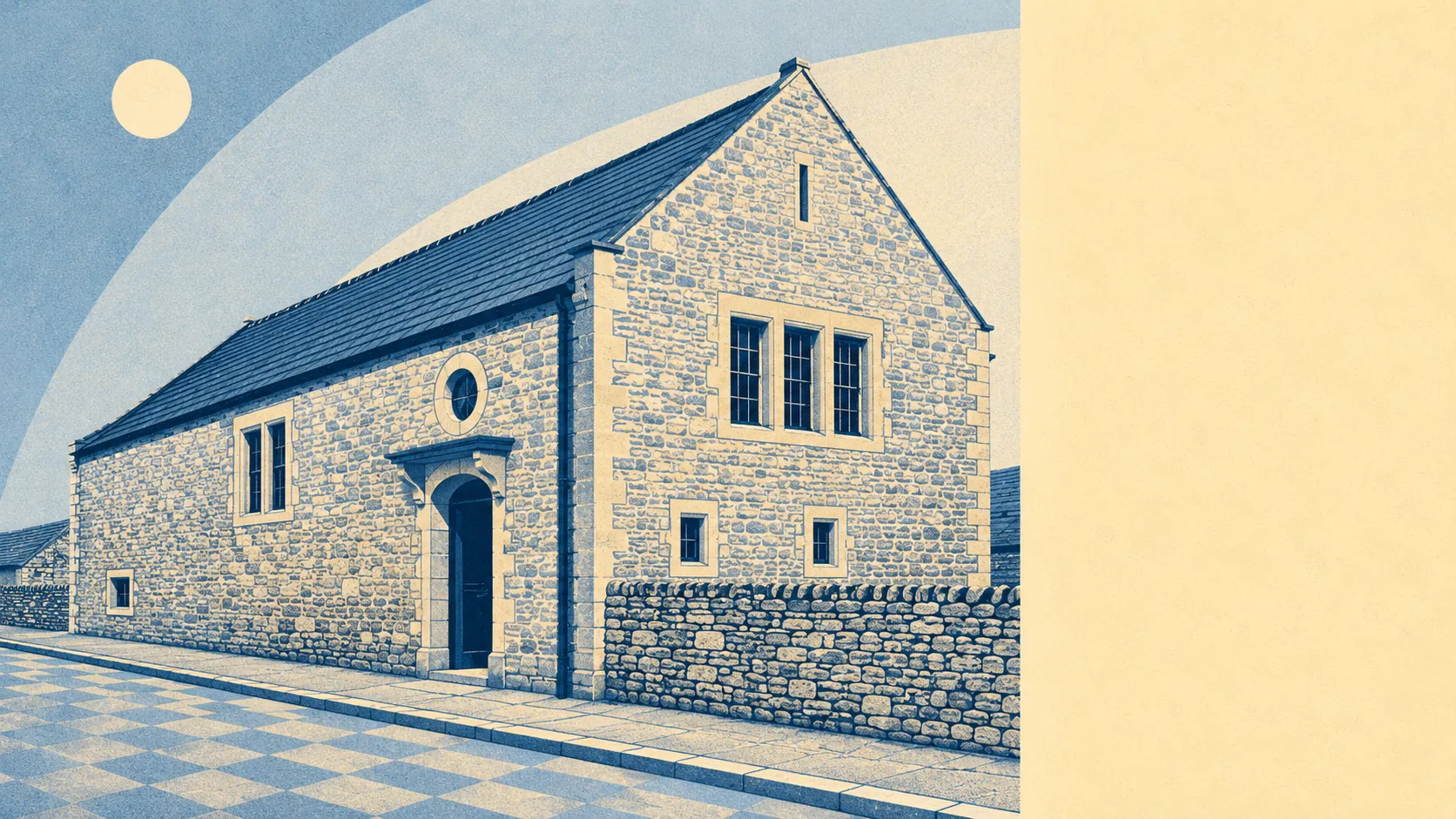
The village has been a boundary gate for a very long time. Domesday recorded it in 1086 under Harding son of Eadnorth, whose descendants took the village's name and held it until Sir John de Meriet died in 1391, at which point the family's contribution to national events concluded. The school building dates from 1876 and has the 1834 Sunday school inside it. Francis Trask, born 1840, dealt with the local pace by leaving for New Zealand entirely, joining its Legislative Council and becoming Mayor of Nelson, which remains the most decisive travel plan anyone from here has committed to.
Merriott's real strength is safety, and it is not close. The weak spot is transport and connectivity, where the honest summary is that the car is the timetable. Buy here for the price of the house, the quiet of the street and the odds of nothing happening to you. Do not buy here expecting the last bus, because it left before you were looking.