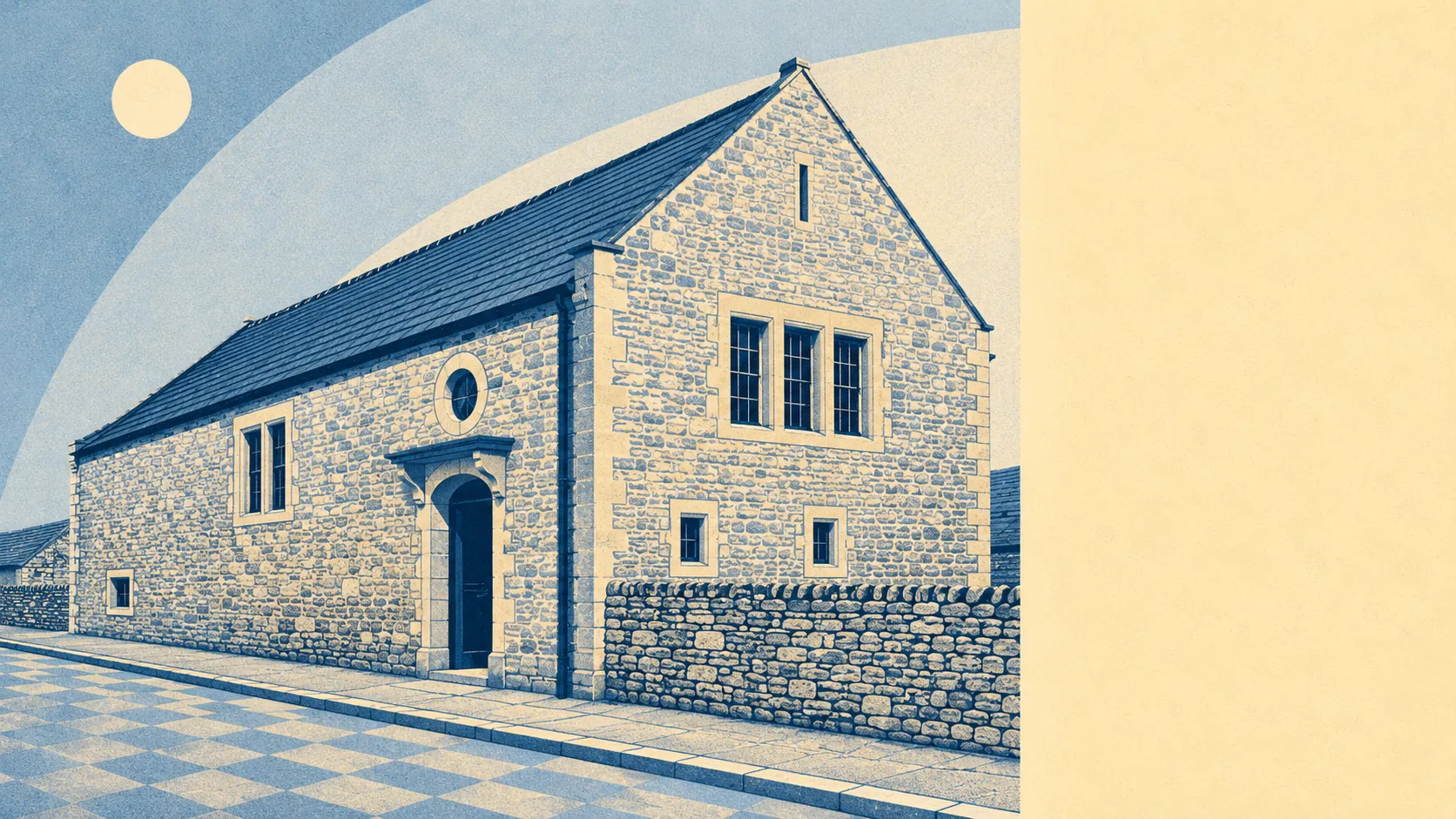
Yes, and the village demonstrates it every year without much fuss. Fifty-nine buildings here carry a listing. One conservation area sits over the heart of the place. Applications keep going in regardless. The heritage looks forbidding on paper, and in practice it sorts homes into two groups: the ones where you fill in a form, and the ones where you fill in a longer form.
Historic England's listing covers 59 buildings across the area, of which one holds grade two star and 58 hold grade two. None is listed at grade one. A listing follows the building rather than the plot, and it covers the inside as much as the outside, so replacement joinery, a knocked-through wall or a flue in the wrong place all become consent questions rather than weekend decisions. Doing the work first and asking afterwards is the one route that carries genuine legal consequences, which is worth knowing before a builder tells you it will be fine.
There is one conservation area, covering Merriott itself. Designation of that sort brings tighter control over demolition and over trees, and permitted development rights can be restricted within the boundary rather than applying automatically. Whether any particular address falls inside the line, and what has been withdrawn there, is a question for the council's own mapping rather than something a village-level answer can settle.
The volume of applications is the part worth paying attention to, because it is live evidence rather than policy theory. Between May 2024 and June 2026, 55 planning applications were logged for the area, 21 of them in the most recent twelve months. That is a steady stream of people extending, converting, reroofing and rearranging, in a village of this size, inside the same constraints everyone here reads about and worries over. Nobody files 55 applications in a place where the answer is always no.
The practical shape is straightforward enough. Fifty-nine listed buildings sit against 1,240 dwellings on the council-tax valuation list, so most homes here are not listed, and roughly 36% of the stock predates 1930, which is where the older fabric and the tighter rules cluster. An unlisted house outside the designated boundary works on the ordinary permitted development rules, with the usual limits on size, height and how close you build to a boundary. A listed building, or one inside the conservation area with rights withdrawn, needs consent before the first brick moves. The order matters: check the designation and the title before the offer, not after the architect has drawn something beautiful.
Freedom to alter a house in Merriott lands in the middle. The rules here are real and they are concentrated on the older core, but the village keeps extending itself anyway, which is the most useful answer the planning record can give.