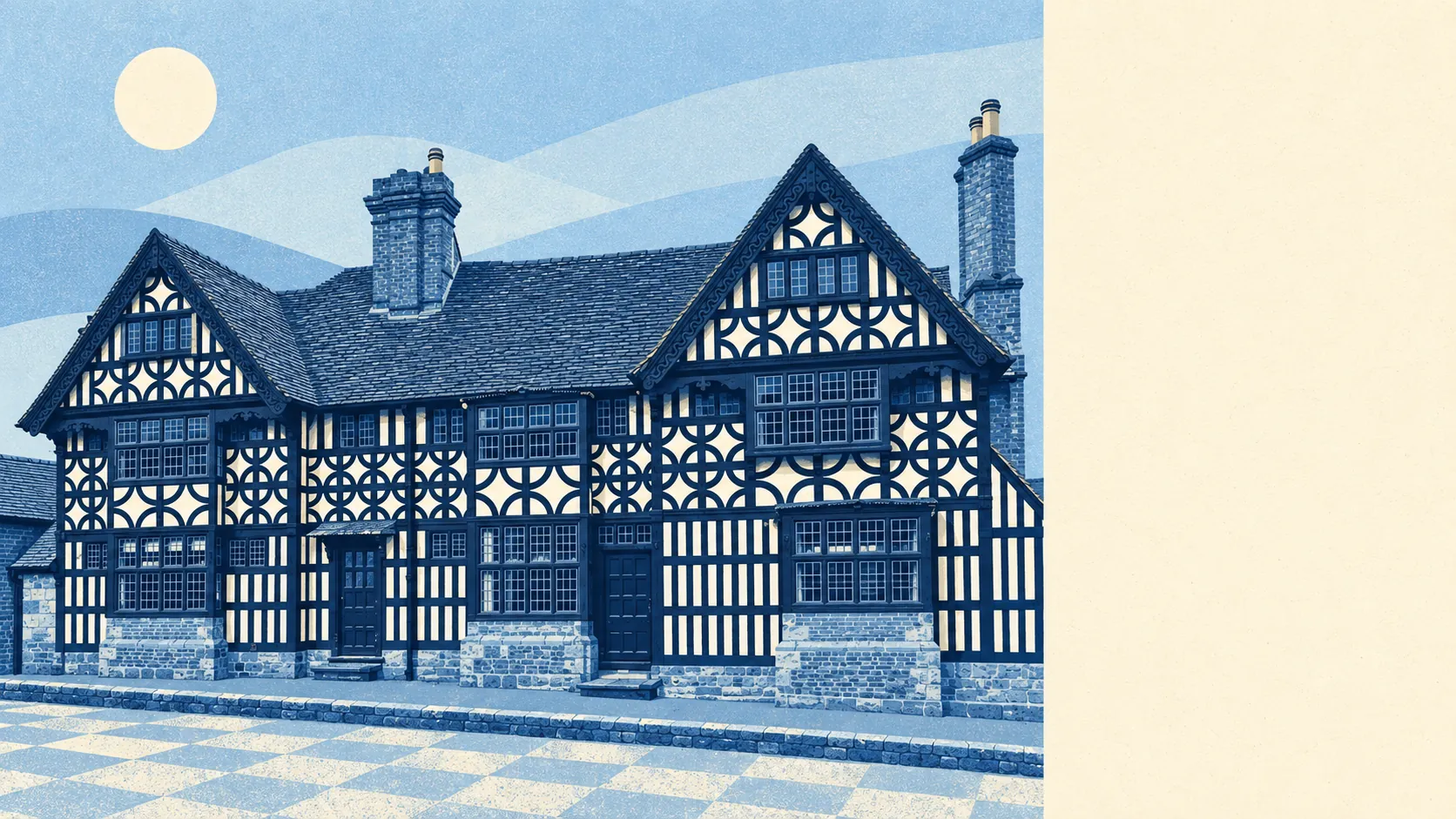
Countryside on every side, and all of it protected. Green space is a short walk from almost every door. Water is within reach too. The high street is small, with a handful of pubs and one restaurant. In Mayfield the fields are the amenity and the high street is the footnote.
Public green space is close. The average home is about 200 metres from the nearest green space, with around eight within a kilometre. That is not one tidy recreation ground doing everything; it is a choice of places to walk the dog, which the dog will have views on.
Water is nearby as well. The nearest blue space, meaning ponds, streams and the like, averages about 410 metres from home, and there are around 16 within a kilometre. None of it is the seaside, but it is enough for a walk that ends at the water.
The National Cycle Network runs about 810 metres from the average home, and about 32% of postcodes sit close to it. There is no ancient woodland mapped within Mayfield itself, which will surprise anyone who has driven the lanes in autumn, but the High Weald setting does most of the work around it.
The high street is made to measure for a village. The rated-premises data counts 32 shops, 3 pubs and 1 restaurant, with 9 offices and 12 holiday lets alongside. The restaurant scene will not tempt anyone out from Tunbridge Wells, and the pubs carry the social life. Anyone expecting the café culture of a market town will find a village that goes to the pub instead.
Air quality is good. Fine-particle pollution across the Wealden council area averaged about 6.4 micrograms per cubic metre in 2024, a council-wide figure and not a reading for Mayfield's own streets.
The designation is the headline. The whole of Mayfield lies inside the High Weald Area of Outstanding Natural Beauty. There is no site of special scientific interest and no ancient woodland mapped within the village itself, so the protection here is the landscape as a whole rather than one fenced-off habitat.
The surroundings have plenty of character. Argos Hill's windmill sits on the ridge outside the village, the sites of the Mayfield and Woolbridge iron furnaces recall the Weald's industrial past, and hamlets such as Five Ashes, Tidebrook and Skippers Hill fill the lanes between farms. Rotherfield's conservation area is a short drive away. The Weald ran on iron once. It now runs on walking boots and property values.
Private outdoor space is generous. The Office for National Statistics' garden measure puts Mayfield at about 521,000 square metres of private garden per 1,000 residents. In a village of detached houses and old plots, most households have a garden of their own, and many have more lawn than they want to mow.
The valuation list gives the business side. Mayfield has 58 rateable premises, the largest group being 28 in the main shop category, followed by 4 offices. These are premises on the list, not a guarantee of what is trading this month, but they describe a village-sized commercial core.
The food scene is small but clean. Of the 14 food premises with a hygiene rating, about 57% hold the top score and none sit at the bottom. The choice is thin, but what's there tends to be well run.
The surroundings are one of Mayfield's real strengths: protected countryside, green space and water close to every door, and gardens to match. The high street and the restaurants are the weak part, and nobody moves here for them.