Marylebone logs about 1,150 recorded crimes a year for every 1,000 people who live there, and that figure is the part of the deal a buyer has to settle with before anything else. Most of it is theft of one kind or another, the sort that follows shoppers. Everything else about the place is either excellent or expensive. It works out as a middling bet: a fine life in central London, with a large number attached to the walk home.
Police records for the year to May 2026 put Marylebone's rate at roughly 1,150 recorded crimes per 1,000 residents, about 161% above the Westminster average. The mix explains much of it. Theft from the person makes up 27% of recorded crime here against 2% across England and Wales, other theft 21% and shoplifting 16%. Violence and sexual offences, the largest category almost everywhere, is 9% here against 35% nationally. A small resident population sharing its southern edge with Oxford Street was always going to lose the arithmetic.
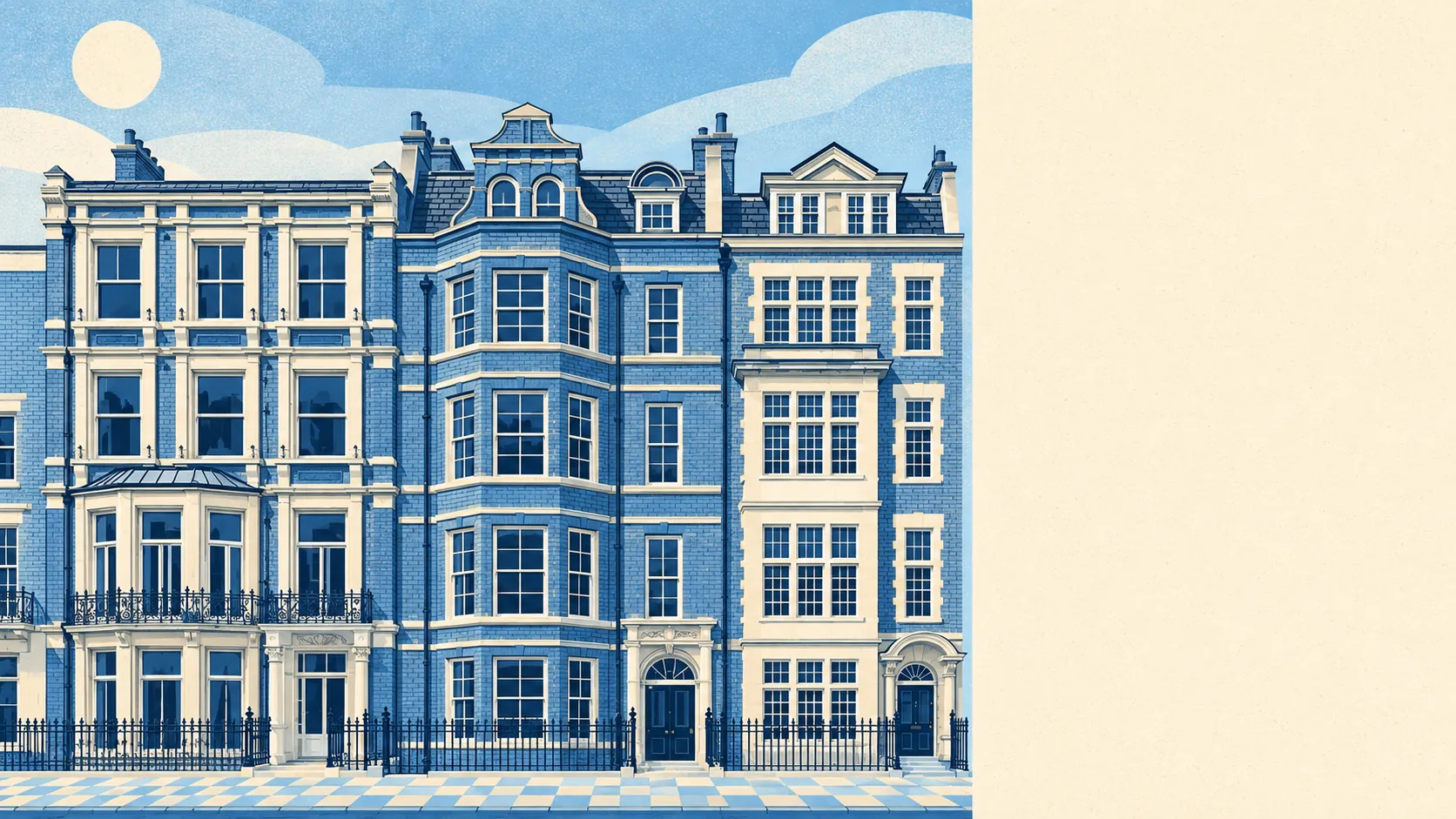
There are 2,200 listed buildings across the area, 91 of them Grade I, and 36 conservation areas fall within the map box drawn around it. A new window, a roof terrace or a rear extension goes through Westminster's planning department, and usually slowly. Henry VIII enclosed the northern part of the manor as a deer park in 1544, and the place has been fending off change ever since.
In the Land Registry's twelve months to May 2026 there were 107 sales, at a median of £1,200,000. The 86 flats went for about £1,123,750 and the 18 terraced houses for about £2,500,000. Band G is the most common council tax band, and bands A and B together cover about 2% of homes. Here the flat is the budget option, and it still runs to seven figures.
Renting gets no cheaper. Typical private rent across Westminster comes to about £3,150 a month as of April 2026. That is an average for the whole borough, so it takes in streets a long way from Marylebone Village.
Flats make up about 92% of homes on the council tax list and terraced houses about 6%. About 56% were built before 1930. The energy certificates come out better than that age profile would suggest: about 63% rate C or above and about 10% E or worse. About 56% of homes heat on mains gas, and about one in five relies on electric heating alone, which is hard going in a room with Victorian ceilings.
London Marylebone Rail Station shares the area's name, and London Paddington and London Euston are on the list of stations nearby. Buses do most of the work. There are 241 stops, averaging about 900 scheduled departures each on a weekday and around 46 buses in the peak hour, and about 99% have a weekend service. Gigabit broadband reaches about 93% of premises. At the 2021 census, taken while London was still in lockdown, 63% of working residents worked from home, 14% walked and 1% took the train. The station is named after the neighbourhood, and the neighbourhood hardly uses it to get to work.
About 11% of postcodes are flagged high on at least one flood indicator, with surface water counted, while the Environment Agency's river-and-sea flood zones cover none of the area. The risk is heavy rain with nowhere to go, in a parish named after a stream whose curve Marylebone Lane still follows.
Ofsted has graded 25 settings on the Westminster figures used here. All 25 are good or better and nine are outstanding. The three primary schools in the area with published results average 112 in key stage 2 maths, and the one secondary with results posts an Attainment 8 score of 61. Hampden Gurney CofE Primary School, St Mary's Bryanston Square CofE School, St Vincent's Catholic Primary School and The St Marylebone CofE School are the local names. Schools are the least of a parent's worries here, though finding a garden for the children is another matter.
About 29% of households own their home and the median age is 36. The Office for National Statistics models average gross household income at about £83,800 for the financial year to March 2023, before tax. The typical resident is a well-paid tenant living in somebody else's very expensive building.
The average front door is about 140 metres from green space, with water about 690 metres away. Regent's Park takes up the north, with London Zoo inside it, and Hyde Park lies off the south-west corner. This page also covers Hanover Square and Piccadilly to the south. For a neighbourhood with almost no private gardens, the public ones are among the best in London.
Lord Byron was born here and baptised at St Marylebone Parish Church. Charles Dickens lived at 1 Devonshire Terrace, which was demolished in the 1950s, so the heritage protection arrived too late for him. Thomas Paine and Norman Wisdom are also on the list of notable names. Samuel Pepys spelled the place Marrowbone in his diary, and visitors have been getting the pronunciation wrong ever since.
Marylebone is right for people who want a royal park at the end of the road, Georgian squares on every side and everything else within walking distance, and who don't mind the shopping crowds. Families who need a garden, buyers planning to remodel and anyone who wants an uneventful doorstep at closing time should look further out.
The crime figure comes from living beside the shops. Most of it is theft, so the main cost to a resident is keeping a close eye on their things on the street. In return, Regent's Park is close enough to treat as a front garden. On balance it comes out as a middling place to live, and which way it tips depends on whether the park or the pickpockets matter more to you.