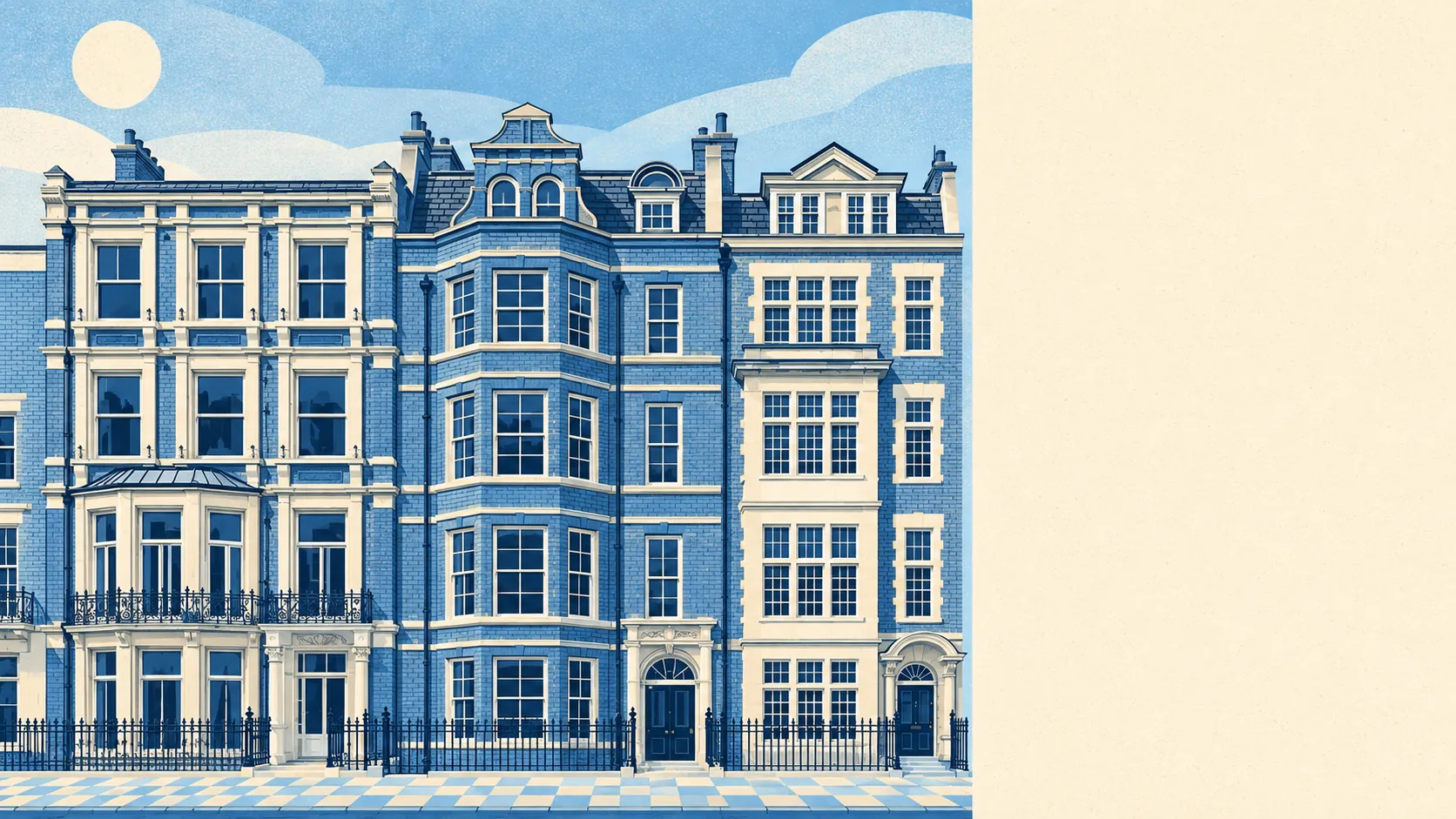
You can extend a home in Marylebone, though very little gets done without somebody's permission. Listed buildings are everywhere. Conservation areas cover most of the map. Most homes are flats with a freeholder attached. Change happens here slowly, in writing, and only with Westminster's agreement.
There are 2,200 listed buildings across the area: 91 at Grade I, 180 at Grade II* and 1,929 at Grade II. Listing protects the whole building, inside and out, so replacing windows, taking out a wall or adding a floor needs listed building consent on top of any planning permission, and doing the work without it is a criminal offence. That is a lot of Grade I for a neighbourhood whose typical home is a two-bedroom flat.
There are 36 conservation areas in and around the box drawn round Marylebone, among them Harley Street, Dorset Square, Portman Estate and East Marylebone. Inside a conservation area, demolition, changes to the front of a building, roof alterations and work to trees all need consent, and the council judges each one against the character of the street. The rear extension that a suburban council might wave through gets examined here for its brickwork and its sightlines.
There are also 3 scheduled monuments within the same box. That is the strictest form of protection there is, and it matters only for land next to or above one.
None of this has stopped the neighbours. Westminster received 2,007 planning applications for the area between April 2024 and June 2026, and 933 of them came in the last twelve months. People here alter their homes all the time, and every one of those changes went through the same forms.
The British Geological Survey puts the ground across 100% of the area in shrink-swell class 3. That means clay that swells when wet and shrinks when dry. It is a published hazard class, and for a building project it means getting a structural engineer to design the foundations, often deeper ones, before the builder digs. It affects the price of the groundwork more than the safety of the house.
Sixteen listed buildings in the area are on Historic England's Heritage at Risk register. These are buildings in poor condition whose repair may qualify for grant funding and will get close scrutiny from the conservation officers. They have no bearing on the buyer of an ordinary flat down the road.
In practice, most homes here are flats, which have far fewer automatic permitted development rights than houses, and most of the rest are in conservation areas or listed. That makes a planning application the normal route for almost any visible change. A flat usually needs the freeholder's written consent under the lease as well, so read the lease alongside Westminster's planning history for the building. Ask the council whether the building is listed and which conservation area it falls in, and have both answers in hand when you make an offer. With a Marylebone flat, you deal with the council and the freeholder at once, and neither of them is in a hurry.
Your freedom to change a home in Marylebone is poor. The neighbourhood's buildings are protected far more closely than the people living in them are left free to alter them.