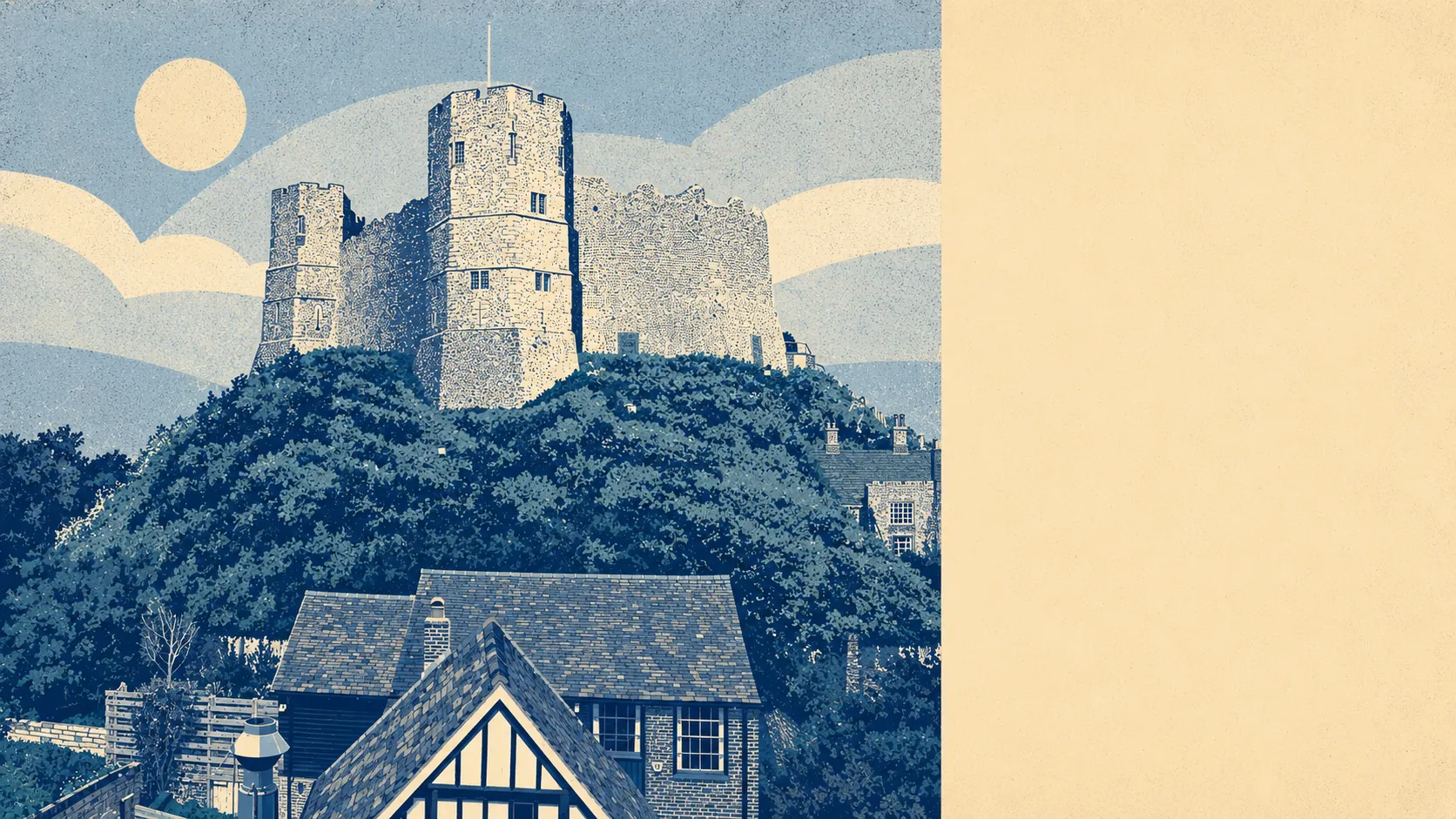
Lewes schools are competent and overpriced. Key Stage 2 maths sits at 104, slightly above the expected standard. Secondary attainment lands at 47.6, somewhere in the middle of the table. There are around fifteen mainstream state primary schools and three mainstream state secondaries in the area. Competent enough for the catchment premium, not so good that you can pretend you bought the house for any other reason.
The primary picture is the broader one. About fifteen mainstream state primary schools cover the area, with Key Stage 2 maths attainment at 104, a touch above the expected standard of 100. In Lewes itself, Wallands Community Primary and Nursery School, Western Road Community Primary School, Southover Church of England Primary School and South Malling Church of England Primary and Nursery School do most of the in-town work. The surrounding parishes are covered by Iford and Kingston Church of England Primary School, Hamsey Community Primary School, Firle Church of England Primary School, Plumpton Primary School, Ringmer Primary and Nursery School, Newick Church of England Primary School, East Hoathly Church of England Primary School, Chailey St Peter's Church of England Primary School, Barcombe Church of England Primary School, Laughton Community Primary School and Chiddingly Primary School. Most are small. Most are church-affiliated. A few have closed in recent years, which means the surviving ones do not need to advertise.
Secondary is sparser. Three mainstream state secondaries serve the area: Priory School in Lewes itself, Chailey School and King's Academy Ringmer in the surrounding parishes. Attainment across the three averages around 47.6, which is the middle of the table. Plumpton College handles the further-education and land-based end of the picture, including the agricultural and equine curriculum the rural parishes are still organised around. Lewes Old Grammar School covers the independent corner for parents who looked at the in-town state options and decided they would rather write a cheque.
There is no automatic catchment for any of these schools. East Sussex allocates on distance from the school gate, which sounds neutral and is, until you find that the distance is measured in straight lines across roof tops rather than by the route an actual child would walk. Parents who think they have bought a guaranteed place by buying a particular postcode find out otherwise in the March of Year 6, and the houses that genuinely sit inside the year-on-year offer line are priced for that knowledge. Nobody in this town pays a catchment premium by accident.
This report grades the schools picture three out of five, which is the average grade. The schools are doing fine on the published numbers. The pricing of the houses around them is doing more.