The country around Leighton Buzzard starts at the end of most streets, and it is the best thing about living here. There is a park or a playing field a couple of minutes from most front doors. The canal and the Ouzel are a short walk further on. Most homes have a proper garden. It is ordinary farmed countryside, nothing grand about it, and it is very easy to get out into.
On average a home here is about 170 metres from the nearest public green space, and around 22 green spaces lie within a kilometre. Pages Park, with croquet lawns beside its pavilion, and the sports grounds at Bell Close are typical of the kind. Very few homes in town are more than a few minutes from somewhere to kick a ball.
Water is close as well. The nearest river, canal, lake or brook averages about 310 metres from home, with about 38 such features within a kilometre. The Grand Union Canal runs along the western edge of town, and the Ouzel and the Clipstone Brook wind through the low ground beside it. For an inland town in Bedfordshire, it has a surprising amount of water.
The National Cycle Network is about 550 metres from the average home, and about 53% of postcodes count as close to it. Further out, the formal gardens at Stockgrove House and the parkland at Battlesden lie north of town past Heath and Reach. Ascott House and its grounds are just to the west.
The rated-premises records list 298 shops, 38 pubs and 22 restaurants. That is a working market town's high street, heavier on shops and pubs than on places to eat out. The town has brewed its own beer since 2014, so 38 pubs have a local option on the bar.
Fine-particle air pollution across Central Bedfordshire averaged about 7 micrograms per cubic metre in 2024, a council-wide figure that also covers the villages and the A-road corridors.
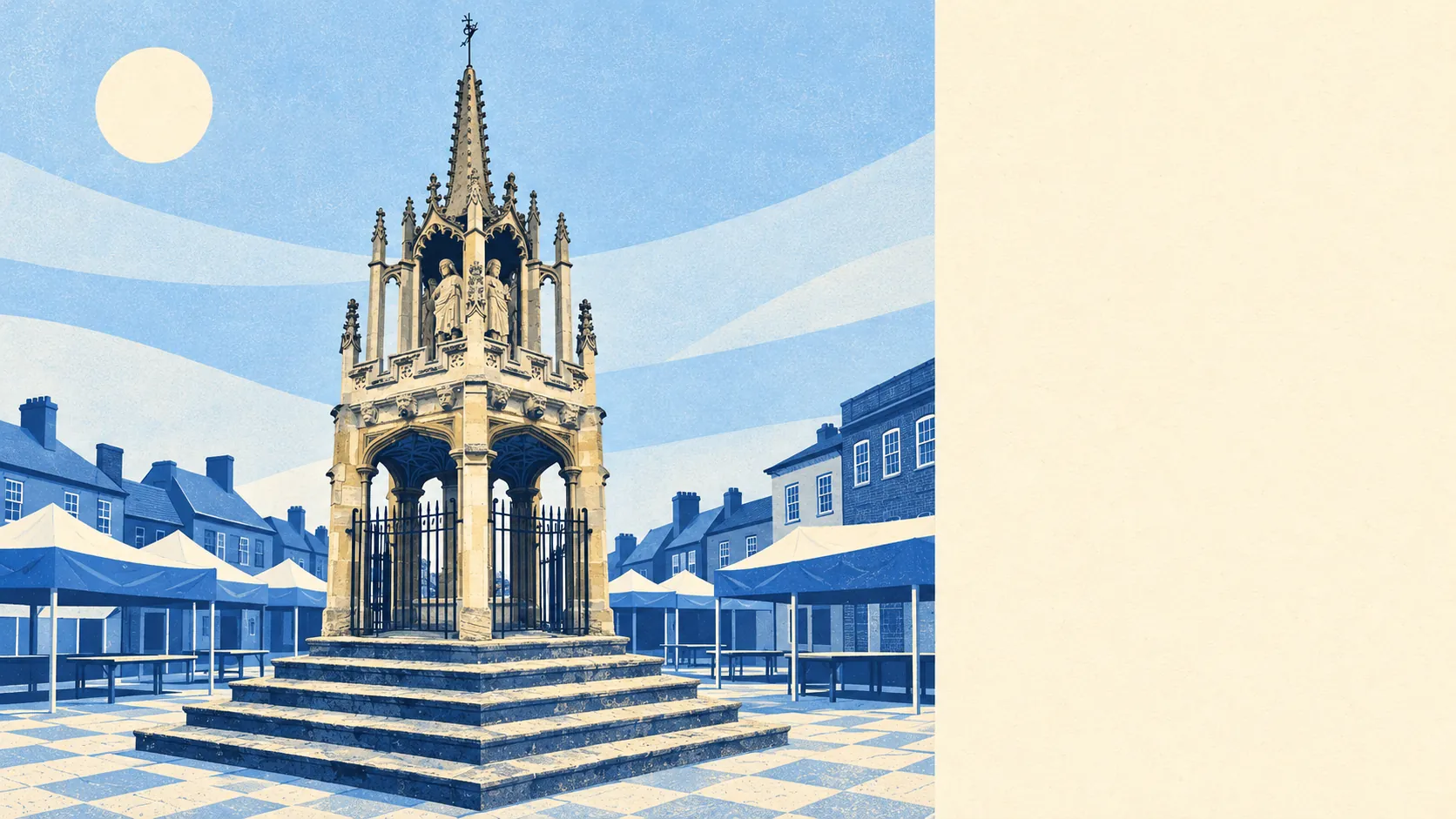
The town itself is a market town with a historic High Street and market square, its centre ringed by post-war estates and newer building on the southern and eastern edges. Leedon, once a separate hamlet, is now simply the town's eastern side. Beyond the edges, villages such as Billington, Stanbridge, Eggington, Slapton and Soulbury begin almost straight away, and Slapton lies between the canal and the county boundary. The Rothschild estate at Ascott and the farmland around it shaped the western side of town long before the estates arrived.
Private gardens add up to about 93,000 square metres for every 1,000 residents across the town's neighbourhoods. That is a lot of lawn. The post-war semis that make up so much of the town came with back gardens, and most of those gardens are still there.
The valuation list for the area counts 1,045 rateable premises. The largest groups are 257 shops, 180 warehouses, 153 offices, 109 workshops and 32 factories. Those are premises on the list, which is not the same as businesses currently trading in them. Even so, it describes a town that still makes and stores things as well as selling them, which fits a place with sand quarries on its doorstep and several national head offices in town.
Eating out is in good hands on hygiene. Of the 188 food premises with a hygiene rating, about 78% hold the top score of five, and about 1% fall at the bottom end of the scale.
No protected landscape overlaps the area. It has no area of outstanding natural beauty, no site of special scientific interest and no ancient woodland. The Chilterns are nearby but begin outside the town. The fields, towpaths and parks here are working countryside that people use every day, free of the rules that come with designated land.
The surroundings are Leighton Buzzard's real strength. Parks, water and gardens are all within a few minutes of almost every home, and open country lies just past the last estate.