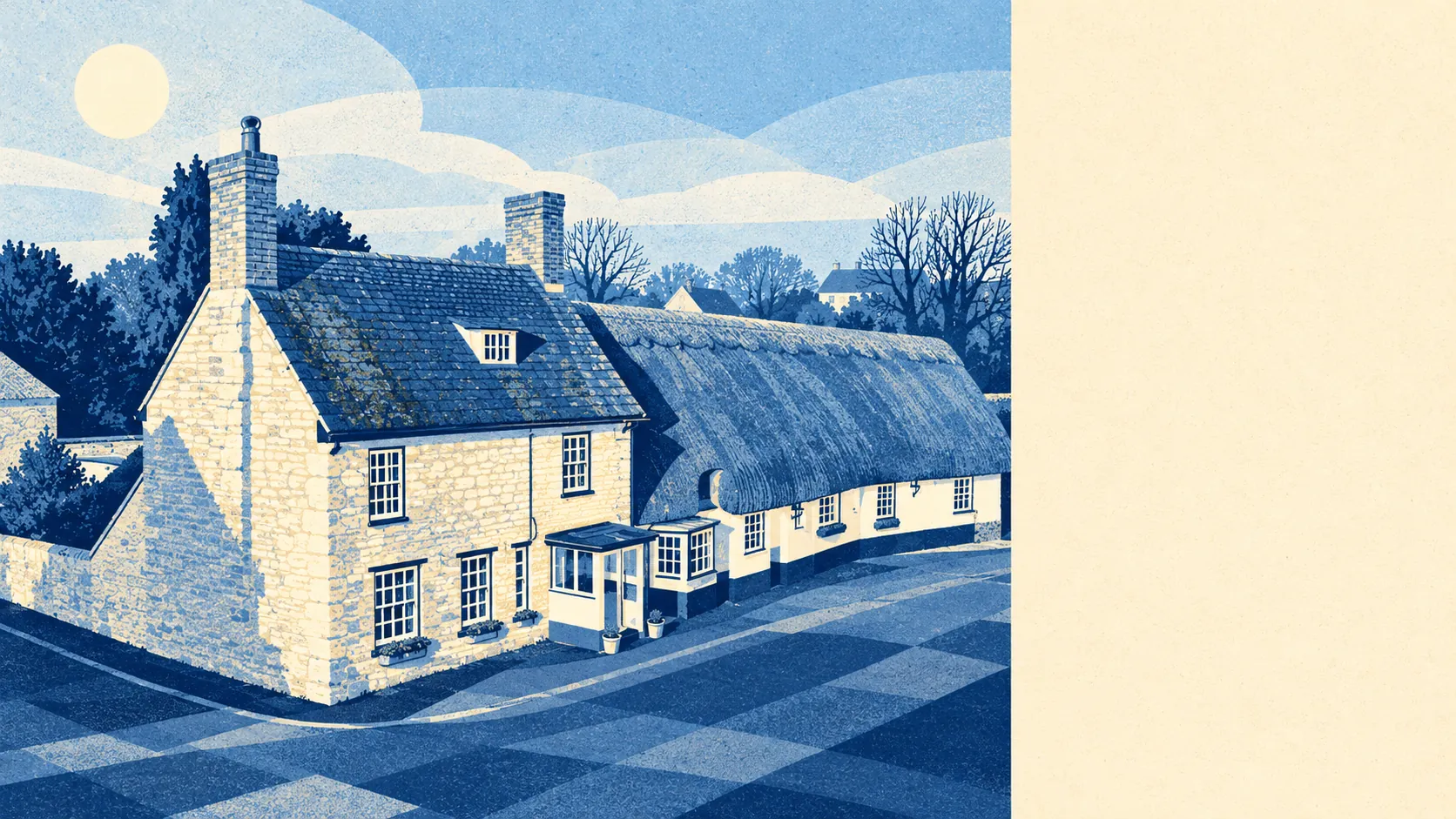
A typical house in Launton costs about £425,000, and the typical house is detached. Four bedrooms is normal. One-bed homes barely exist. The terraces are the cheaper seats, and there are only a handful. You pay for space here, and you get it.
The Land Registry recorded 23 sales in Launton in the year to April 2026, with a median price of £425,000. That figure is pulled upwards by what sold. Detached houses made up 13 of the 23 sales, at a median of about £499,000. The four semis went for about £350,000 and the six terraces for about £312,500. With so few sales, a couple of big detached houses changing hands can shift the median in any given year, so the split by type tells you more than the headline. An asking price on a semi should be judged against the semis, and the village's own median flatters any terrace pegged to it.
The published house price index for the area put the average at about £358,000 in May 2026, up 4.2% on a year earlier. Flats in the same index rose by 0.7% over the same twelve months, which matters very little in a village where flats are about one home in fifty. Neither number tells you where prices go next. A 4% rise is solid and unremarkable, and sellers will mention it more often than buyers do.
Council tax is gentler than the prices. Band C is the most common band in Launton, and only about 6% of homes are in Bands A or B, the cheapest two. A Band D home pays about £2,583 a year. Most of the village pays Band C on a valuation drawn up long before anyone here was asking £425,000.
Renting is mostly a Bicester activity, and the numbers that exist cover the whole district. Typical private rent across Cherwell was about £1,290 a month in April 2026, the mean from the Office for National Statistics rent index, so it describes the council area as a whole and not the village. By size, that runs from about £963 a month for one bedroom, £1,203 for two and £1,452 for three, up to about £2,183 for four or more. Given what Launton is built of, the four-bedroom figure is the one that applies.
Against income, the price is a stretch. The Office for National Statistics models gross household income for the surrounding area at about £73,500 for the financial year to March 2023, before tax and three years out of date. That is a comfortable income, and £425,000 still asks a lot of it. Gross is the number on the payslip that never quite reaches the current account.
The price per square metre gives a cleaner comparison. Of the sales that could be matched to an energy certificate's floor area, about 83% of the year's total, the median came to about £4,690 per square metre, on homes with a typical floor area of about 79 square metres. That covers most of the sales and leaves a few out.
The bedroom count explains the prices better than anything else. At the 2021 Census, about 2% of Launton's households lived in one-bedroom homes, 21% in two-bedroom homes, 40% in three and 37% in four or more. A first-time buyer looking for a small place in the village is looking for one of the rarest things in it.
Houses in Launton are dear for a village of its size, and the reason is what they are: big, detached and built for families with money. Buyers who want that pay the going rate. Buyers who want a cheaper start will find it a few minutes away in Bicester.