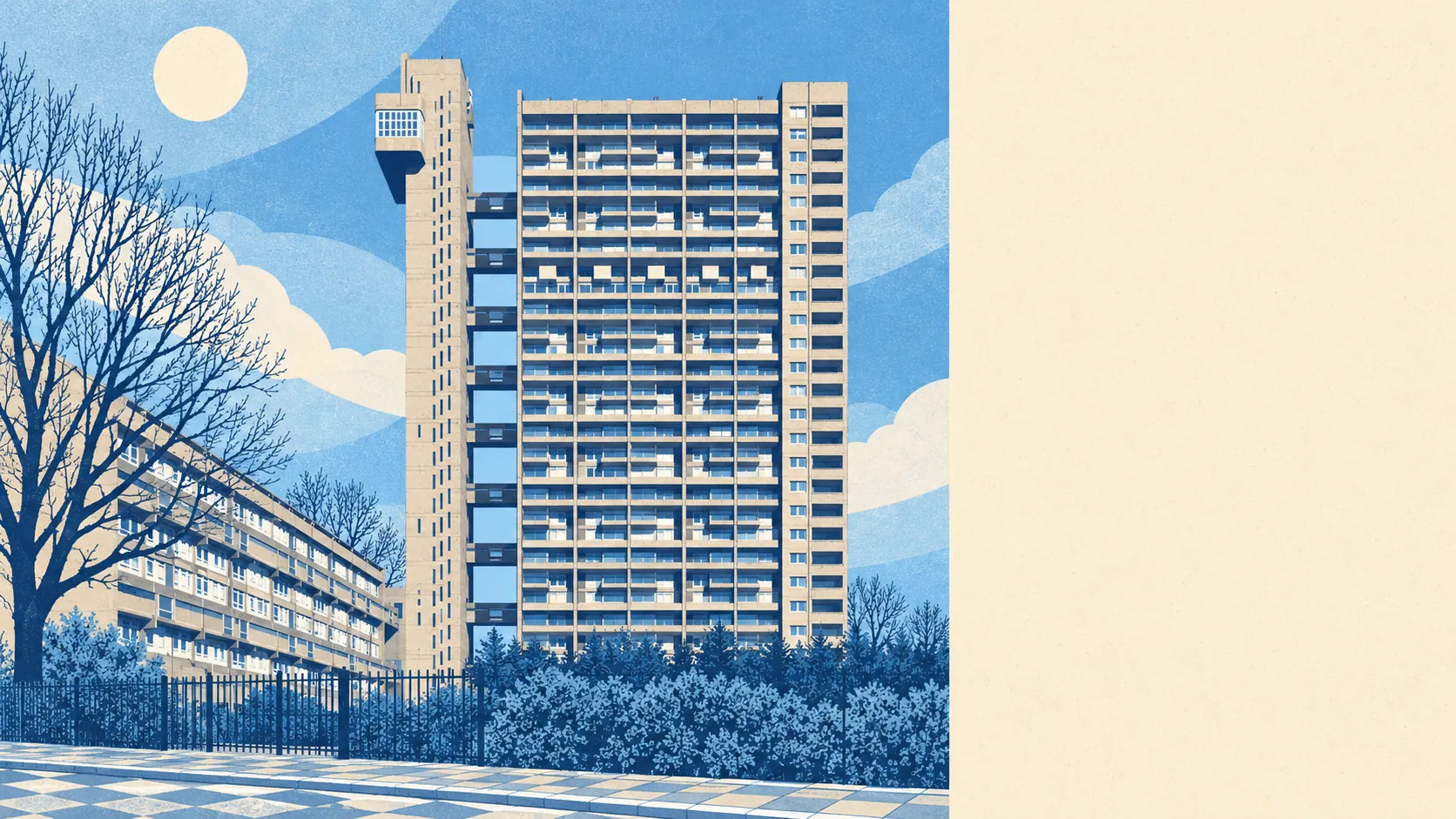
You can extend a home in Ladbroke Grove, but only slowly and with the council watching. The area has hundreds of listed buildings. Conservation areas cover much of the map. Most homes are flats, so a freeholder has a say alongside the planners. Alterations here are something you negotiate.
Historic England lists 318 buildings in the area: 3 at Grade I, 26 at Grade II* and 289 at Grade II. Listing covers the inside of a building as well as the front, so changing a listed home, whether that means windows, walls, fireplaces or an extension, needs listed building consent on top of any planning permission, and working without it is a criminal offence. Grade II is the commonest grade and the least strict. With 289 of them, it is still the grade most likely to be on the house you are looking at.
The wider box drawn around the area takes in 18 conservation areas. In a conservation area, the council controls demolition and tends to hold extensions, roof changes and new windows to the street's existing character, so changes that would pass without comment elsewhere need an application. James Weller Ladbroke laid out the estate in the 1840s, and his street plan still carries more weight with the planners than anything you might submit.
The same box contains 1 scheduled monument, the strictest tier of heritage protection, though it only matters for ground near the monument itself.
Plenty of people still try. Kensington and Chelsea's planning records show 802 applications in the area between April 2024 and June 2026, and 294 of them came in the last twelve months. People here alter their homes all the time. They just fill in a lot of forms first.
The ground needs as much attention as the paperwork. The British Geological Survey puts the area in shrink-swell class 3, and 100% of it reaches that class, so the clay underfoot swells when wet and shrinks when dry. For an extension that means deeper foundations than a builder might quote by default, and an early visit from a structural engineer, especially near trees.
Historic England has 33 listed buildings in the area on its Heritage at Risk register. These are buildings in poor condition whose repair may attract grant money and will certainly attract scrutiny. Living next door to one carries no risk for the owner of an ordinary house, though a neighbour of an at-risk building may find the council paying close attention to the whole street.
Permitted development, the national right to build certain extensions without a planning application, is narrower here than a buyer might hope. It does not cover flats at all, and about 81% of homes on the council-tax list are flats, so most extensions here mean a planning application plus the freeholder's written consent. It is cut back further for listed buildings and in conservation areas. The single most useful step is to check the exact address against Kensington and Chelsea's listed building and conservation-area maps, and for a flat, read the lease to see what the freeholder must approve.
Freedom to change your own home is one of Ladbroke Grove's weakest points. Buy here expecting to apply for permission, and to wait for it.