Kingston Bagpuize gives most of the people who move here what they came for: a proper house, a safe village and two main roads to leave by. Crime runs at about half the local level. Seven in ten own their homes, and most of those homes are detached. Life here is built around the car and the home office in roughly equal measure, and buyers who arrive knowing that tend to do well out of it.
The safety picture is the easy part. Thames Valley Police recorded about 30 crimes per 1,000 residents in the year to May 2026, against about 58 per 1,000 across the Vale of White Horse as a whole. For a village sitting where the Oxford to Swindon road meets the Abingdon to Witney one, the crime table makes very dull reading, and dull is what a buyer wants from it.
Prices are where the place gets selective. The Land Registry recorded 44 sales in the twelve months to mid-May 2026, at a typical price of about £448,000. That middle figure blends detached houses at around £535,000, semis at about £375,000 and six flats at roughly £183,000, so the "typical" home is a semi-buyer's stretch and a detached buyer's bargain at once. Band D is the most common council-tax band here, and only about 5% of homes fall into bands A or B. The cheap end of the market is not hiding somewhere in Southmoor. It mostly isn't here.
Renting is a thin market. Only about 11% of households rent privately, and typical private rent across the Vale of White Horse council area ran to about £1,330 a month in April 2026, a figure that covers the whole district, village houses and town flats alike.
The council-tax valuation list shows what the village is made of: about 45% detached, 27% semis, 12% terraces, 11% bungalows and 5% flats. Around 22% of homes were built before 1930, and about 40% have four or more bedrooms. Of the homes that hold an energy performance certificate, about 77% are rated C or better, and 74% of households heat with mains gas. Flat hunters get a short list. Families wanting a fourth bedroom get competition from every other family who had the same idea.
The people match the houses. About 71% of households own their home, the median age is 40, and the Office for National Statistics modelled gross household income across the area at about £80,000 for the financial year to March 2023. A median of 40 is young for a village whose big house was built around 1660 and once belonged to the son of the novelist John Buchan. The newer arrivals are families who did the commuting arithmetic and bought the bigger house with the answer.
Flood risk is the weak spot. About 15% of postcodes are flagged high on at least one flood indicator, surface water included, with another 19% at medium and 33% at low. None of the village falls inside the Environment Agency's river-and-sea flood zones 2 or 3. Being clear of the rivers' mapped zones and staying dry in a summer cloudburst are two different questions, and sales conversations tend to dwell on the first.
Getting around means driving or not going. Under 1% of working residents commute by train, 47% drive and 44% work from home, going by the 2021 Census. Each of the 12 bus stops sees about 70 departures on a weekday, roughly four an hour at peak, and every stop has a weekend service. The Department for Transport's 2019 modelling puts the nearest town centre 16 minutes away by car and 78 by public transport, and bus timings tend to get worse as services are cut. Gigabit broadband reaches about 93% of premises and superfast reaches all of them. For nearly half the village the broadband is the commute, and on that measure it does very well.
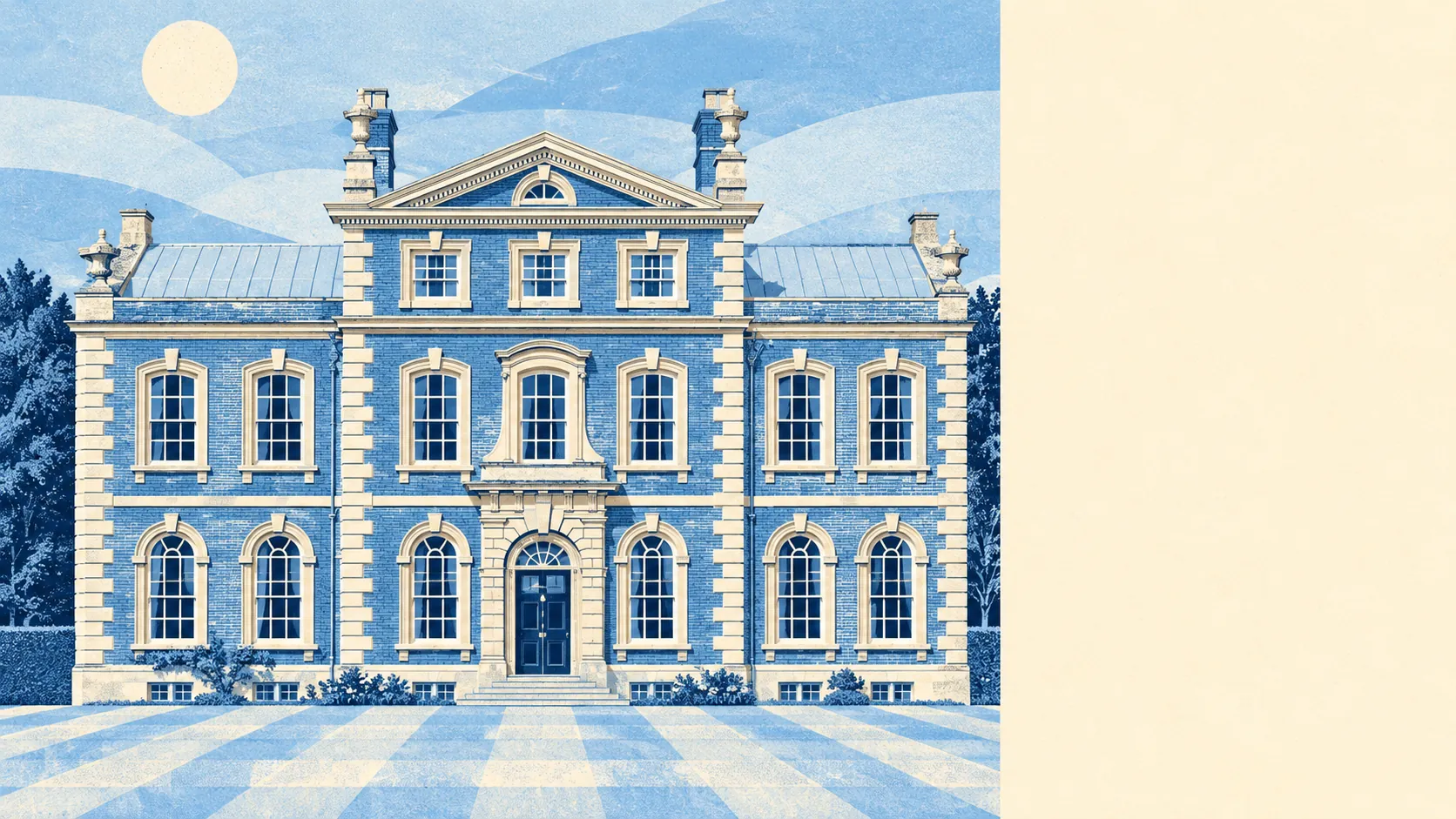
Heritage rules bite in places, not everywhere. The area holds 37 listed buildings, two at Grade II* and 35 at Grade II, along with one conservation area, officially spelled Kingston Bagpuise. The parish church of St John the Baptist went up in 1799 and 1800 to designs by John Fidel of Faringdon. Most of the village's housing is post-war, though, and for those homes a rear extension involves the ordinary sort of planning paperwork, nothing special.
The surroundings are the best thing about the place. The average home is about 150 metres from green space, with six green spaces within a kilometre and water about 420 metres away. The old parish ran in a strip from the River Thames down to the River Ock, and the countryside still reaches the back fences. Longworth, Garford and New Bridge are all close by. The Department for Transport's model puts the nearest food shop a 51-minute walk away, so for most residents a field is far closer than a pint of milk.
Kingston Bagpuize is a better-than-average place to live, as long as you buy for it. It works for a family with two cars, one job that can be done from a laptop and a taste for footpaths. It also works for anyone who wants a detached house without paying Oxford prices. It does not work for a train commuter, a renter after a one-bed flat, or a buyer who needs a shop within walking distance. Go and look at the postcode's surface-water record before you look at the kitchen, because the fields that make this village worth the drive are the same fields that send the water downhill.