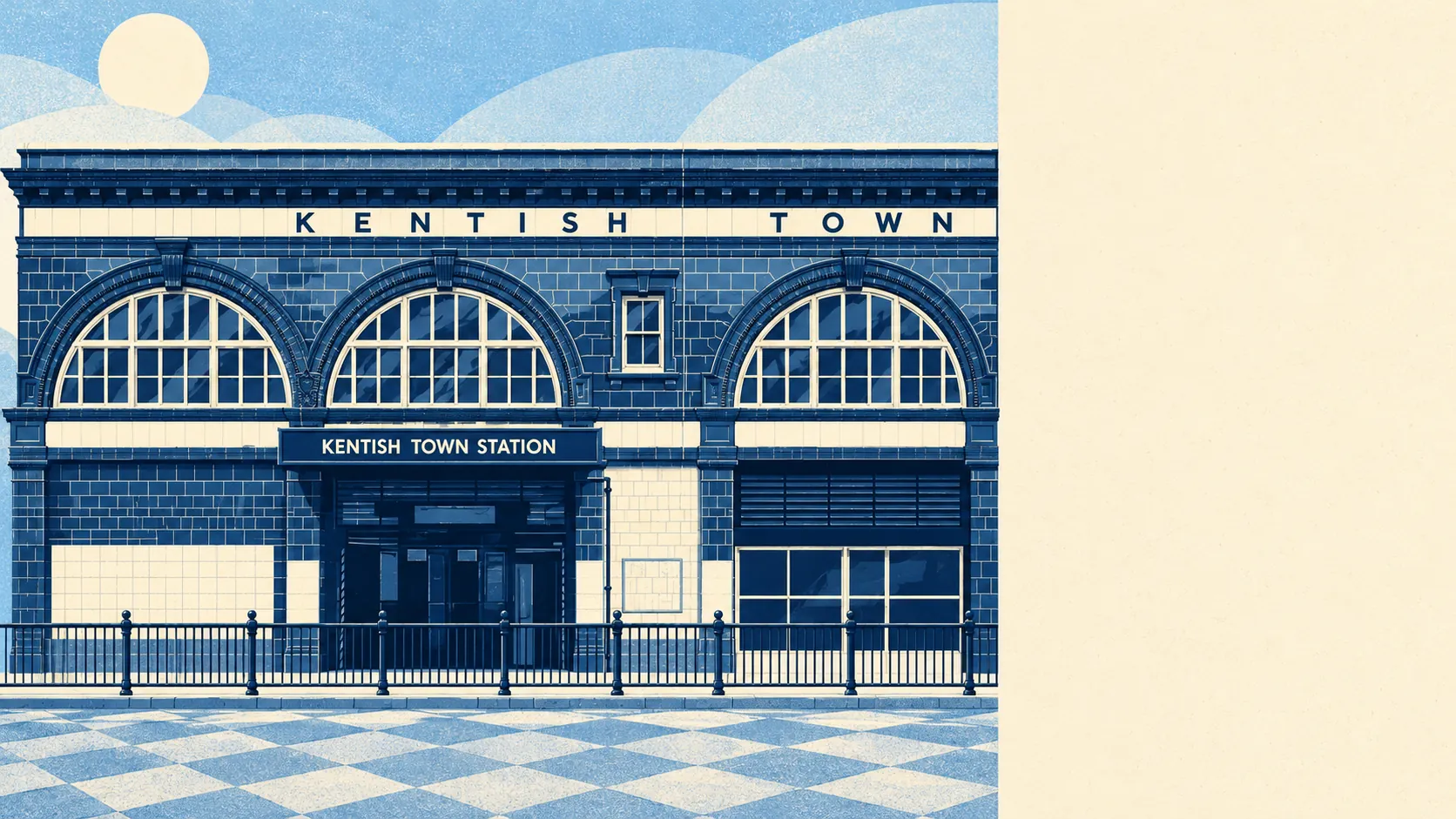
Kentish Town gives a buyer the Heath, a mainline station and the calmer end of Camden, and charges about £677,500 for a typical home to get them. That money mostly buys a flat. A terraced house goes for about £1,530,000. Everything else about the place is good enough that people keep paying it.
The Land Registry recorded 170 sales here in the twelve months to May 2026, at a median of £677,500. Underneath that figure are three different markets. The 128 flats that sold went for a median of £572,500. The 33 terraced houses fetched around £1,530,000. Nine semi-detached houses changed hands at about £2,200,000 each, which makes a gap down one side of the house the most expensive feature in Kentish Town. Band D is the most common council tax band, and only 19% of homes fall into bands A or B.
Renting is no escape from the arithmetic. Camden Council's area as a whole has a typical private rent of about £2,720 a month as of April 2026, a borough-wide mean from the Office for National Statistics, and down 4% on a year earlier. Kentish Town's own rents will vary from that figure street by street, and the borough number covers everything from Hampstead to King's Cross.
The housing is overwhelmingly flats. Across every dwelling on the council-tax valuation list, about 82% are flats, 13% are terraced houses, 3% are semis and about 1% are detached. Around 54% were built before 1930. In 1901 The Piano Journal called Kentish Town "that healthful suburb dear to the heart of the piano maker". The makers have gone and their streets have mostly been divided into flats, so the instrument residents hear through the wall now is usually the neighbour. On energy certificates, about half the stock rates A to C, 41% rates D and 9% rates E or worse. About 68% of homes heat with mains gas and 8% rely on electricity alone.
Safety is where the place surprises people who know Camden. The Metropolitan Police recorded crime at about 129 offences per 1,000 residents in the year to May 2026, roughly 43% below the Camden average. The mix tilts away from the serious end. Anti-social behaviour makes up about 26% of recorded crime here against 16% nationally, while violence and sexual offences are about 24% against 35% nationally. Kentish Town has more nuisance than the national mix and less of the harm.
The population is young and mostly renting. About 31% of households own their home, the median resident is 35, and modelled gross household income averages about £73,000 for the financial year to March 2023. Kentish Town began as a hamlet on the River Fleet, a river London has since buried, and it has spent the centuries since taking in whoever the city sends north. The names on its notable-residents list read like a decent pub quiz team. Writer Ben Aaronovitch, rapper Akala, photographer Gerry Badger, actor Kingsley Ben-Adir and Mike Barson, keyboardist of Madness, have all lived here. Karl Marx moved into Grafton Terrace in 1856, and his wife Jenny wrote that the house was princely compared with the places they had lived in before. Plenty of first-time buyers here judge their flat by the same standard.
The heritage controls are thorough. There are 126 listed buildings, one at Grade I, 10 at Grade II* and 115 at Grade II, and 16 conservation areas in and around the place, including Dartmouth Park, the Bartholomew Estate, Inkerman and Kentish Town's own. On a street of matching Victorian terraces, the first owner who wants a dormer learns how closely the terraces are expected to keep matching.
The transport is good enough that most households manage without a car. About 61% have none. Kentish Town station has Thameslink trains and a link to the Underground, and Kentish Town West, Gospel Oak and Camden Road add Overground options. The 97 bus stops average about 376 departures each on a weekday, at around 20 an hour at peak, and every one of them has a weekend service. Gigabit broadband reaches about 96% of premises, which mattered at the 2021 census, when about 54% of working residents were working from home.
Flooding comes from above here. About 20% of postcodes carry a high rating on at least one flood indicator, and those indicators include surface water. In the Environment Agency's river-and-sea flood zones the share is 0%. The Fleet is underground, so any flooding here starts as heavy rain in the street.
The schools hold up well. Across Camden, Ofsted has graded 25 settings and rated every one of them good or better, with 13 outstanding, though that count is borough-wide. Closer to home, the five primaries in the area average about 108 on the end-of-primary maths tests, and the five secondaries average an Attainment 8 score of about 54. The local names include Eleanor Palmer, Torriano and Rhyl at primary level and Parliament Hill School, William Ellis School, Acland Burghley, La Sainte Union and the Camden School for Girls at secondary.
The surroundings are the best thing about the place. The average home here is about 92 metres from green space, with around 65 green spaces within a kilometre, and open water about 920 metres away. Gospel Oak and Dartmouth Park run up to the edge of Hampstead Heath and Parliament Hill. Most flats here have no garden of their own, but the residents get the Heath, and somebody else does the mowing.
Kentish Town works for people who want a flat, a station and serious open space all within walking distance, and who are happy to live without a car or a drive. A family that needs a house with a garden, bought on one salary, should look further out, because here a terraced house costs about £1,530,000 before anyone has picked a school.
On price, Kentish Town is at its worst. A median flat costs about £572,500 and pays for the location before it pays for any floor space. The Heath, the trains and the lower crime figures all come with that price. Kentish Town is a better place to live than most buyers expect, and a harder place to buy into than most of them can afford.