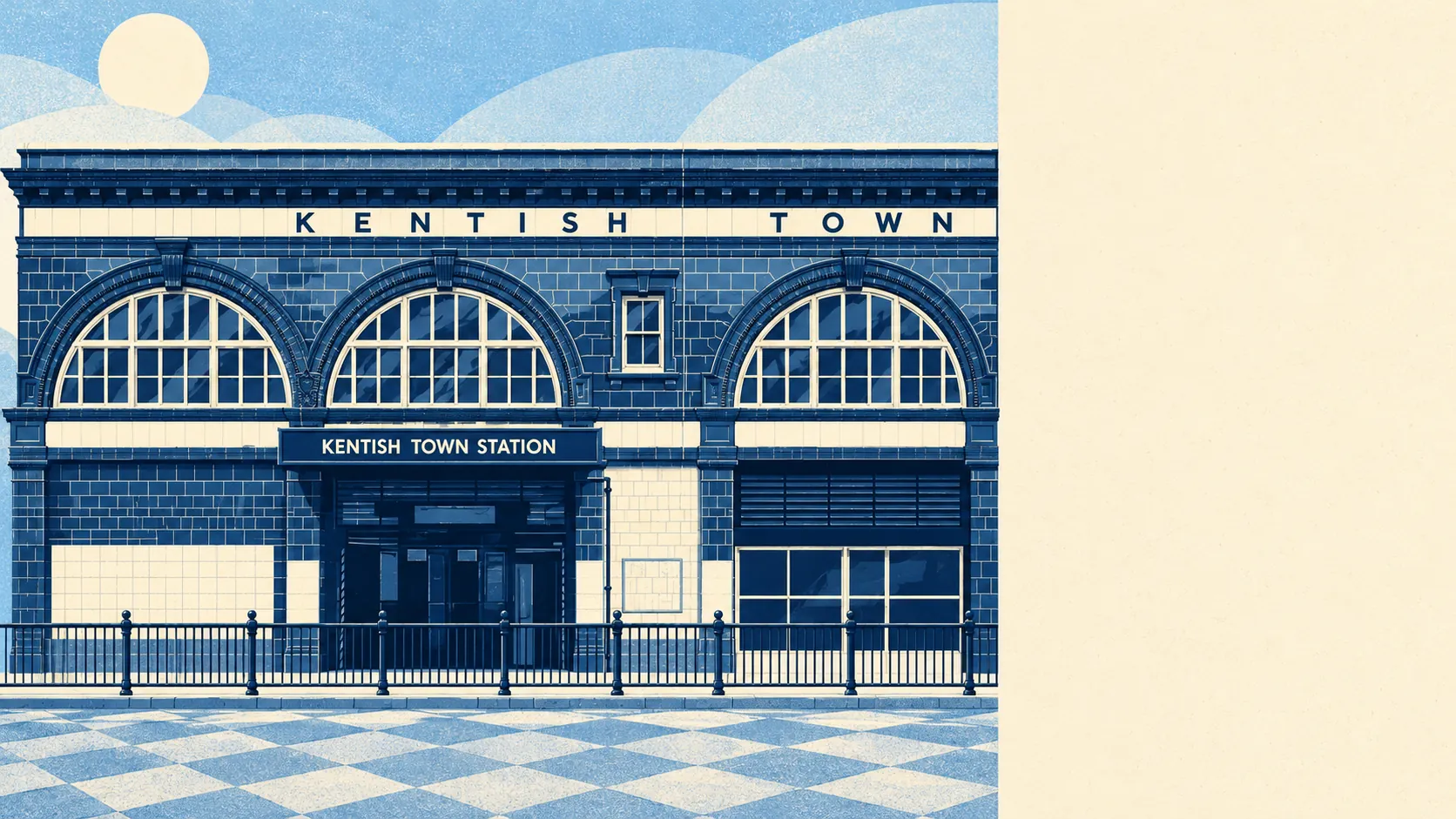
You can extend in Kentish Town, but plenty of other people will get a say in it. It has 126 listed buildings. There are 16 conservation areas in and around it. Every postcode sits on shrinking and swelling clay. The neighbours lodge hundreds of planning applications a year, so the planning office is not short of work.
Historic England lists 126 buildings in Kentish Town. One is Grade I, 10 are Grade II* and 115 are Grade II. Listing covers the inside of a building as well as the outside, so even small changes to a listed home, an internal wall or a window, need listed building consent on top of any planning permission. Grade I is a single building. The 115 at Grade II are the ones a buyer here is likely to own or live next door to.
Kentish Town has 16 conservation areas in and around it, including Dartmouth Park, the Bartholomew Estate, Inkerman, Harmood Street and Camden Square. In a conservation area, changes to the outside of a house, particularly anything visible from the street, get closer attention from the council, and some work that would go ahead freely elsewhere needs consent here. On terraces built to one design, a change to the front of one house draws in the whole street.
Plenty of owners go through the process anyway. Between April 2024 and June 2026, 902 planning applications were lodged across Kentish Town, 383 of them in the last twelve months alone. That is 383 households in a single year who decided extending was worth asking the council about.
The ground needs as much thought as the paperwork. Every part of Kentish Town reaches class 3 on the British Geological Survey's shrink-swell scale, meaning the clay underneath swells when wet and shrinks when dry. For an extension, that usually means deeper foundations and a structural engineer's design, particularly near trees. It's a routine engineering cost and doesn't need to worry anyone. A conservation area doesn't change what the clay does, and the foundations have to deal with it either way.
Five listed buildings in Kentish Town are on Historic England's Heritage at Risk register. Those are buildings in poor condition, whose repair may qualify for grant support and will be watched closely. They pose no hazard to anyone buying an ordinary house nearby.
The practical point is that permitted development, the work allowed without a planning application, covers less here than people expect. Flats don't have the householder rights that houses do, and in a conservation area or on a listed building the rights that remain are narrower again. Some owners also have a freeholder to deal with. The streets in the east of Kentish Town named after people and places linked to Christ Church, Oxford, Oseney, Islip, Wolsey and the rest, still have part of their freehold in the college's name, so a loft plan there may need to get past Oxford as well as Camden. For any address you're considering, check Camden's conservation-area and listed-building maps and read the lease or title for any covenant on alterations, all before you pay for an architect's drawings.
Freedom to extend is restricted in Kentish Town. Extensions do get built here, but the owners who manage it allow for the clay, the consents and the council from the start.