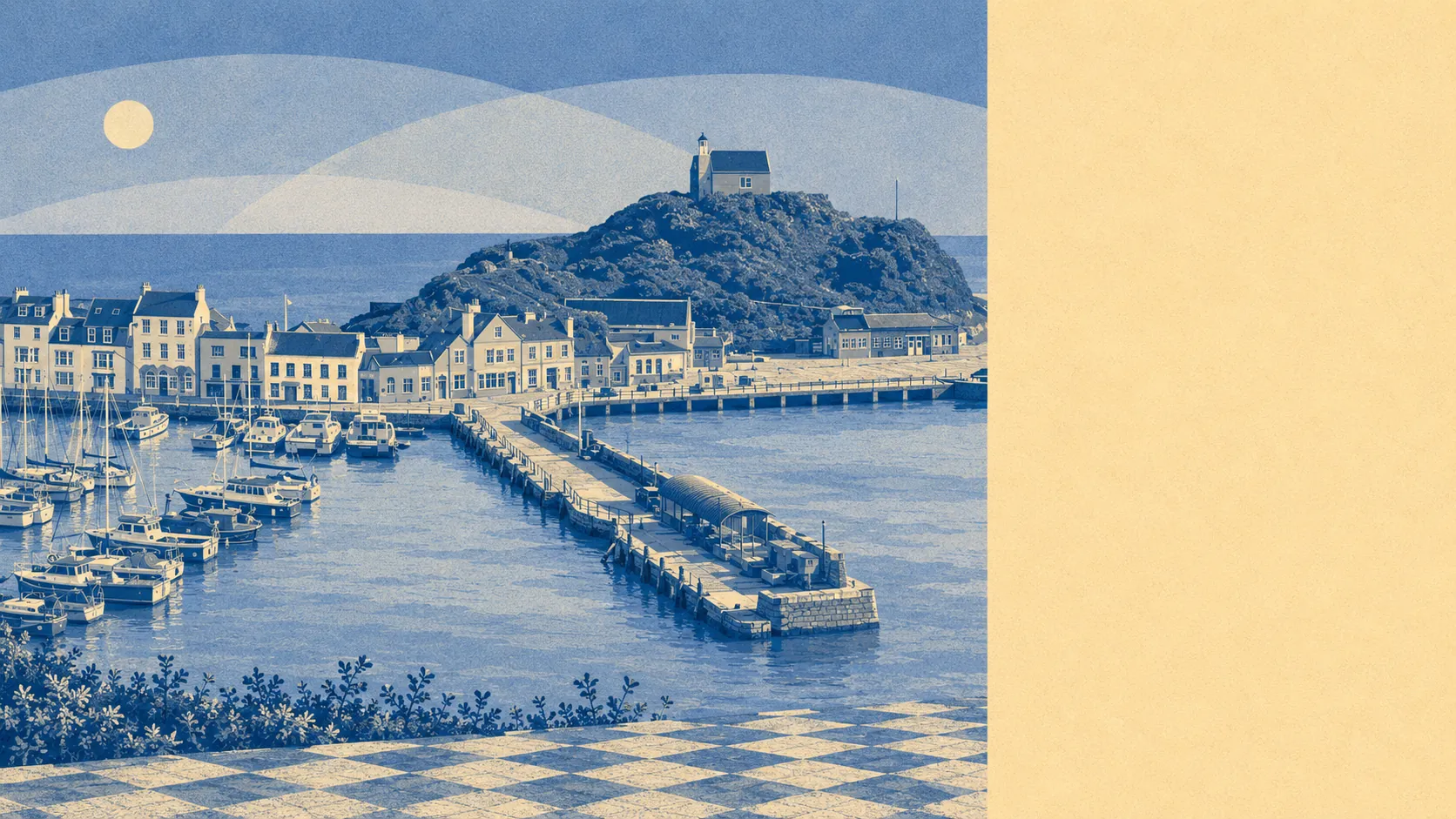
Usually yes, unless your particular house comes with paperwork attached. There are 132 listed buildings here, which sounds like a lot until you set it against every other house in town. One conservation area covers the historic core. Hundreds of planning applications have gone in across the area over the past couple of years, so this is plainly not a town where nothing gets built. Whether the constraint lands on you is decided by your address, not by the scale of your plans.
Historic England's listing covers 132 buildings in the area, and the grade split matters more than the total. Two are grade one and two are grade two star, which is the rarefied end where any change becomes a project with a specialist attached. The other 128 are grade two, and that is the grade that catches ordinary houses lived in by ordinary people. Listing applies to the whole building, inside as well as out, so it is not only the front elevation that needs consent. Replacing internal doors, opening up a fireplace, swapping windows for something warmer: all of it goes through listed building consent, and doing the work first and asking later is a criminal matter rather than a paperwork one. Two entries in the area also sit on Historic England's Heritage at Risk register, meaning buildings in poor enough condition to warrant monitoring. That can bring grant support into play for whoever takes one on, along with a level of scrutiny that no ordinary extension attracts. For anyone buying a normal house down the road, those two entries change nothing.
The area has one conservation area, covering Ilfracombe itself. Inside its boundary, some of the permitted development rights that apply elsewhere are narrowed, demolition is controlled, and works to trees generally require notice to the council before anyone starts. Outside it, the ordinary rules apply. The boundary is the thing to check before you commit, because conservation area status is invisible from the pavement and entirely visible on a solicitor's search.
The volume of activity is the reassuring part. There have been 470 planning applications across the area between April 2024 and July 2026, with 181 of those in the last twelve months. People here do alter their homes, regularly, in a town where a good deal of the housing predates 1930 and was built for households with different expectations of kitchens, bathrooms and insulation. That figure counts applications rather than outcomes, so it says people are trying rather than what they got. It is still the most honest signal available that extending here is a normal activity rather than a heroic one.
Practically, the split is straightforward. If your house is unlisted and outside the conservation area, most ordinary work sits within permitted development, subject to the usual national limits, and the constraint you meet will be physical rather than bureaucratic. About 54% of the dwelling stock here was built before 1930, which in a valley town means terraces, party walls, narrow plots and gardens that run uphill. Those things stop more extensions than the planning department ever does. If your house is listed or sits inside the conservation area, assume consent is needed and budget the time for it, because the answer to the question of whether you can do the work is genuinely different from house to house.
Freedom to alter a home here is middling: less constrained than a town centre wrapped entirely in heritage designations, more constrained than a modern estate, with the deciding factor being which side of a boundary line your front door sits on.