High Wycombe is a useful, ordinary town with one problem it cannot hide behind the Chilterns, which is crime at roughly a hundred offences for every thousand residents. That is about half as much again as the rest of Buckinghamshire. The homes cost less than the scenery around them suggests, and a park is rarely more than a couple of minutes from the door. For a buyer, choosing the street matters more here than it does in the villages on the ridge.
Thames Valley Police published a rate of about 99 crimes per 1,000 residents for High Wycombe in the year from June 2025 to May 2026. That is 51% above the Buckinghamshire average of about 65. Violence and sexual offences make up 36% of the total, close to the England and Wales share of 35%. Shoplifting stands out more, at 12% of recorded crime against 8% nationally. Across the whole force area about 9% of crimes ended in a charge over the same year, against 12% nationally, and Thames Valley ranked 37th of 42 forces on that measure. The deterrent at the tills is mostly the shop staff.
Flooding looks different depending on which map you read. The Environment Agency puts about 2% of postcodes in flood zone 3 and another 2% in zone 2, the river-and-sea zones that usually get mentioned in a sale. Once surface water is counted, 34% of postcodes are rated high on at least one flood indicator. High Wycombe is a long town in a narrow valley, and rain on the Chiltern slopes runs down to the valley floor.
The Land Registry recorded 699 sales in the year to May 2026, at a typical price of about £375,000. Flats went for around £220,000, terraced houses £370,000, semis £416,000 and detached houses £570,000. Band C is the most common council-tax band, with about 24% of homes in bands A and B. The jump from a flat to a semi is the big one, and most people buying in High Wycombe are trying to make it.
In April 2026 the typical private rent across Buckinghamshire was about £1,470 a month, 5% up on a year earlier. That figure covers the whole county, and the Wycombe flats are averaged in with every larger house in the Chiltern villages.
The council-tax list makes it a town of semis and flats: semi-detached houses are about 31% of homes, flats 33%, terraces 17%, detached houses 13% and bungalows 5%. Only 16% of homes were built before 1930. The furniture factories filled the east and west of town with workers' terraces in the 19th century, and the council's 1932 slum clearance moved whole districts into new estates up the valley sides, so High Wycombe's housing climbs the hills in order of age. About 74% of homes heat with mains gas and 14% are electric-only. Of the homes with an energy certificate, about 57% are rated C or better.
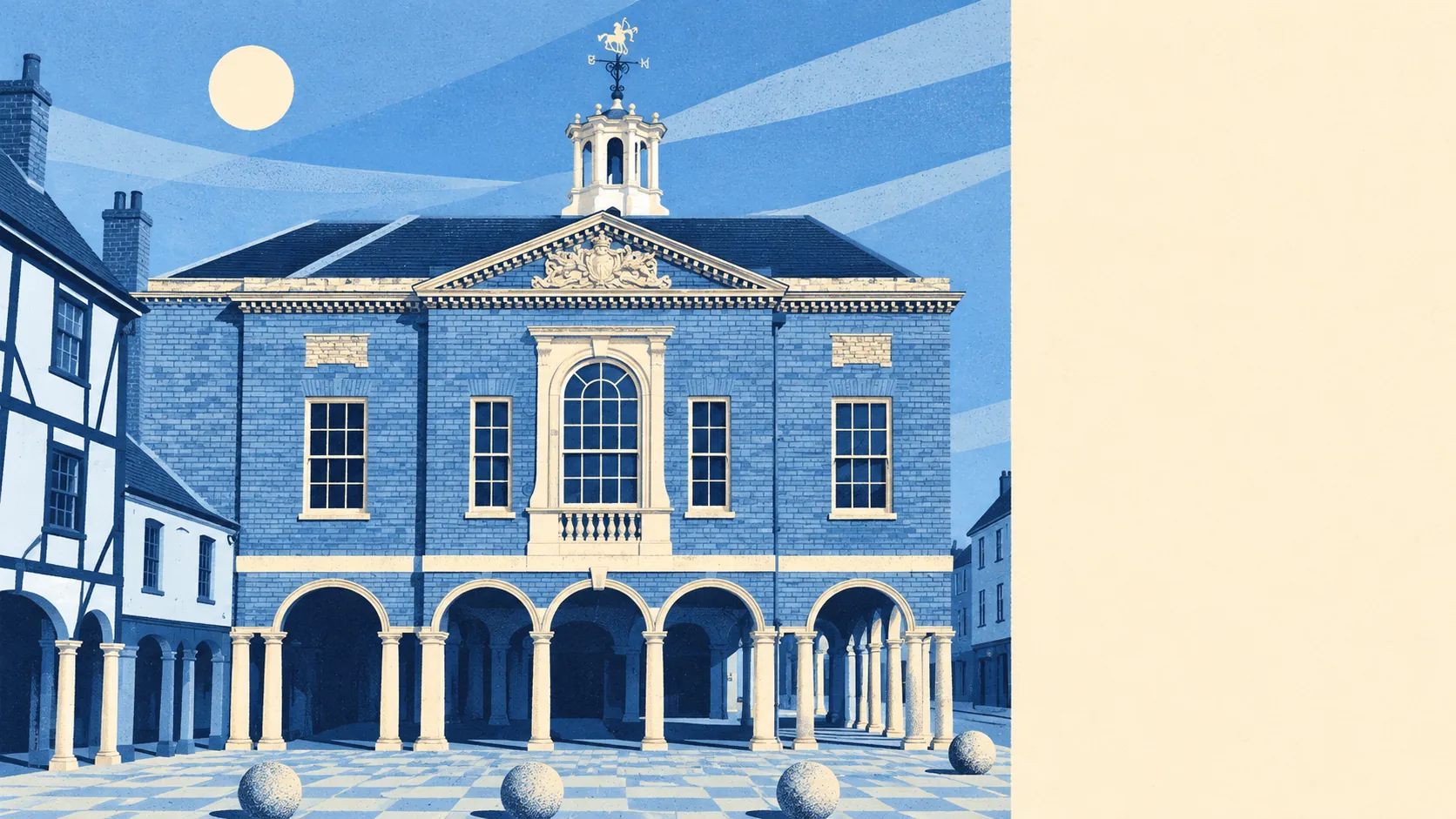
There are 178 listed buildings, three of them Grade I and 18 Grade II*, and 11 conservation areas, including Amersham Hill, Terriers, Downley Common and one called Leigh Street Furniture Heritage. The Guildhall and the Little Market House are on the list. So is a furniture workshop next to 37 High Street, so in this town even the factory floor needs consent before anyone changes the windows. If a home is in a conservation area, extensions and replacement windows go through the council first.
High Wycombe Rail Station is on the Chiltern Main Line, with trains to London Marylebone, Oxford and Birmingham Snow Hill. At the 2021 Census only about 2% of working residents took the train to work. About 46% drove and 32% worked from home. The M40 has two junctions serving the town, including Handy Cross. The town has 425 bus stops, and 82% of those with timetable data get a weekend service. Gigabit broadband is available at about 76% of premises and superfast at 99%. The fast line to Marylebone is the reason plenty of people move here, and most of them still end up driving.
About 59% of households own their home, and the median resident is 36, young for Buckinghamshire's towns. Gross household income averaged about £62,000 in the financial year to March 2023, a figure the Office for National Statistics modelled for middle-sized neighbourhood areas. The name High Wycombe also covers the valley neighbourhoods of Wycombe Marsh, Loudwater and Booker and the villages beyond them: Flackwell Heath, Tylers Green and Penn to the east, West Wycombe and Bradenham to the west, and Naphill and Great Kingshill up on the ridge. Living in Penn and living by the Wycombe Marsh retail parks are different lives with the same postcode prefix.
Green space is the town's best argument. The average home is about 155 metres from the nearest green space, with around 19 within a kilometre, and the nearest water is about 640 metres away. The Rye, the parkland where a Roman villa's mosaics and bathhouse were dug up, is right by the centre. West Wycombe Park lies to the west, and the Chiltern Hills are on every side. The Romans picked the Rye for a villa, and nearly two thousand years later it is still where the town goes to walk the dog.
High Wycombe works for commuters who need Marylebone or the M40 and want a semi with a park at the end of the road for the price of a flat further out. It also works for younger buyers who want a real town, with a station, a university, a football club and shops that stay open. Anyone who moved to Buckinghamshire for village life after dark should look on the ridge. So should anyone who wants the scenery from their window and not from the end of a short walk.
On safety, buying here means accepting a crime rate the rest of the county does not have, and that rate is an average over many streets, some of them better and some worse. It is a decent town overall, with a better setting than its reputation suggests and a worse record on crime than its setting suggests.