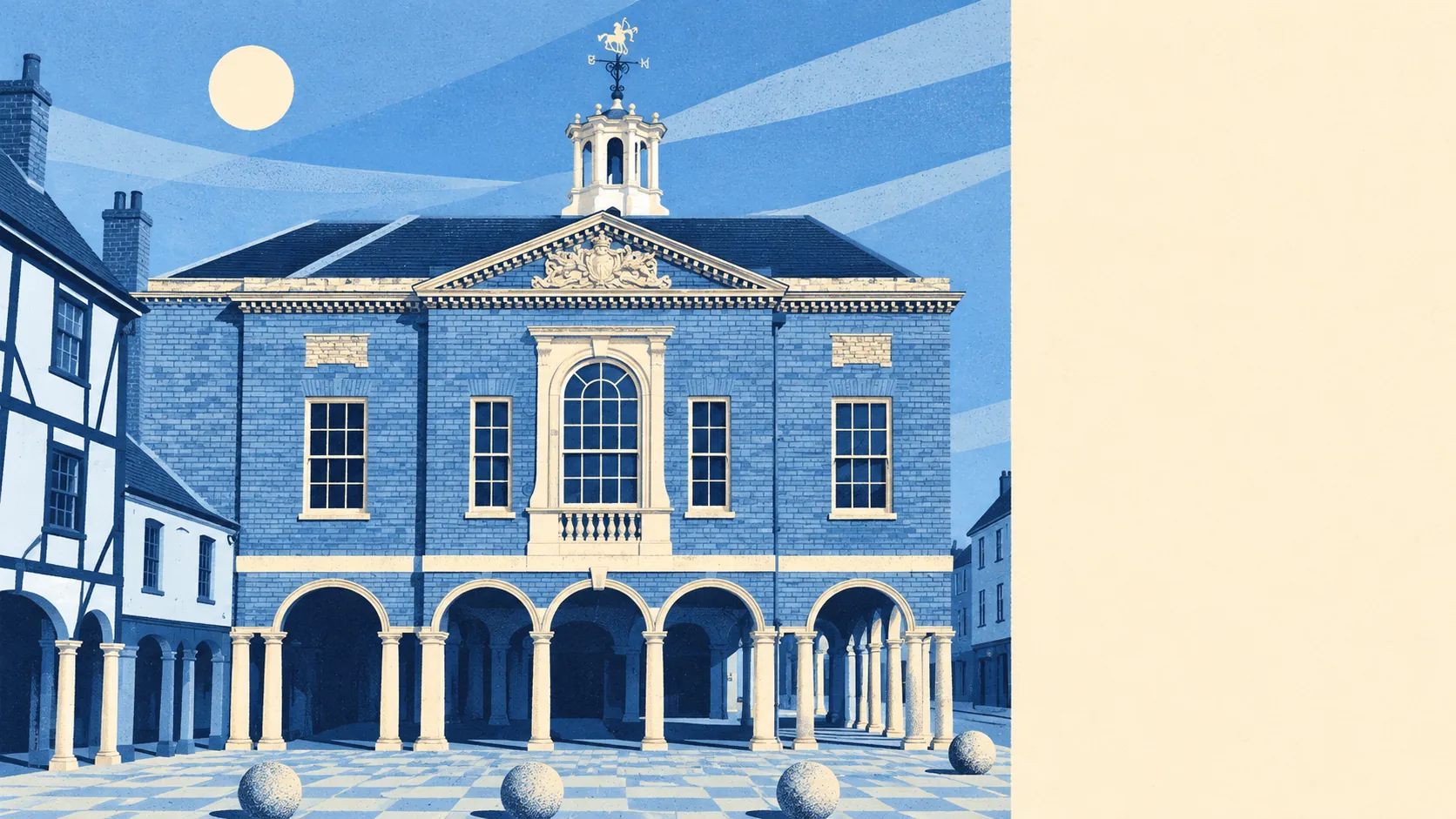
Yes, in most of High Wycombe you can, but more of the town is protected than its post-war housing suggests. There are close to two hundred listed buildings. There are eleven conservation areas. A handful of ancient monuments are protected too. A semi on the slopes is usually straightforward. The old centre and the protected streets are where the council gets a say over your plans.
There are 178 listed buildings in High Wycombe: three Grade I, 18 Grade II* and 157 Grade II. Listing covers the whole building, inside and out, so new windows, an extension or even taking out an internal wall need listed building consent as well as any planning permission. Grade I and II* buildings get the closest scrutiny. Only about 16% of the town's homes were built before 1930, so a listed house is the exception, and the people who own one tend to know it.
Eleven conservation areas fall in and around the town, from the old centre to Amersham Hill, Priory Avenue and the furniture-trade streets. Inside a conservation area the council looks at changes to the outside of a house more closely, and some work that would be automatic elsewhere needs an application. Buckinghamshire Council's conservation area maps show whether a particular house falls inside one, and that one check settles more of the extension question than any amount of reading.
Three scheduled monuments are in the area, the strictest tier of protection in England. They matter mainly to anyone whose land is next to one.
The neighbours are certainly building. Buckinghamshire Council's planning register shows 4,135 applications in the High Wycombe area between April 2024 and June 2026, and 1,865 of them in the last twelve months. The town that made its name on chairs now produces planning applications at about the same pace.
Away from the listed buildings and the conservation areas, a lot of ordinary work on a house, such as many single-storey rear extensions and loft conversions, can come under permitted development rights, which means no full planning application is needed. Inside a conservation area those rights are narrower, and for a listed building they effectively do not apply. Which list the house appears on decides whether it is a builder's job or a job for a consultant first.
Freedom to extend in High Wycombe is more limited than in a typical town. The semis on the hillside are mostly free to grow, while anything older, central or listed needs the council's agreement first.