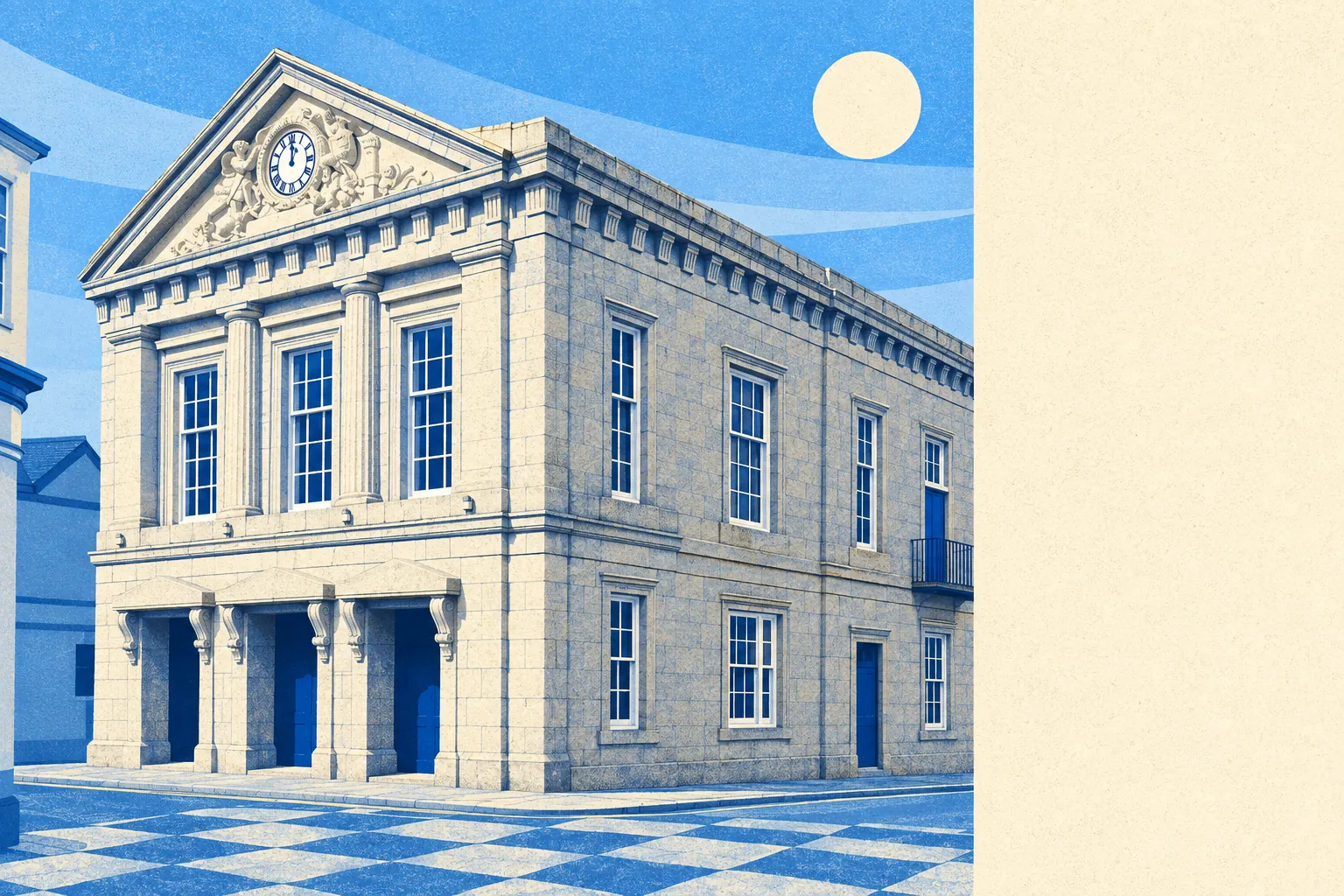
Helston is lived in by people who work here, which in this part of Cornwall is rarer than it should be. About two-thirds own their homes. The typical resident is in their early forties. Close to a third of households are one person living alone. This is not a retirement colony, and it is not a dormitory for somewhere else. It is a town with a working population, which is why it still has a February.
On tenure, about 64% of households own their home and about 23% rent privately, with another 12% renting from a social landlord. That ownership level is the structural fact behind almost everything else here: a town where most people have bought in tends to hold onto its residents, and holding onto residents is what keeps a school roll and a bus timetable alive.
The age profile is middle-aged without being old. The median resident is 42, and about 25% of the population falls in the 25 to 44 band. That is a working-age core rather than a pensioner one, and it shows up in the fact that people are here on a Wednesday morning rather than only in August.
Income, as modelled by the Office for National Statistics, came to about £50,700 per household before tax in the financial year to March 2023. That is gross rather than take-home, and it describes that year rather than today. The same modelling puts net household income at about £38,000 once tax comes out, which is the number that actually meets a mortgage payment.
Household shapes are varied in a way that small towns often are not. About 10% of households are lone-parent households, which is a real share rather than a rounding note, and it matters for anyone weighing up school places and part-time work.
The Census 2021, which is the source for every population figure on this page, puts about 30% of households as one person living alone. About 15% are a single pensioner, and that group sits inside the one-person figure rather than alongside it. About 21% are a couple with dependent children. A town that is simultaneously a third single-occupant and a fifth young families is a town with a genuine mix of housing needs, and it explains why the stock here runs from small terraces to bungalows without much of a theme.
On qualifications, about 31% hold a degree-level qualification and about 15% hold none. Full-time students make up about 2% of the population, which is what happens in a town with no university attached to it. That mix is what it is. It says nothing about anybody's worth and predicts nothing about the street you buy on.
Health looks reasonable. About 82% of residents describe their health as good or very good, and about 5% as bad or very bad. Broader health measures are published for Cornwall as a whole rather than for Helston, and on that county basis both smoking prevalence, at about 12% of adults, and the preventable mortality rate sit similar to England. Similar is the honest word. It is neither the reassurance nor the warning that people tend to want from a health section.
One technical note worth having: 70 people out of a population of 12,176 live in communal establishments rather than private households, which is small enough that it does not distort any of the household shares above.
The people here are ordinary in the way that ordinary has become unusual in coastal Cornwall: middling incomes, middling health, mostly owners, mostly working, mostly staying.