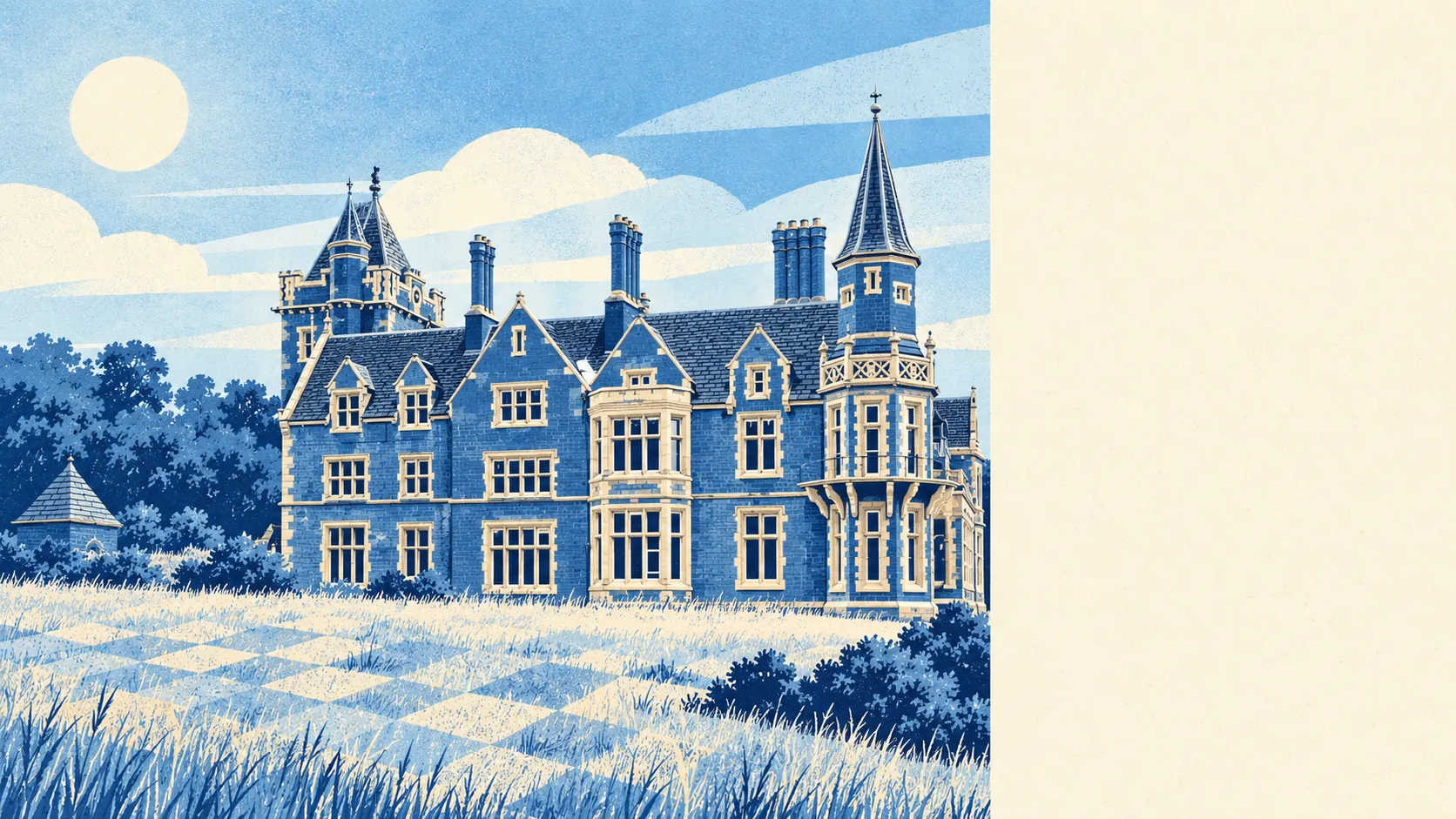
Green, comfortable, and better for a walk than a night out. The average home has eight green spaces within a kilometre. There's water within a short walk. The town has seven pubs. Most of the outdoor life here happens on the common or in private gardens.
The average home in Gerrards Cross is about 360 metres from the nearest public green space, with eight within a kilometre. The biggest is Gerrards Cross Common itself, the old heathland the town grew up around, and Bulstrode Park and Broadwater Park are on the list of nearby parks and gardens. Living here, a walk round the common is the default, and nobody needs to plan it.
Water is close as well. The average home is about 460 metres from the nearest pond, stream or other blue space, with about 11 within a kilometre. Latchmoor Pond at the western end of the common is the one people know, and the River Misbourne runs through the parish north-east of the town.
Cyclists have further to go. The nearest stretch of the National Cycle Network is about 4 kilometres from the average home, and 0% of homes are close to it. Most bike rides here start with a car.
The rated-premises register lists 184 shops, seven pubs and ten restaurants in Gerrards Cross. That's a town built for errands and a weekday coffee, with a fairly short list for a big evening out.
Across Buckinghamshire as a council area, fine-particle air pollution averaged about 7 micrograms per cubic metre in 2024.
The town is on the lower slopes of the Chiltern Hills, and the motorway runs beside woodland on its southern edge. The Church of St James on Oxford Road dates from 1859, and the Bull Hotel and the crossroads at the western end of the common mark where the old village was. Around it are Chalfont St Peter, Fulmer, Hedgerley, Stoke Poges, Denham and Iver Heath. They're the villages people drive through on the way to Gerrards Cross station, and then start looking at when Gerrards Cross prices sink in.
Private gardens are big. Gerrards Cross has about 352,000 square metres of private garden for every 1,000 residents, which fits a town where most homes are detached houses on generous plots. Listing photos usually show the lawn from the patio, and the lawn tends to go on well beyond the edge of the shot.
The council's valuation list holds 222 rateable business premises. The two biggest categories are 105 shops and 60 offices. Those are premises on the rating list, which uses different groupings from the hygiene register and includes units that aren't trading, so the counts don't match. Both describe a centre of shops and small offices, built around the needs of a commuter town.
Food hygiene is strong. Of the 55 rated food premises, about 73% hold the top score and 0% are rated poor. Eating out here comes with fairly few surprises.
No protected landscape overlaps Gerrards Cross: no area of outstanding natural beauty, no site of special scientific interest and no ancient woodland. For a town on the Chiltern slopes, that may surprise people. It means the green space here is everyday common and parkland, open to use without the extra rules, and the protected countryside starts somewhere else. Walk the common and the nearest park from any house you're considering before you offer, since those are what you'll actually use day to day.
The surroundings are one of Gerrards Cross's real strengths: a common at the centre, parks and water within a short walk, and some of the biggest private gardens around.