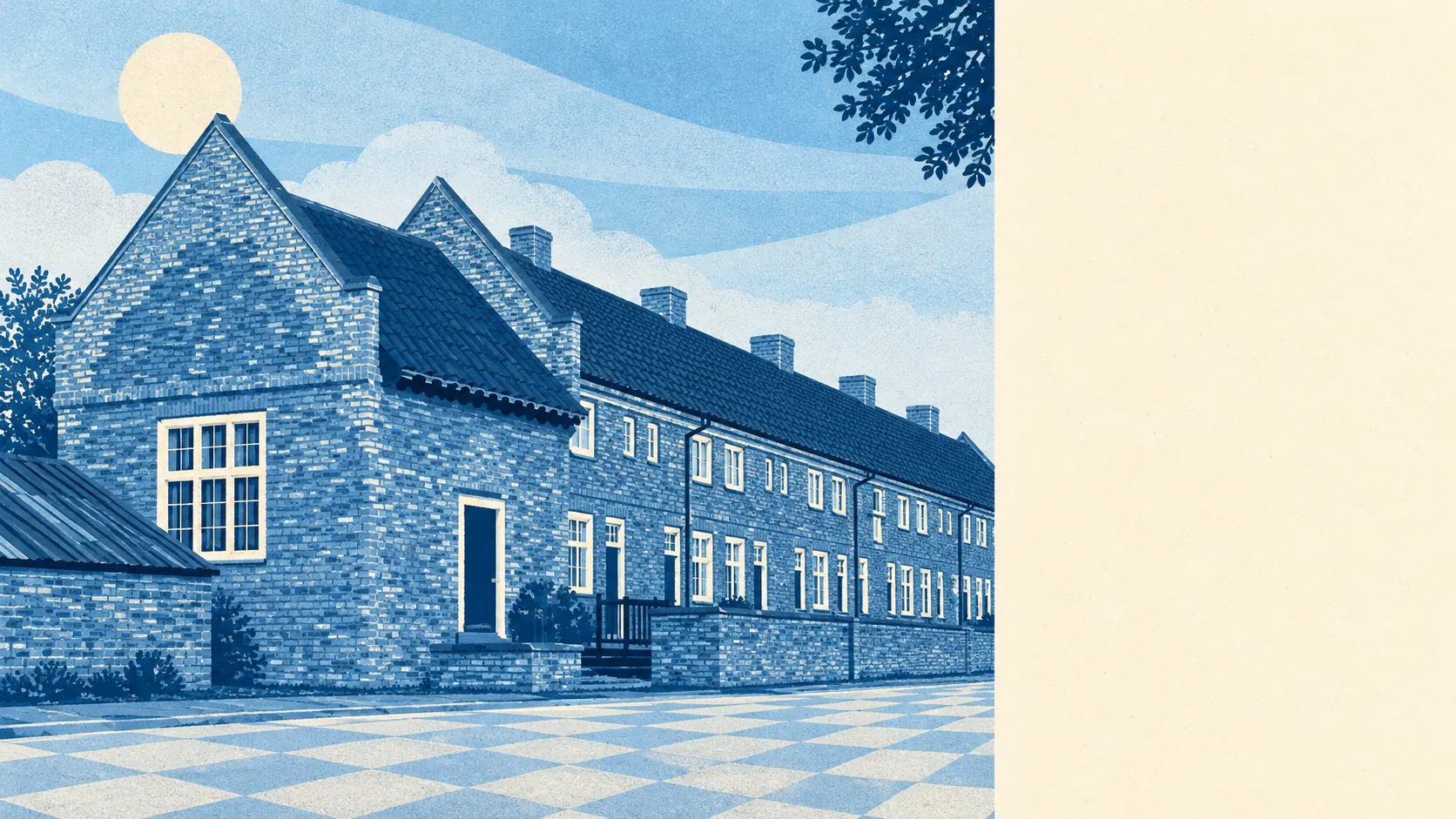
In Gamlingay a typical home costs around £410,000, and that price is the stiff part of the deal. It buys streets with little crime and a field within a short walk of most doors. It doesn't buy a train. Anywhere bigger than the village starts with the car keys, and buyers who make peace with that tend to stay.
The Land Registry recorded 34 sales in the year to April 2026, with a median of about £410,000. Property type moves that number a long way. Detached houses went for a median of £537,500 across 18 sales, semis for £350,000 across nine and terraces for £342,500 across six, so one unusually big garden can tilt the smaller groups. Most homes are in council tax band C, and only 14% are in bands A or B, so homes at the cheap end to buy and run are thin on the ground.
Renting gives little relief. South Cambridgeshire's typical private rent was about £1,400 a month in April 2026, a mean for the whole district, so it says nothing particular about this village. Only about 11% of Gamlingay households rent privately, so there are few homes to choose from.
The council-tax valuation list, which covers every home, gives detached houses 30% of the stock, semis 24%, terraces 23%, bungalows 18% and flats 3%. That bungalow share tells you who built their plans around this place, and it was people expecting to stay put for good. About 22% of homes went up before 1930. Energy certificates put 49% of assessed homes in bands A to C, 37% in D and 14% in E or worse. About 64% of homes are on mains gas and about 11% rely on electric heating alone. An old cottage on electric heaters looks lovely in the conservation area, though it costs a lot more to keep warm than to look at.
Cambridgeshire Constabulary's figures put recorded crime at about 39 per 1,000 residents in the year to May 2026, roughly 36% below the South Cambridgeshire average of 61. The worst disaster in the village's records is still the Great Fire of 1600, which destroyed most of the place. Even a dull police log looks good next to that.
The Environment Agency's river-and-sea flood zones cover none of Gamlingay. The postcode indicators, which include surface water, are less relaxed. About 15% of postcodes carry a high rating on at least one flood indicator, 18% medium and 52% low. Much of the parish is on the Lower Greensand, and the ground drained so badly that Gamlingay Heath had a quaking bog until 1855. The bog was drained. The rain still falls.
Green space is about 210 metres from the average home, with around 11 green spaces within a kilometre, and water is roughly 550 metres away. Gamlingay Wood and Gamlingay Cinques Common are both in the parish. Dog owners have it easy, and the dogs know it.
The station closed in 1968, and the commute has run on petrol ever since. At the 2021 census about 52% of working residents drove to work, about 1% took the train and bus commuting barely registered. About 37% worked from home, and gigabit broadband reaches about 97% of premises, so working from home is easy here even if travelling isn't. The Department for Transport's 2019 modelling put the nearest town centre 14 minutes away by car and 43 by public transport, and the public transport times are the ones most likely to have got worse since.
About 75% of households own their homes and the median age is 49. The Office for National Statistics models gross household income at about £61,800 for the financial year to March 2023, averaged across a wider area than the village alone. For centuries most of the land belonged to Merton, Downing and Clare colleges. The owner-occupiers have it now, and they are no less attached to it.
There are 63 listed buildings, one at Grade I, five at Grade II* and 57 at Grade II, and the village has its own conservation area. The Emplins and the Cock Inn are among them. The Cock has been an inn since at least 1588, so its window frames now fall under rules older than anyone drinking there. Listed status means consent for most changes, and conservation-area rules reach the unlisted houses too, so new windows or an extension go through the planners first.
The trade is much the same in the smaller places this page also covers: Great Gransden, Little Gransden, Hatley and Waresley. They have fewer neighbours and the same reliance on the car.
The village's best-known former resident is Sir George Downing, who built Downing Street; a later baronet of the same name founded Downing College. The actor Jeremy Irvine grew up here. Dick Turpin's link rests on a "supposedly", and Gamlingay keeps it anyway, on the reasonable grounds that every village needs one rumour.
Gamlingay is right for buyers who drive, work from home for part of the week, and want a village where crime is low on their list of worries. Anyone who can't or won't drive should look elsewhere, and so should first-time buyers hoping to get in below semi-detached prices.
What makes the money hard to swallow is the lack of a station. Around £410,000 for a typical home, and over half a million for a detached one, buys space and calm, but no easy way to anywhere else. The low crime is what buyers get back for that, and safe streets and a quiet night are a real return. Gamlingay comes out ahead on balance for anyone whose budget reaches that far. The cheap seats are thin.