Yes, provided you like your history lived in. Two in three households own their home. The typical resident is in their mid-forties. Nearly a third of working people don't commute at all. This is a finished town rather than a project, and it prices itself that way.
Terraces set the tone. On the council-tax valuation list, 41% of homes are terraced, 23% semi-detached, 14% detached and 14% flats, with bungalows making up the last 6%. A third of all dwellings, 34%, went up before 1930. Among homes with an energy certificate, 53% rate C or better, 36% sit in band D and 11% are E or worse. Most homes, 81%, heat with mains gas, so few buyers face the all-electric surprise. The older terraces look lovely in the listing photographs, which show the sash windows and not the draught coming through them.
The Land Registry's twelve months to May 2026 recorded 287 sales at a typical price of £322,500. Split by type, detached houses went for around £502,500, semis for about £366,000, terraces for £305,000 and flats for about £181,500. The terrace is the entry ticket to a proper house here, which explains why so many buyers end up in one and learn to call the stairs "character". Band C is the most common council-tax band, and 37% of homes sit in bands A or B, so the annual bill is less of a shock than the purchase price.
Rent is harder to pin down. The typical private rent across the Swale area was about £1,090 a month as of April 2026. That is a figure for the whole borough, not for Faversham itself. Across the same area, a one-bed averaged about £763, a two-bed about £1,008 and a three-bed about £1,217. Treat those as the borough's numbers and expect a town with this many listed front doors to test them.
In the year to May 2026, the published crime rate for Faversham was about 102 per 1,000 residents, roughly 3% below the Swale average. That puts it level with the borough, which is less a verdict than a shrug. The mix leans towards nuisance. Anti-social behaviour makes up 25% of recorded crime here, against 16% nationally, while violence and sexual offences, the broad category that tops the list almost everywhere, make up 32% against a national 35%. Kent Police charged in about 16% of cases over that year, against 12% nationally. That is a force-wide figure, not Faversham's own, but it beats the average.
Faversham Rail Station sits in the middle of town, with Selling and Teynham on either side, and yet only 4% of working residents took the train to work at the last census. Some 46% drove and 31% worked from home. The station gets the credit and the car does the work. There are 76 bus stops, averaging about 35 weekday departures each, and 69% of the stops with timetable data have some weekend service. Gigabit broadband reaches 81% of premises and superfast 98%, and all four mobile networks cover about 98% of the area with 4G or 5G. That is why the home-working share is so high.
Flood risk needs a straight answer. On the Environment Agency's river-and-sea flood maps, about 7% of the area sits in Flood Zone 3, the highest-risk band, and 17% falls inside the extent modelled for climate change. Counting a broader set of indicators, surface water included, 18% of postcodes carry a high risk on at least one of them. About 9% of postcodes fall within the Lower Medway Internal Drainage Board's district. For this stretch of coast, the shoreline management plan's policy is to hold the line for the next hundred years, which is a policy, not a guarantee. Against that, the surroundings are the town's best feature. The average home is about 138 metres from green space and about 276 metres from water, and the creek and marsh edge are close enough to shape how the place feels.
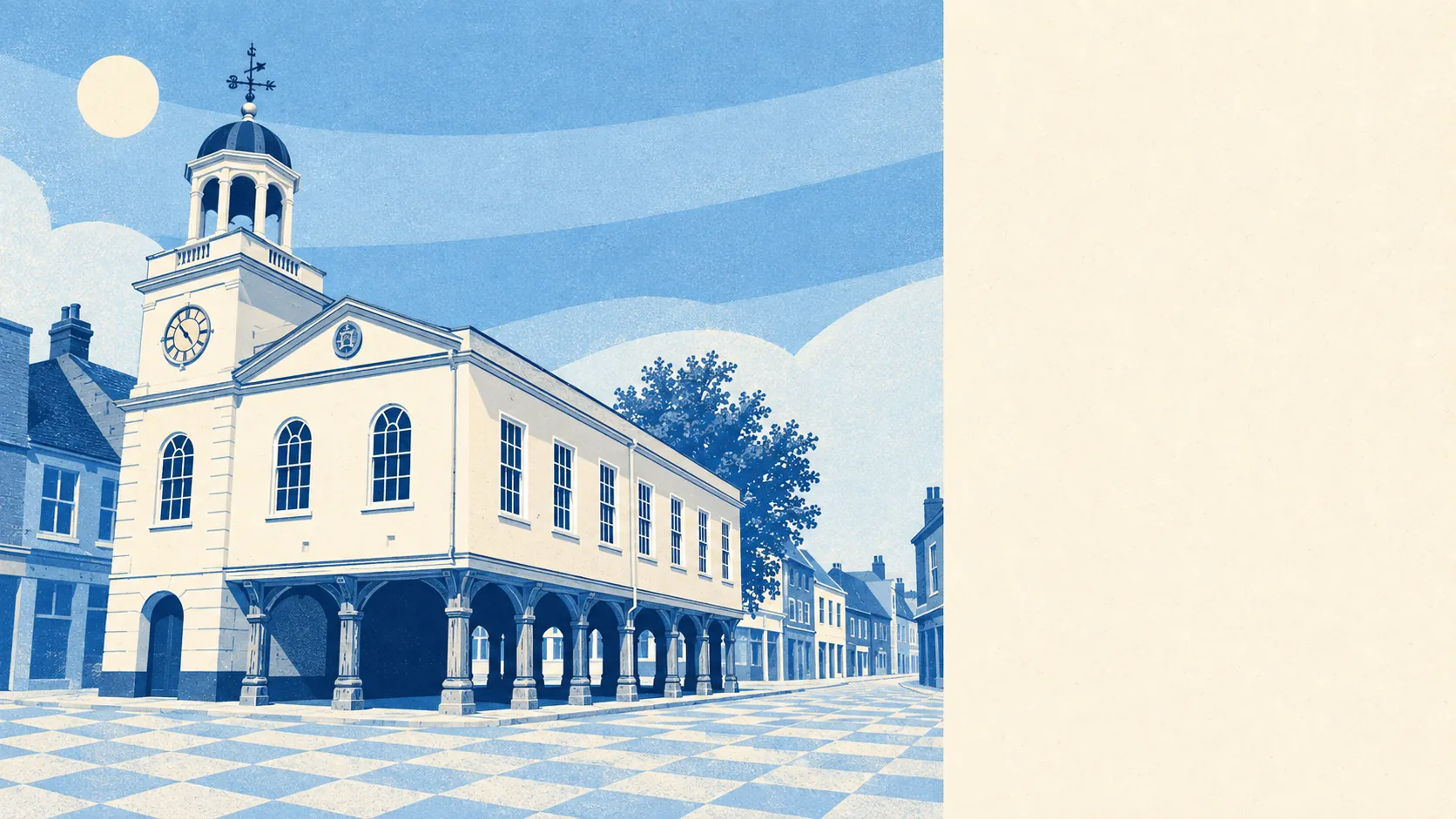
Faversham has 377 listed buildings. Four are Grade I, including the Parish Church of St Mary of Charity, and 26 are Grade II*. There are five conservation areas nearby: Faversham itself, Ospringe, Preston-next-Faversham, Syndale and Whitehill. Abbey Street and the Guildhall on the Market Place are the showpieces. For a buyer, that means a new window in the wrong place becomes a correspondence with the planning department. It also means the street will look the same in twenty years, which is the whole point of paying for it.
Two thirds of households, 66%, own their home, and the median age is 44. Gross household income averaged about £57,000 in the financial year to March 2023. The town brews its own beer at Shepherd Neame and has run the oldest street market in Kent for longer than anyone can remember, and it has the settled confidence of a place that has never had to reinvent itself. Nobody here is waiting for the town to be discovered. The residents think it already has been, by them.
This page also covers Boughton under Blean and Selling, the villages on the Canterbury side of town, where the pace drops a gear and the verges get wider.
Faversham suits buyers who want a walkable market town with a working station, who are happy to live in an older house and who work from home some of the week. It also suits anyone who wants water and open country close by without moving to the coast proper. If a Georgian or Victorian terrace on a street people photograph is the dream, this is one of the few places where that dream still costs around £305,000.
It suits you less if you want a new-build with a driveway and a garage per car, or if you would rather not fill in a planning form to change a door. Anyone looking at the low-lying streets near the creek should read the flood maps before booking a viewing, not after falling for the view.
Faversham is a good place to live, a notch above average, and it knows it. Its real strength is the setting: green space a short walk away, water close by and a town centre that still works as one. The weak spot is flood risk, which is concentrated but real. Buy on the higher ground and the town gives you most of what it promises. Buy by the water and you get the view, along with the paperwork that comes with it.