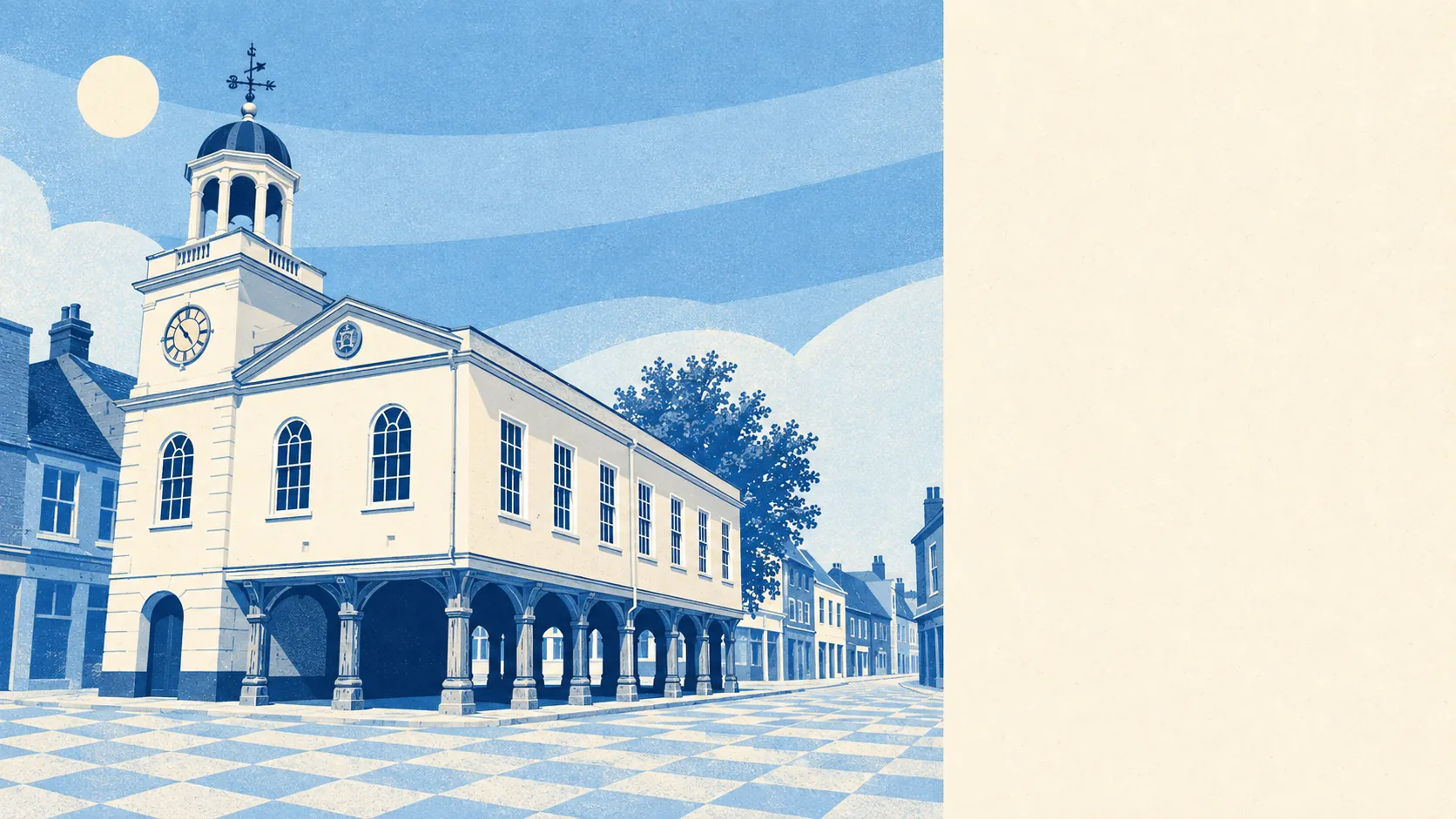
Yes, but in Faversham an extension begins with paperwork, not with a digger. Hundreds of buildings are listed. Five conservation areas cover the town and its edges. The neighbours still apply for planning permission hundreds of times a year. Almost all of it sits on ground that moves. You can build here. You just have to show your working first.
Faversham has 377 listed buildings. Four are Grade I, 26 are Grade II* and 347 are Grade II. Listing covers the whole building, inside as well as out, so changing a listed home, even an interior wall or a window, generally needs listed building consent on top of any planning permission. Most listed homes are Grade II, but that is still enough for a replacement staircase to become a conversation with a conservation officer. If the house you are viewing is on the list, assume every alteration will need consent until the council tells you otherwise.
Five conservation areas cover Faversham and its fringes: Faversham itself, Ospringe, Preston-next-Faversham, Syndale and Whitehill. A conservation area protects the look of a whole street rather than a single building. Work that is visible from the road gets closer scrutiny, and some of the freedoms homeowners elsewhere take for granted can be narrower. Ask the council which rules apply to a particular address before you commission any drawings.
There are 4 scheduled monuments in and around the town, the strictest level of heritage protection there is. They matter mainly if your land borders one, and then they matter a great deal.
None of this has stopped people trying. Between April 2024 and June 2026, the area recorded 968 planning applications, 421 of them in the last twelve months. That is a steady stream of kitchens, loft rooms and garden rooms going through the process. The system is slow, but it is not a no.
Underground, the British Geological Survey rates the shrink-swell hazard at class 3, and about 98% of the area reaches that class or higher. Shrink-swell clay expands when it is wet and shrinks when it is dry, which moves foundations over the years. For an extension, that usually means deeper footings than a builder working on firmer ground would quote, and a structural engineer's view before anyone digs. It is a cost to budget for, not a reason to walk away. A builder who does not raise it is a reason to walk away.
Two listed buildings in the area are on Historic England's Heritage at Risk register. That means they are in poor condition. Their repair may qualify for grant support and will certainly be watched closely. For someone buying an ordinary house nearby, they are a matter of local character rather than a hazard.
In practice, a modest rear extension on an unlisted post-war semi outside the conservation areas may well fall under permitted development, the national rules that let some work go ahead without a full application. A listed terrace inside the Faversham conservation area almost certainly will not. Check which kind of house you are buying before you check how big the garden is. The two answers move together more than most buyers expect.
Freedom to extend is one of Faversham's weaker points: plenty is possible, but on the old streets almost nothing happens without consent and a good deal of patience.