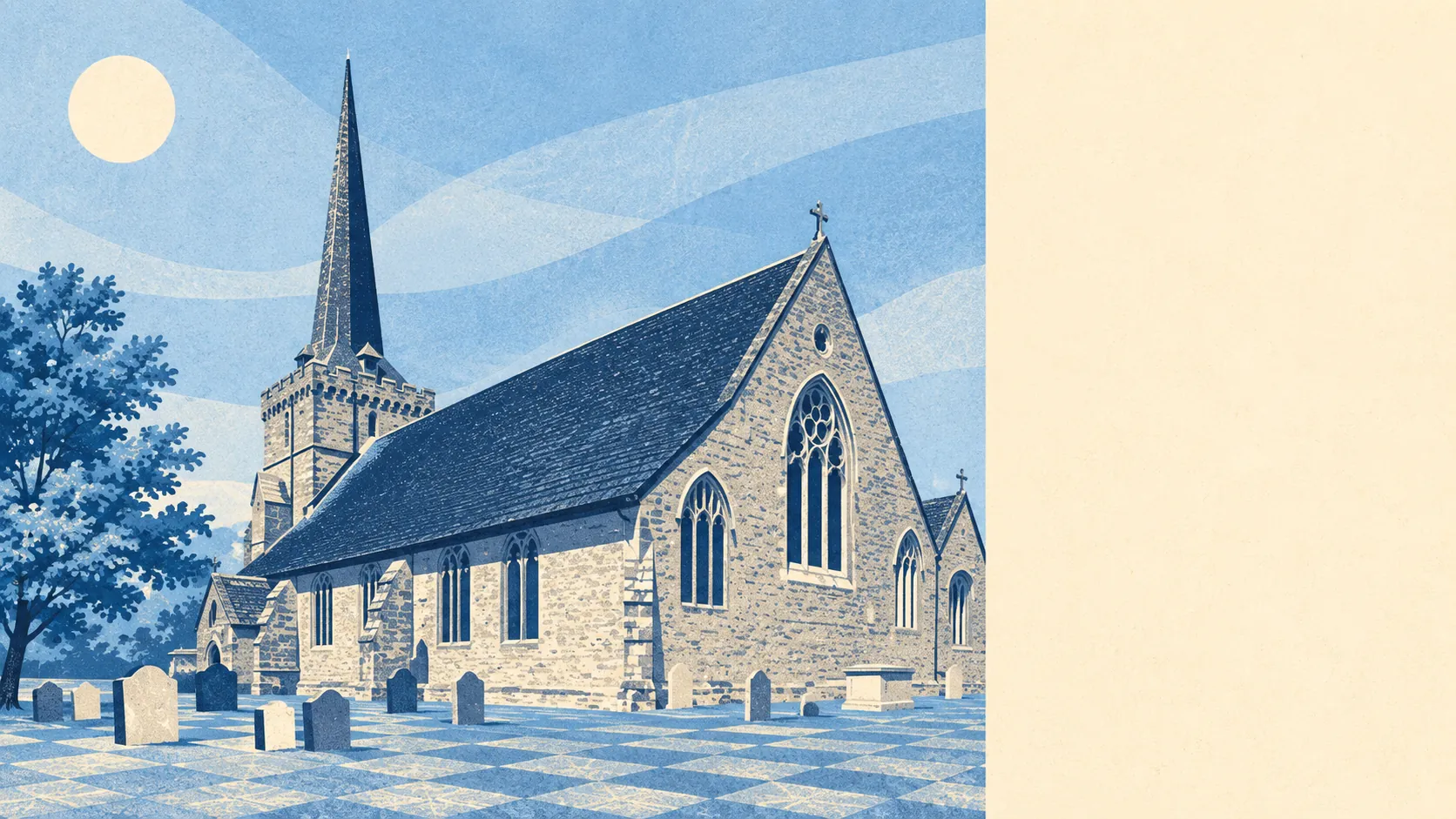
Cuckfield is a good place to live once the money's already been made. About three in four households own their home. The typical sale runs well past half a million. Almost half the working residents never left the house to earn it. This is where a career goes to put its feet up, and the commute stays somebody else's problem.
The housing is mostly big houses for people who've stopped moving. Across every dwelling on the council-tax list, 38% are detached, 25% semi-detached, 13% terraced, 12% flats and 7% bungalows, and 32% were built before 1930. That's a lot of loft conversions waiting to happen and not much for anyone starting out. The energy certificates tell you what the old stock costs to run. Only 39% of certificated homes reach band C or better, 35% sit in D and 26% are E or worse. Just 53% are on mains gas and 7% rely on electric-only heating, so ask about the heating before you fall for the inglenook.
Prices match the postcode's opinion of itself. The Land Registry's median sale over the twelve months to late April 2026 was £665,000, across 57 sales. Detached houses went for a median of £831,000 (34 sales), semis for £715,000 (11) and terraces for £435,000 (9). Only three flats sold, at a median of £247,500, which tells you more about how few there are than about what they're worth. Band G is the most common council-tax band, and only 11% of homes sit in bands A or B. Nothing here was designed to be the cheap option, and the council tax bill makes that clear every April.
Renting is more of a Mid Sussex question than a Cuckfield one. The typical private rent across the Mid Sussex area was about £1,410 a month as of April 2026. That's a district-wide average, and a four-bed on the edge of the High Weald won't be anywhere near it. Nobody should read the average as the going rate for a period house near Holy Trinity church.
Crime is low, and dull in the way that counts. Police recorded a published rate of about 58 crimes per 1,000 people in the year to May 2026, roughly 9% below the Mid Sussex average. The worst thing most residents will see is an argument about parking outside Ockenden Manor. You wouldn't call that a crime wave.
Getting around works if you drive, and the 2021 Census shows people noticed. About 40% drove to work, 3% took the train and 48% worked from home, though a pandemic year flattered that last figure. The nearest station is Haywards Heath. The Department for Transport's 2019 modelling puts the nearest town centre at about 13 minutes by car and 29 by public transport. There are 89 bus stops, averaging 14 weekday departures each, so the bus is for when the car's in for its service. Broadband is better than the buses: gigabit speeds reach about 81% of premises and superfast about 95%, and all the mobile operators cover about 98%. The people working from home chose well.
The surroundings are the best reason to be here. A quarter of the area falls inside the High Weald Area of Outstanding Natural Beauty. The average home is about 490 metres from green space and has around eight green spaces within a kilometre. On flood risk, none of the area's postcodes sit in the Environment Agency's river-and-sea flood zones 2 or 3. On the wider postcode measure, about 8% of postcodes hit a high rating on at least one flood indicator, surface water included, so check the specific house rather than trusting the hill.
Before you plan the kitchen extension, count the paperwork. Historic England lists 283 buildings in and around the area: two at Grade I, 12 at Grade II* and 269 at Grade II. There are eight conservation areas nearby, including Cuckfield itself, Muster Green, Whitemans Green and Lucastes. Buy inside one and new windows need someone else's permission, and the planning office will be interested in your roof. The streets look the way they do because somebody already had that argument and won.
The people match the houses. About 74% of households own their home, the median age is 47, and the Office for National Statistics' modelled gross household income averaged about £74,000 in the financial year to March 2023. It's a settled, well-off, middle-aged place, and it plans to stay that way.
Cuckfield suits buyers who already sold something bigger somewhere dearer. It works for families after a large detached house near a good school run, and for anyone working from home who wants the Weald outside the window and fast broadband inside it. If you'd rather walk to a pub than to a planning officer, the old village centre still does both.
It doesn't suit a first-time buyer, a renter hoping the area average applies to them, or anyone who needs a train every ten minutes. Haywards Heath has the station and more flats, and Cuckfield gives you the quieter streets. Pick the one your life needs and don't try to have both.
The village has always drawn a certain crowd. Mary Ann Mantell found the first known iguanodon fossils at Whitemans Green, where a monument to her husband Gideon now stands. Natasha Bedingfield was born here, and so was Tommy Cook, who played cricket for Sussex and football for Brighton & Hove Albion and England. Sid James and Tara Fitzgerald are also on the list. Cuckfield Park is said to be haunted by Anne Pritchard Sergison, known locally as "Wicked Dame Sergison". Most of the neighbours are less trouble.
Cuckfield is a good place to live for anyone who can afford it, and that condition does most of the sorting. Its real strength is the setting: the High Weald on the doorstep, green space round the corner, and a village centre protected hard enough that it will still look like this in thirty years. The weak spot is price and value. Every house here costs a lot to buy and a lot of the old ones cost a lot to heat. You pay a premium to live somewhere the neighbours worked to keep exactly as it is.