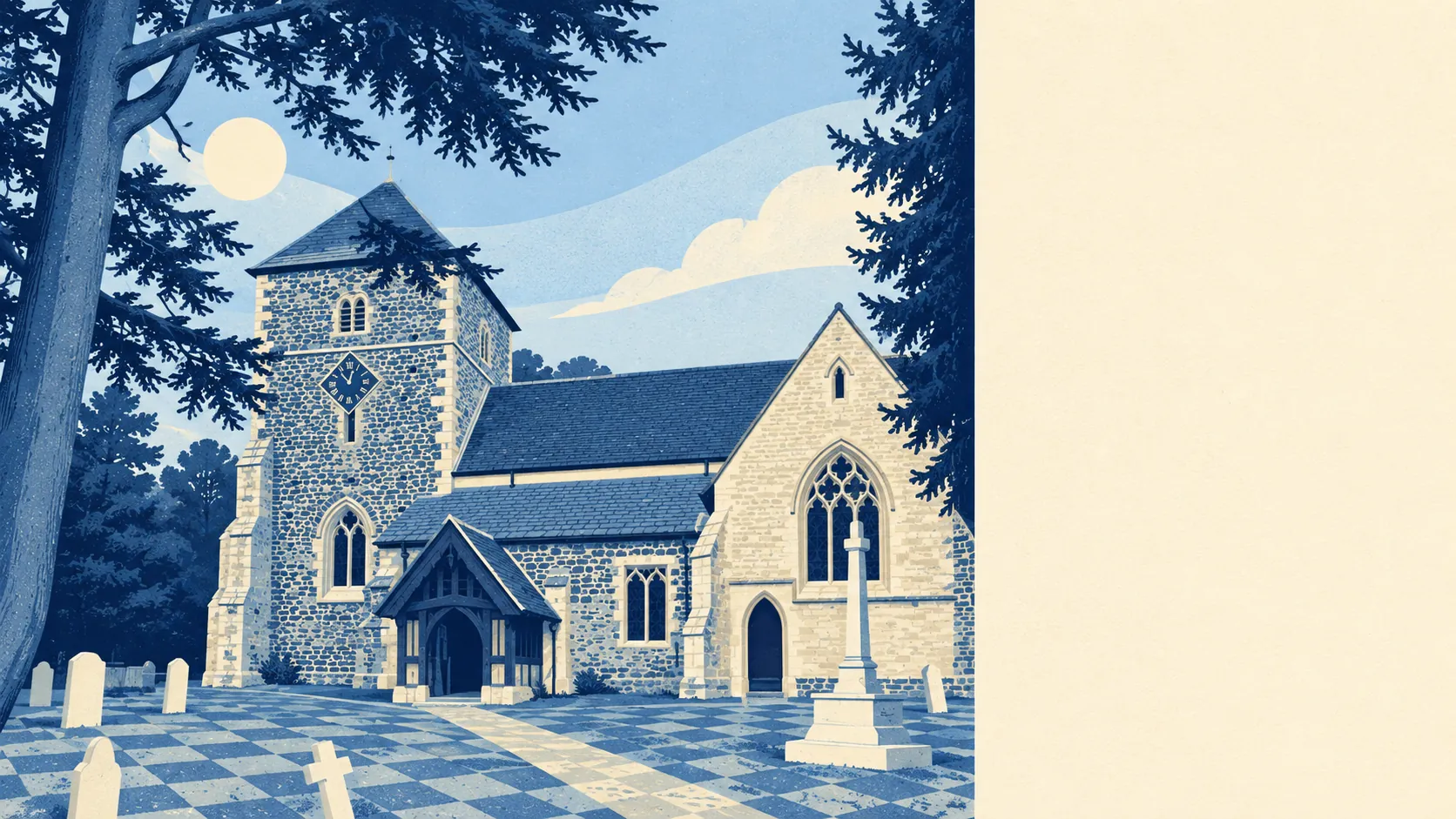
Cranleigh is well connected to the internet and poorly connected to everything else. Nearly half of workers drive. Almost four in ten don't leave the house for work. Barely anyone takes a bus or a train. In most of these houses, the broadband router does the commuting.
Rail is easy to cover because Cranleigh doesn't have any. The line closed under the Beeching cuts in 1965, and at the 2021 census about 1% of Cranleigh's workers commuted by train, which is roughly the share who'd find a way to do it by canoe if they had to. There are 48 bus stops in the area, and about 1% of workers used a bus to get to work.
The real commute happens elsewhere. About 46% of workers drove to work and about 38% worked from home, so the car and the spare bedroom account for most of the village. Walking came to about 8% and cycling to about 2%. Only about 11% of households have no car, while about half run two or more. Here the second car is standard kit, not a lifestyle choice.
The Department for Transport's journey-time statistics, modelled for the area rather than timed from any particular front door, put the nearest town centre about 9 minutes away by car, 12 by bike, 13 by public transport and 23 on foot. Other daily errands are similar. A GP is about 8 minutes by car, 12 by public transport and 18 on foot. A food shop is about 16 minutes' walk or 8 by car. A hub of jobs is about 19 minutes by car and 27 by public transport. The hospital is the outlier: about 32 minutes by car and about 66 by public transport. The public-transport figures date from 2019 and services have been cut since, so trust them less than the car and walking times.
The buses do exist, and they run on current timetables. A stop here gets about 26 scheduled departures on an average weekday, which means one or two buses an hour at peak. About 77% of stops have any weekend service at all. That's enough for a trip into town, but it won't carry a working week.
Broadband is where Cranleigh does well. Gigabit-capable connections reach about 78% of premises and superfast about 98%. No premises fall below the universal service obligation, the legal minimum speed anyone can request. For the four in ten who work from the spare room, that matters more than any timetable.
Mobile is solid. At least one operator offers 4G or 5G across all of the area, and all operators cover about 97% of it.
Road noise reaches further than the village image suggests. Every postcode in the area sits near or above 65 decibels, the level at which official noise mapping treats road noise as significant, and the loudest band recorded is 75 decibels. That figure describes the roads nearby, not how any particular bedroom will sound, so listen for it at the viewing.
Electric car owners have three public charge points in the area with ten connectors between them, and one of those is rapid. That means charging mostly happens on your own driveway, and charging in town takes some planning.
Cranleigh's connections are middling: excellent broadband, a short drive to most things, and very little for anyone without a car. It works well for people who stay at home or drive and badly for people who hoped to do neither.