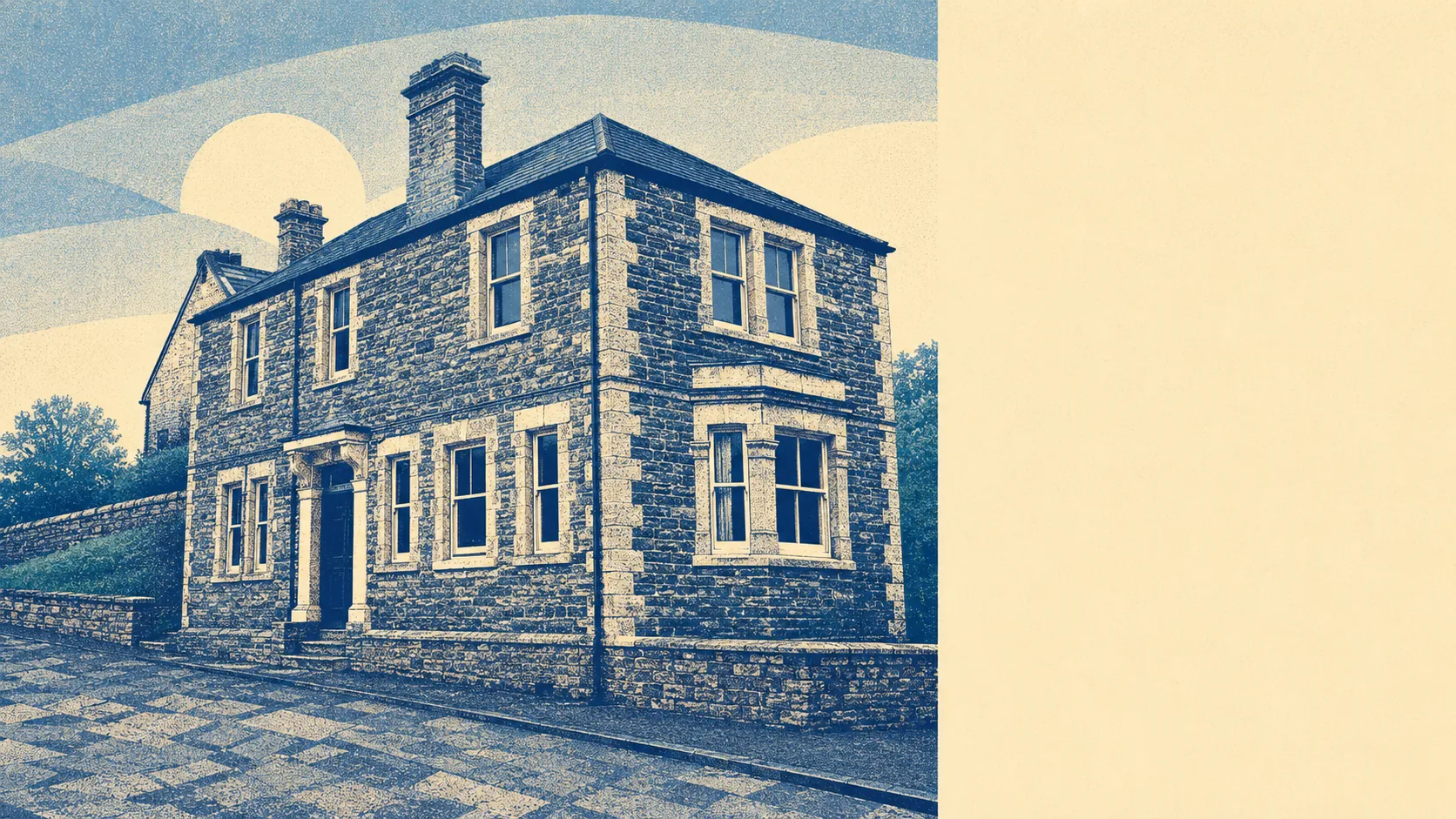
Clutton is where you pay Bath-adjacent money to live on top of an old coal mine. The typical house sells for about £425,000. Four in five residents own the place they live in. Nearly two in three households run more than one car. Not the Chew Valley of the brochures, then. A commuter village that kept the church and lost the pit.
The housing here is houses. Four in five homes are exactly that, with bungalows making up most of the rest and flats barely registering at fewer than one in twenty. The stock skews post-war, built between the 1950s and the early 1980s, with a quarter of it older than 1930. The energy ratings read like a village that predates anyone caring about insulation: four in ten homes reach band C or better, over a third sit at band D, and almost a quarter land at band E or worse. Old stone holds heat about as well as it sounds like it would. The kind of place where the woodburner is a heating strategy, not a lifestyle choice.
About £425,000 buys the median home, and the type you want decides how far past that you go. Detached houses run to around £500,000. Semis sit near £360,000, terraces a touch lower at about £335,000. Council tax mostly lands in band C, with only around one in five homes down in the cheaper A and B brackets. For the money, you are buying the village and the postcode, not the square footage.
Renting is thin on the ground in a place where four in five people own, and the figure worth quoting is the wider one: typical private rent across the Bath and North East Somerset area runs to about £1,880 a month. That is a district number, not Clutton's own, and it is a Bath number doing a lot of the lifting. If you want to rent a house in a former mining village, you will be waiting for one to come up.
Clutton is safe in the way small Somerset villages tend to be. The published crime rate is about 49 incidents per thousand people a year, which sits roughly 44 percent below the Bath and North East Somerset average. Most of what that figure counts is the kind of thing that happens when not much happens. The nearest you get to a crime wave is somebody's gate left open.
Schools are a genuine draw. Clutton Primary School sits in the village, and across the wider area nearly six in ten schools rated by inspectors come out good or better, four of them outstanding. Key stage two maths scores land just above the national average. The catch is secondary: the bigger schools are a drive away rather than a walk, which in a place where just over half the working population commutes by car is less a problem than a continuation of the theme.
On transport, the honest summary is that you drive. Just over half the working residents commute by car and close to four in ten now work from home, which between them describe the entire local economy of movement. Almost nobody takes the train, for the simple reason that the village station closed with the Bristol and North Somerset Railway long ago. Broadband, at least, has caught up faster than the roads: gigabit lines reach about three-quarters of the village and superfast speeds almost nine in ten, so the four in ten working from home are doing it on a decent connection.
Flooding is a localised worry rather than a village-wide one. Around seven percent of postcodes carry a high surface-water risk and a slightly smaller share a medium one, with the formal river flood zones barely featuring. Green space is the compensation and the point: most homes sit within about 350 metres of somewhere green, and water rarely much further. The ground underneath is the less photogenic story. This is old coalfield, with abandoned workings recorded under dozens of postcodes and radon rated high across most of the village, both of which a decent survey will price in before you do.
For anyone planning to change a house, the heritage footprint is moderate. The area holds around 80 listed buildings, five of them in the higher grade two star bracket and the rest grade two, plus a single conservation area over at Timsbury. Most of Clutton's own housing carries no such designation, which means the average buyer can fit the windows they want without a letter from the council explaining why they cannot.
The character is settled and comfortable. Just over four in five households own their home, the typical resident is 46, and median household income sits around £63,000, above the national middle. This is a village of people who arrived, stayed, and had no particular plan to leave.
It suits people who work from home or don't mind the car, who want a house with a garden over a flat with a lift, and who value a low crime rate and green space over nightlife and a station. Families do well by the primary. Downsizers do well by the bungalows.
It does not suit anyone without a car, anyone who needs a train, or anyone expecting Bath value at a price already halfway to Bath. The energy bills on the older stock will find you out, and so will the drive to everything.
For a small place, Clutton has produced a couple of names. Amy Woodman, a national long-jump champion, lived here from the age of two. Maisie Williams, who spent a decade playing Arya Stark, went to Clutton Primary School, which is either a fun fact or the single best thing an estate agent in this postcode has ever been handed. The village itself turns up in the Domesday Book of 1086 as Clutone, and spent the nineteenth century as a working mining settlement under the Earl of Warwick, who built Maynard Terrace for his miners. The pit closed. The terrace stayed.
So is Clutton a good place to live? Above average, and earned rather than gifted. Its strongest card is safety, as low-crime as anywhere on this stretch of Somerset. Its weakest is value: you pay well for the privilege, and the houses ask for money back in heating and surveys. Buy here because you want the quiet and the garden, and you will be happy. Buy here expecting a bargain, and the coalfield under the floor won't be the only thing that comes as a surprise.