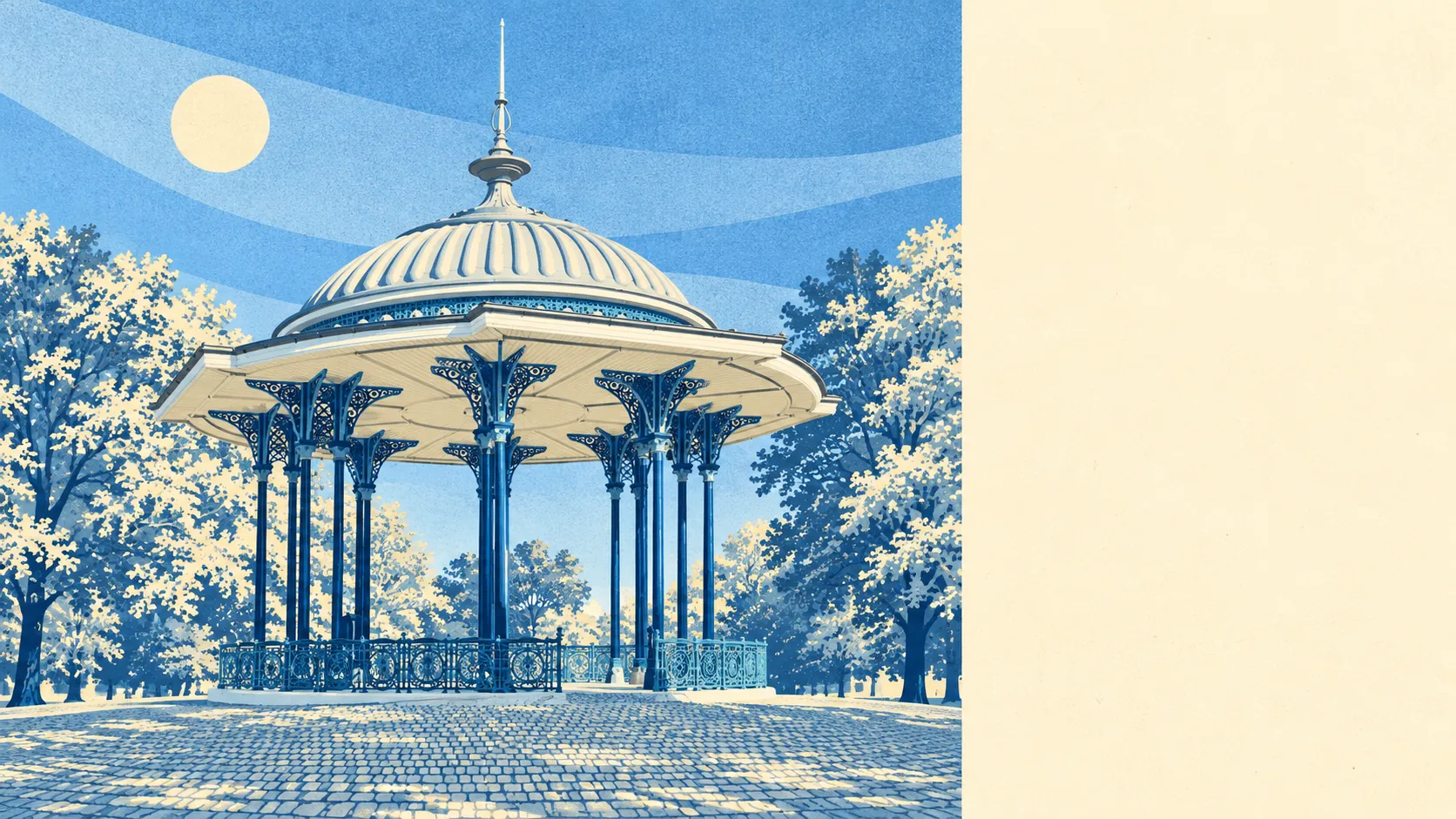
Clapham's surroundings are its best feature, and the reason is a single, very large common. Green space is about a minute's walk from the average front door. There are dozens of parks and patches of green within a kilometre. Water is a short stroll beyond that. The high street has shops on every frontage and enough pubs to keep most people within walking distance of one.
The average home in Clapham is about 110 metres from public green space, with 44 green spaces inside a kilometre. Clapham Common is the biggest of them. The boundary between Lambeth and Wandsworth runs across it, and Lambeth looks after the whole thing. With 44 within a kilometre, picking which one to use is the only real decision.
Open water is about 630 metres away on average, and the typical home has 5 bodies of water within a kilometre. It is enough for a walk by the water without making anyone a waterside resident.
The National Cycle Network is further off, about 2.8 kilometres from the average home, and no postcode in the area counts as close to it. There is no ancient woodland. Clapham's green space is municipal and well used, and none of it is wild.
The local rating records list 278 shops, 26 pubs and 35 restaurants. The pubs are outnumbered about ten to one by shops, which still leaves 26 places to argue about which is the local.
Fine-particle pollution across Lambeth averaged about 9 micrograms per cubic metre in 2024. That is the council's figure for the whole borough, and the busy roads and the middle of the Common will each differ from it.
Clapham has had well-off residents for a long time. City of London merchants built large houses and villas around the Common and in the Old Town through the eighteenth and early nineteenth centuries. Samuel Pepys spent his last two years here and died in 1703. Captain Cook's widow, Elizabeth, lived on Clapham High Street for many years after his death. The Common later counted Sir Charles Barry, the architect of the Palace of Westminster, the composer Edvard Grieg and the novelist Graham Greene among its residents. The people around it now mostly rent. The Abbeville Road and Clapham High Street conservation areas keep the period streets looking much as those earlier residents would remember them. Stockwell, Battersea and Balham border the area, and each has its own page here.
Private gardens add up to about 19,600 square metres for every 1,000 residents. In a district where most homes are flats, a large part of that belongs to the houses, and many people's outdoor space starts at the Common.
The business rates valuation list records 860 non-domestic premises in the area. Shops are the largest group, with 276 premises, followed by 187 offices and then two classes of industrial-type units, with 67 and 50 premises. These are rateable premises on the valuation list, which is a different thing from businesses currently trading, but the shape is clear: Clapham is a place of shops and small offices, and very little of it is industrial.
Of the 238 food premises with a hygiene rating, about 65% hold the top score of five, and about 7% sit at the low end of the scale. For a neighbourhood that eats out this much, that is a reassuring spread.
No area of outstanding natural beauty, site of special scientific interest or ancient woodland overlaps Clapham. Its green space is all urban, made of commons, parks and squares, and none of it is protected countryside.
The surroundings are one of Clapham's real strengths, built around green space a minute or two from almost every front door and a high street that keeps most errands within walking distance.